











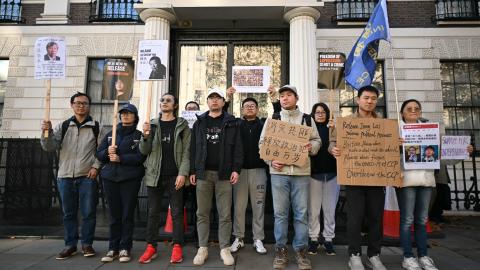
Xin Ruoyu, a young mother in her thirties, was forcibly disappeared into a Chinese “black jail” around July 2024. Her detention is extrajudicial, with the charges and duration of her sentence unknown. Her so-called crimes were creating an app to provide users with access to Christian hymns, worship music, and devotional material. For exercising her religious freedom, she has been separated from her child and disappeared into China’s vast network of extralegal detention facilities.
Xin is but one of the more than 11,000 individuals the Congressional-Executive Commission on China (CECC) has documented in their Political Prisoner Database (PPD), highlighted in their latest Annual Report released on Human Rights Day.
Xin joins the ranks of many innocent people the CCP has deemed a threat to the Party. The Party is notorious for political prisoner taking, most recently for its targeting of Pastor Ezra Jin and approximately 30 other pastors and associates of Zion Church. Christians are not the only ones targeted. The Annual Report highlighted political prisoners of many faiths, including Tibetan Buddhists, Falun Gong, Uyghur and Hui Muslims, and Jehovah’s Witnesses, among others.
Technically, persons of faith in China are guaranteed a right to religious freedom in Article 36 of the constitution. The reality is quite the opposite due to the CCP’s policies of Sinicization, which require religious adherents to ensure their religious practice conforms with the goals and aims of the Party, a secular institution.
The CECC report notes that the Party’s practice of political prisoner taking and violations of religious freedom are just a few of the many ways the CCP repeatedly makes – and subsequently breaks – promises to people across China.
This, among other reasons, is why human rights should play a critical role in any effective and strong U.S. foreign policy, particularly toward authoritarian actors like China. In the year ahead, the U.S. should get more serious about tackling the threat the CCP poses to human rights and freedom. One of the ways it could do so is by strengthening the tools it has at its disposal to free political prisoners.
As I argue in my Hudson Institute report on setting political prisoners across China free, the U.S. should establish an Office of Political Prisoner Advocacy and appoint a Special Envoy of ambassador-rank to lead the office. A more centralized office at the State Department has the potential to strengthen U.S. advocacy for cases of extrajudicial detention of individuals across China like Xin Ruoyu and could strengthen U.S. advocacy on behalf of political prisoners with American family members, like Pastor Jin, Gulshan Abbas, Ilham Tohti, and others.
On Human Rights Day, we must not forget the most vulnerable individuals across China – those the CCP extrajudicially detains. The CECC’s new report serves as a vivid reminder of political prisoner’s plight and provides concrete recommendations on what the U.S. can do to better alleviate their suffering and secure their freedom.