










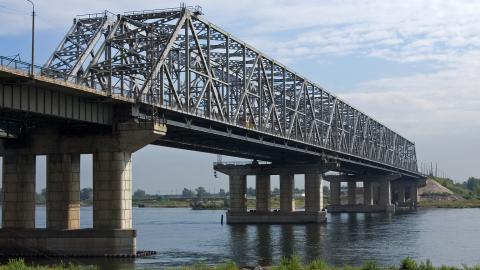

A study commissioned by the EU, which was published last week, focused on what investments and infrastructure projects are needed to better connect Europe to Central Asian markets via the South Caucasus. The study, titled “Advancing a Cross-Regional Connectivity Agenda with Central Asia, Turkiye and the South Caucasus,” said all the right things about the need to invest in and update infrastructure that is often outdated.
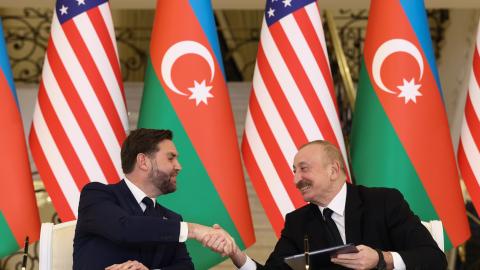
But this has all been heard before. At the same time the report was released, US Vice President J.D. Vance was on the ground in Armenia and Azerbaijan in the South Caucasus, discussing, among other things, a new transit route and economic connections that will be led and part financed by the US, as well as the next steps of the peace agreement and diplomatic normalization between Yerevan and Baku. This juxtaposition is a metaphor for Washington and Brussels’ engagement in the region in recent years: another report and strategy document from Brussels and an on-the-ground presence by the US.
The South Caucasus should be a strategic priority for the EU, especially in the current geopolitical climate. The region serves as a key source of energy resources at a time when Europe is trying to diversify away from Russian oil and gas. In the immediate aftermath of Russia’s invasion of Ukraine in 2022, Europe turned to Azerbaijan for more energy and even signed an agreement that would see energy resources from Azerbaijan to Europe double by next year.
Crucially, the region is also important for trade and transit. In particular, the Trans-Caspian International Transport Route, commonly referred to as the Middle Corridor, connects markets from East Asia to the heart of Europe, bypassing both Russia and Iran. As European markets seek new economic opportunities, the Middle Corridor and the countries of the South Caucasus will play an important role.
The problem, however, is that the EU has struggled to turn many of its big ideas for the region into timely and measurable policy outcomes.
A good example of this is the Global Gateway initiative, which is meant to identify areas around the world that are strategically important for trade, energy and transit and then bring investment, either public or private, to improve infrastructure. Specifically for the South Caucasus and Central Asia, the EU has established a Cross-Regional Connectivity Agenda under the Global Gateway initiative. Since its inception, the EU has announced about €12 billion ($14 billion) in funding and identified numerous infrastructure projects to receive investment.
However, the translation of these headline figures into visible, on-the-ground progress has at times moved more slowly than the rhetoric initially suggested. As is often the case with the EU, political and public announcements can outpace actual implementation on the ground.
Last April, the bloc held a summit with the five Central Asian states in Samarkand, Uzbekistan, with great fanfare and many at the time were optimistic that this would mark a new start in the EU’s relations with the strategically important region. A good example of this dynamic, at least in the South Caucasus, is France’s coziness with Armenia, which often places Paris at odds with Baku and can complicate closer EU engagement with that Caspian state.
As the months have passed, tangible results for the EU in the region have been limited. There are a few reasons for this. Political and public announcements often outpace actual implementation on the ground, which leads to heightened expectations in the beginning and greater disappointment as time goes on. This is made more problematic by the fact that multiple EU institutions have different policy competencies over various parts of initiatives like the Cross-Regional Connectivity Agenda. In addition, the priorities of individual EU member states at times compete with or even block EU progress if there is a bilateral dispute with a country in the region.
All this political uncertainty and bureaucratic fragmentation has slowed the mobilization of private capital that could be raised to invest in the region. Meanwhile, the US has been able to do a better job with strategic messaging and attracting inward investment. The progress made in just the past 12 months under the Trump administration outpaces what the EU has been able to accomplish over several years.
When there is a high-level US summit or announcement, follow-up engagement by senior officials often comes quickly. A good example of this is how the Trump administration has been able to bring Armenia and Azerbaijan to the peace table and push along progress on the so-called Trump Route for International Peace and Prosperity, which could become a key transit link in the South Caucasus.
By contrast, EU deliverables frequently lag behind the initial political momentum. This is puzzling, given that Europe stands to benefit more directly from initiatives such as the Middle Corridor and from greater access to energy and rare earth minerals from the heart of Eurasia than even the US does.
This is why it is time for Europeans to step up and become more actively involved in a region that has clear geopolitical significance for their overall stability and well-being. It could also serve as an area for confidence-building between Brussels and Washington, as there are many overlapping interests in the South Caucasus and Central Asia. Both sides of the Atlantic should work together to advance a common agenda and deepen relations with the countries of the region.
The South Caucasus and Central Asia will only grow in importance in the years to come and Europe cannot afford to remain a secondary player in its own broader neighborhood.