








Power shifts are never easy. A major one is now underway, not between rival states, but between competing approaches to international order. Call it a clash of two operating systems. One view holds that the most pressing issues of the day can be addressed only through a framework of global and supranational institutions and multilateral rules. The other insists that the nation-state remains the foundation of legitimate authority and effective action, and that outcomes ultimately depend on the decisions, capacities, and accountability of individual states.
For much of the post–Cold War era, what one can call a “global first” approach dominated international thinking. Governments, international organizations, and nongovernmental actors shared the assumption that challenges to do with security, economic disruption, migration, pandemics, and climate change required global solutions. The collapse of the Soviet Union and China’s accession to the World Trade Organization accelerated economic globalization, reinforcing the belief among leaders in the United States and elsewhere that global institutions were best suited to manage complexity and preserve peace. For decades, these institutions (and the governments and the phalanx of nongovernmental organizations that supported them) advanced a common creed: that only global bodies could tackle the defining problems of the age.
Yet the results of this global-first model have been uneven at best. Despite decades of negotiations, global greenhouse gas emissions continue to rise, and no major economy is on track to meet the targets set by the 2015 Paris agreement on climate change. Record numbers of people have been displaced, migration has destabilized domestic politics in many countries, and armed conflicts are more numerous and protracted than at any point since the end of the Cold War. The COVID-19 pandemic exposed failures in global health governance, while progress toward the United Nations’ Sustainable Development Goals has fallen dramatically short of ambitions.
At the same time, China rose rapidly within this global order, accumulating economic, technological, and military power while selectively exploiting international rules and arrangements. Today, China is mounting the most serious strategic challenge the United States has faced since the end of the Cold War, discrediting the notion that deeper integration and multilateral engagement would produce a more cooperative and stable international system.
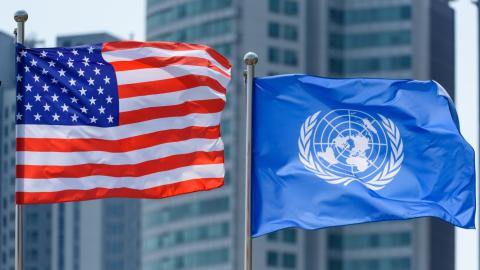
Instead of assessing why decades of global efforts have failed, many leaders dig in their heels. The current UN secretary-general, António Guterres, frequently laments that multilateralism is “under fire,” warning that there is no path forward except through “collective, common-sense action for the common good.” What this view leaves largely unexamined is the possibility that the fault lies in the limitations of the global-first approach itself.
In the 2010s, long-simmering doubts about the post–Cold War global order rose to the surface. The United Kingdom’s decision to leave the European Union in 2016, as well as mounting impatience in Europe and elsewhere with supranational institutions, had already begun to erode many of the assumptions that shaped the policies of Western governments after 1991. U.S. President Donald Trump accelerated this shift when he assumed office in 2017, but he did not start it.
In his second term, Trump argued in his September 2025 address to the United Nations that despite the organization’s “tremendous, tremendous potential,” it was not “coming close to living up to that potential.” The 2025 U.S. National Security Strategy states that “the world’s fundamental political unit is and will remain the nation-state.” Trump’s withdrawal from dozens of international organizations, his call in January for a “Board of Peace” that would bypass the UN Security Council, his cuts to international aid, and his challenges to trade and immigration orthodoxies have been widely denounced, but the president’s actions reflect a broader rejection of global-first pieties. His clear priority, in places such as Iran and Venezuela, is to act on the basis of national interest and collective defense without first deferring to global bodies.
Beneath Trump’s theatrics, however, lies a coherent claim: only states generate problems (their industries pollute), experience those problems (their citizens suffer), and hold the means to address problems (through revenues, infrastructure, and services). Only states acting to advance their own interests—whatever the implications for so-called international order and norms—can solve problems that global institutions and processes have so far failed to fix.
The global frame functions much like the passive voice in English: it conveniently detaches agency from problems and obscures true causes. It also produces elaborate organizational processes that impede real progress. Even advocates of global approaches acknowledge that international negotiations often entangle officials in dense webs of meetings, procedures, and rules. These layers of complexity slow action or prevent it altogether.
Disagreements over these competing operational approaches matter. They are straining alliances, complicating partnerships, and fueling accusations of isolationism, while leaving many of the world’s most vulnerable populations no better off. By challenging failing global frameworks, a state-centric approach could produce truly positive change—and place states back at the center of practical action.
The Growth of the Global
The United States both shaped and was shaped by the rise of the global order in the twentieth century. The horrors of World War I, in which industrialized warfare killed an estimated 20 million people, severely undermined faith in the nation-state as the foundation of international order. The League of Nations emerged just afterward as the first major supranational experiment in collective security. U.S. President Woodrow Wilson described the league as a “community of power,” arguing that states must yield freedom of action to a common council to preserve peace. The novelist H. G. Wells went further, arguing that “there can be no great alleviation of the evils that now blacken and threaten to ruin human life altogether, unless all the civilized and peace-seeking peoples of the world are pledged and locked together under a common law and a common world policy.”
But the league failed to prevent the chaos of World War II, and it is doubtful that it would have succeeded even had the United States joined. After that war, countries again sought to build a more durable peace. The United States emerged as the principal architect of the post-1945 international system, using its unmatched economic and military power to forge new global institutions. It led the creation of the United Nations, the International Monetary Fund, and the General Agreement on Tariffs and Trade, which governed global trade for nearly five decades before the creation of the World Trade Organization.
Over time, member states ceded elements of their sovereignty—authorizing the UN Security Council to define threats to peace, empowering the WTO to adjudicate trade disputes and authorize retaliatory tariffs, and allowing the IMF to lend large sums to states with balance-of-payment problems—in exchange for the promise of a more stable world. State power would be constrained not only by domestic constitutions but also by international law and the rules of international institutions.
In Europe, where nationalism had fueled some of the twentieth century’s most devastating conflicts, pressure grew to find alternatives to the power of the nation-state. The European Economic Community, founded in 1957 and later broadened into the European Union, rested on the belief that economic interdependence could tame conflict. By deepening integration and limiting national sovereignty, European leaders argued, war could be made not only undesirable but implausible.
Over time, transnational and supranational efforts to move beyond the nation-state gained ground, and international institutions steadily widened their authority. The UN now encompasses dozens of funds, programs, and specialized agencies. The IMF evolved from a narrow focus on balance-of-payments support into a far broader role in macroeconomic surveillance, crisis lending, and structural reform, while the WTO grew into an expansive regime governing services, intellectual property, and dispute settlement. At the same time, many of these bodies became less accountable to states. Donor states are often frustrated that UN development agencies consider themselves to be autonomous from the governments that fund them, even when those governments ask for audits of how their money is spent. Member states exercise tenuous control over the World Bank. As staff, budgets, and mandates expanded, these institutions increasingly evolved from instruments of states into bodies with their own agendas.
The collapse of the Soviet Union and the end of the Cold War contributed to the widespread belief that a new international community was emerging and that the ascendancy of the United States as the sole superpower would usher in a system of collective security and an ever-growing democratic zone of peace. After the collapse of the Berlin Wall, U.S. President George H. W. Bush hailed the arrival of a new era. Later, after the United Nations condemned Iraqi leader Saddam Hussein’s invasion of Kuwait in 1990, he observed that countries could now “seize the opportunity to fulfill the long-held promise of a new world order, where brutality will go unrewarded and aggression will meet collective resistance.”
China’s accession to the World Trade Organization in 2001 rested on a similar set of assumptions. U.S. and European policymakers believed that integrating China into global markets and institutions would encourage the country’s economic liberalization, expose Beijing to international rules and norms, and gradually temper its strategic ambitions. As China grew wealthier and more embedded in the global economy, many expected it to become a responsible stakeholder in the liberal international order. That did not happen; China instead used its access to the world economy to grow rich and threaten that order.
This global mindset was also reinforced by the rise of multinational corporations, increasingly treated as global actors. Although formally subject to national laws, their scale and reach often allow them to shape state behavior. Technology firms influence regulatory outcomes on taxation, privacy, and market access; energy companies negotiate directly with governments over investment, sanctions, and climate policy; and financial firms, whose assets often exceed the GDP of many countries, exert influence through capital allocation and engagement with regulators and central banks.
All the while, global groupthink deepened. Former UN Secretary-General Kofi Annan popularized the idea of “problems without passports,” arguing that many challenges were too diffuse for individual states to address alone. The UN’s 2000 Millennium Declaration framed hunger, poverty, conflict, and social injustice, for example, as global problems, a vision embodied in its 2015 Sustainable Development Goals. Although the UN now concedes that many targets will not be met, it largely avoids questioning whether its original ambitions were realistic. Most recently, the organization has promoted global approaches to managing the risks of artificial intelligence.
A global mindset seized much of civil society and the commentariat. By the 1970s, an informal global governance movement had emerged alongside formal institutions, arguing that interdependence required stronger multilateral cooperation or “common management,” the phrase employed by the Trilateral Commission, one of the transnational bodies established in that era. By the 1990s, such ideas had hardened into dogma. Influential commentators such as Thomas Friedman hailed globalization as the dominant force shaping domestic politics and foreign relations, and thousands of nongovernmental organizations became formally linked to the UN, embedding nonstate actors into global institutions.
The global frame has found its way into many U.S. and European initiatives. The Biden administration’s Build Back Better World initiative was rooted in “a unified vision for global infrastructure development.” The European Union’s Global Gateway project aims to tackle the “most pressing global challenges,” including climate change, pandemics, and the security of global supply chains. A powerful global architecture came to define the post–Cold War order. Yet this order turned out to be as fragile as it was ambitious.
The Limits of the Global
More than 75 years since the post–World War II push toward global approaches, the optimism that animated support for these institutions has given way to a more sobering reality. The architecture of global governance expanded, but that governance did not become more effective. The global order was supposed to generate collective strength: countries, working together, could do more and make resources go further. In practice, however, it created layers of bureaucracy that siphoned resources away from addressing the problems at hand. Devotion to process replaced attention to outcomes.
Tackling climate change has been approached primarily through global, multilateral frameworks for more than three decades under the auspices of the UN. Despite the constant warnings about the existential threat of climate change, global emissions of carbon dioxide had reached their highest level on record in 2025. All G-20 countries are off track to meet the 2015 Paris accords’ goal of limiting global warming to below two degrees Celsius by the end of the century. The global approach to reducing carbon emissions is clearly not working.
In the realm of human rights, multilateral responses have too often proved ineffective or counterproductive. The willingness of international institutions, particularly the UN, to treat authoritarian regimes as legitimate participants has insulated these countries from reproach and censure. Nowhere is this failure more evident than in the UN Human Rights Council, which has been regularly co-opted by some of the world’s worst human rights violators. While the council issues resolutions and hosts dialogues, Iran kills and imprisons civilians with impunity and China subjects Uyghur Muslims to a harsh regime of arbitrary detention and surveillance. Multilateral human rights mechanisms have often shielded perpetrators rather than constrained them.
In development, increasingly ambitious yet abstract agendas advanced by international institutions often overlook the socioeconomic conditions that determine whether aid truly works. Despite wide variation in state capacity and local circumstances, initiatives such as the UN’s Sustainable Development Goals rest on the premise that “all countries and all stakeholders” can deliver any number of outcomes, from ending the AIDS epidemic to eradicating extreme poverty by 2030. Yet hundreds of millions of people still lack reliable access to electricity, food insecurity has worsened, and water stress continues to intensify across many regions. While the United Nations highlights the global decline in poverty between 1990 and 2015, it also concedes that a substantial share of the world’s population will remain poor well beyond 2030. Similarly, the World Bank acknowledges that progress on poverty reduction has stalled and that, at current rates, lifting everybody above even a modest threshold of roughly six dollars per day would take more than a century. It is unclear how recommitting to those same global processes, such as additional summits and greater international coordination, would produce better outcomes.
After the Cold War, it was widely assumed that free trade would alleviate global poverty. Liberal commerce would lift all boats, and a supranational rule setter, the WTO, would ensure an ever-rising tide. In practice, however, the WTO struggled to make trade genuinely free. Persistent distortions, such as China’s subsidies and unfair trade practices and the EU’s Common Agricultural Policy (which shields European producers through subsidies and price supports), highlight the WTO’s inability to curb entrenched protectionism. These weaknesses are compounded by the WTO’s failure to clearly distinguish between state-owned and private firms, a flaw most evident in cases involving China, in which the line between state and market is blurred.
Migration has become a central flash point in the clash between global and national approaches. Migrants increasingly try to enter countries as asylum seekers even when their motivations are largely economic. This dynamic has strained asylum systems and roiled the politics of many receiving countries. Yet rather than confronting whether the system is working as intended, its defenders call for increased funding for the Office of the UN High Commissioner for Refugees, reinforcing a model that expands humanitarian administration without resolving the underlying drivers of displacement.
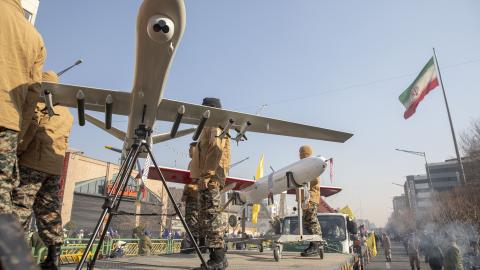
In the realm of nonproliferation and direct threats to the United States and its allies, global approaches have repeatedly fallen short. For decades, the UN, other multilateral bodies, and ad hoc coalitions relied on diplomacy, inspections, and economic pressure to constrain the nuclear ambitions of states such as Iran and North Korea. In both cases, agreements and UN resolutions slowed aspects of these programs at times but failed to halt their underlying momentum.
In Iran, the Joint Comprehensive Plan of Action temporarily constrained elements of the country’s nuclear program without dismantling its enrichment capabilities or the infrastructure needed to resume progress. In North Korea, successive agreements, talks, and sanctions failed to prevent Pyongyang from advancing its nuclear and ballistic missile programs, allowing it to cross the nuclear threshold. In both cases, regimes used negotiations to buy time, relief, or legitimacy while continuing to expand their capabilities. Meaningful disruption of Iran’s nuclear trajectory occurred only through direct U.S. and Israeli military action—measures that invariably drew international condemnation—while the absence of comparable enforcement against North Korea allowed Pyongyang to emerge as a de facto nuclear-armed state. Together, these cases suggest that insisting on multilateral consensus and global approval has not prevented proliferation and has often enabled it by prioritizing process over outcomes.
Across these and other areas, many leaders confronted with today’s cascading crises come to the same diagnosis: too little global cooperation. Instead of considering alternative approaches, supporters of the global frame insist that the clear remedy is to reinforce existing institutions by affording them more authority, funding, and effort.
In economic policy, a 2023 IMF report warned that geoeconomic fragmentation undermines shared goals and argued that restoring trust requires a “robust global financial safety net with a well-resourced IMF at its center.” This logic, however, conflates coordination with institutional centralization, overlooking the limits of centralized authority. The same reflex appears in security, often at the expense of U.S. interests. As conflicts have multiplied, calls to revitalize collective security have focused on strengthening the UN Security Council, despite decades of paralysis caused by the politicized use of the veto and great-power rivalry. From Syria to Ukraine to Gaza, UN deadlock has neither deterred aggression nor protected U.S. allies, forcing Washington to rely on ad hoc coalitions and unilateral action. Global security mechanisms frequently fail to safeguard American interests, but many policymakers argue that they simply need to be empowered further.
A similar pattern characterizes climate policy. Missed targets have prompted demands for more ambitious pledges and financing instead of serious reassessment of whether consensus-driven frameworks can deliver results amid divergent national priorities. The pattern repeats in global health, where failures exposed by the COVID-19 pandemic led to demands for a stronger World Health Organization when scrutiny of the performance of centralized global processes in major crises was more warranted.
These cases point to a broader tendency: when global frameworks underperform, their advocates refuse to change course. Yet cooperation has often advanced more effectively through regional arrangements, bilateral agreements, and policies aligned with the capacities of particular states. The question is not whether cooperation is necessary—of course, it is—but whether reinforcing the same global approaches again and again protects vital interests or merely mistakes process for progress.
Solid State
A new operating system is worth a try. The remedy for the shortcomings of global institutions is not greater deference to them but a return to square one: the nation-state. A state-anchored approach recognizes that it is states, not global institutions, that are directly accountable to citizens. In democracies, governments face political consequences when they fail, a chain of accountability weakened when authority is delegated to international organizations. States also possess the capabilities to solve problems. Although global bodies can convene debates and issue resolutions, the power to fund, regulate, and fight resides with sovereign governments. A state-first approach thus strengthens both accountability and effectiveness.
Effective cooperation is best pursued through coalitions of the willing, not through frameworks that diffuse authority across multilateral forums with divergent interests. Collective action works when participating states agree on means and ends. Insisting that decision-making include actors with conflicting objectives often produces paralysis, not progress. A state-based approach accepts that cooperation cannot be presumed, especially with rivals or adversaries, and that broad, consensus-driven arrangements are unlikely to deliver meaningful outcomes. Instead, it prioritizes practical collaboration among allies and partners through intelligence sharing, coordinated policy, and shared capacity, grounded in real power, compatible political systems, and aligned national interests.
A state-anchored approach also acknowledges that time is a decisive dimension of success in any policy domain. When countries become trapped in prolonged multilateral negotiations, time becomes a liability, delaying action while problems compound. Global processes move slowly, if at all. States offer a better chance of acting with speed and flexibility and of delivering results.
The actions of states could be more effective than those of global bodies in various areas. Consider climate policy. A state-anchored approach could better align climate objectives with the realities of countries’ needs for energy security, growth, and technological development. Emerging energy options such as geothermal and nuclear fission and fusion will mature only when national governments provide the regulatory frameworks, financing, infrastructure, and policy commitments to support their advancement. The economic historian Daniel Yergin has written in these pages that the energy transition will unfold differently in different parts of the world, at different rates, with varied mixes of fuels and technologies, shaped by governments establishing their own paths. In practice, a state-anchored approach to climate change recognizes where responsibility, authority, and capacity truly reside.
In a similar vein, states should forge an international trading regime through their actions, not their submission to multilateral bodies. In a world of divergent economic systems, bilateral and regional trade agreements offer a more practical approach to trade governance and strategic interests than do institutions such as the WTO. Unlike multilateral frameworks that require consensus among dozens of countries, often with incompatible economic models, these agreements allow similar states to negotiate rules that are more likely to be implemented and enforced. Trade agreements among institutionally compatible partners will work better than universal regimes that attempt to impose common rules across fundamentally different systems. In an increasingly fragmented global economy, this model offers a realistic path forward: trade integration among willing, capable, and trustworthy partners instead of lowest-common-denominator rules that fail to discipline the most distortive practices.
In global health, one of Washington’s most successful initiatives was the President’s Emergency Plan for AIDS Relief, launched in 2003. Designed and driven by the United States, the state-centric program made hundreds of investments that resulted in major reductions in mortality and infection rates related to HIV/AIDS, especially in Africa. Its success demonstrated the effectiveness of targeted, data-driven assistance anchored in national leadership and accountability. Years later, the Obama administration implicitly recognized this reality with its Global Health Security Agenda, which emphasized concrete state commitments to strengthen national public health capacities, not new global rules. Its premise was that only strong and capable state institutions could handle pandemics. That initiative functioned as a corrective to WHO-led frameworks that had set obligations without producing sustained national improvements.
In defense, NATO offers a good example of the state-based approach. Although Article 5 in NATO’s charter commits allies to common defense, it deliberately preserves national sovereignty: each state retains control over its forces and the authority to decide how and when they are employed. The alliance does not replace national militaries; it depends on them. Deterrence flows from state capacity: the quality, readiness, and credibility of national forces, combined with the political will behind them. A common defense organization works because it aligns state capabilities toward a common purpose.
Beyond formal alliances, smaller, purpose-built coalitions have often proved more effective than universal frameworks in addressing concrete threats. These include the AUKUS agreement among the United States, the United Kingdom, and Australia to deter China in the Indo-Pacific, as well as bilateral cooperation between Japan and the United States. These agreements work because they have the backing and direction of the United States. Consider, for example, the fact that American assistance was vital in saving Ukraine from complete Russian conquest. Russia was not deterred from invading Ukraine by global institutions or universal norms, but it has been constrained by NATO’s arms transfers and sustained military support for Kyiv. Global forums condemned the invasion, but it was NATO’s material power, coordination, and credibility that limited the war’s geographic spread and raised the costs of further escalation. Likewise, the territorial defeat of the Islamic State (also known as ISIS) in Syria and Iraq in 2019 was achieved not through UN processes, but through U.S.-led coalitions of willing states combining intelligence sharing, targeted military force, and partner capacity building. Across these cases, security outcomes have depended less on global institutions than on coalitions of capable states acting decisively when interests align.
A similar logic applies in counterproliferation. The Proliferation Security Initiative, a voluntary counterproliferation framework launched by the George W. Bush administration in 2003, was not a treaty or supranational body but a practical mechanism designed to strengthen national authorities, share intelligence, and interdict shipments of illicit weapons—such as nuclear materials and missile components. It relied on coordinated national action, not formal supranational institutions, to fulfill its mission. This flexibility allowed the framework to adapt through regional initiatives, from the Mediterranean to the Pacific, and to remain effective as proliferation pathways evolved.
In development, a growing body of scholarship suggests that international efforts to support poorer economies cannot overcome the limitations of state capacity and ill-conceived domestic policy choices. Economists such as William Easterly and David Dollar have long argued that differences in economic policy among developing countries at the national level explain much of the variation in growth performance, especially among African countries, and that no amount of foreign aid can substitute for domestic reform. Top-down global planning produces grand targets without mechanisms for delivery.
Against this backdrop, Africa may be emerging as a testing ground for a different model that treats national governments as the primary drivers of reform, not mere implementers of global agendas. Despite decades of international spending, nearly half of sub-Saharan Africa’s population lacks access to electricity. In January 2025, 12 African countries launched National Energy Compacts with country-specific targets, explicitly anchoring responsibility in national policy and institutions. Given the mixed record of global frameworks, this state-anchored approach offers a pragmatic test of whether national ownership can deliver results.
Course Correction
The record of the past several decades should invite humility but not resignation. Across many arenas, the results delivered by so-called global solutions have been mixed at best, suggesting that an operating model defaulting to universal frameworks deserves reexamination. This does not mean abandoning international cooperation. Reorienting toward state-anchored approaches and an emphasis on outcomes reflects a belief that cooperation matters too much to accept arrangements that fail to deliver. It is a necessary correction to ensure that cooperation actually works.
A state-centric shift does not reject multilateral institutions. It calls for a more realistic appraisal of their limits and a clearer focus on what they do best: convening, sharing information, and enabling coordination when interests align. Too often, global bodies are asked to perform operational tasks for which they lack authority and capacity. Only states possess the political authority, citizen accountability, and implementation capacity to deliver durable results that large global frameworks have repeatedly failed to achieve.
This debate is no longer abstract. The divide between globally minded and state-centered policymakers has become a prominent fault line in contemporary geopolitics, shaping transatlantic debates in particular. In Washington, leaders are doubtful that existing global institutions are delivering concrete outcomes, while their European counterparts continue to stress the importance of these institutions in sustaining the postwar order. At its core, this debate reflects a shared concern: that democratic governance must adapt if it is to remain effective, credible, and capable of producing results in a more competitive world. Slow, consensus-bound systems have left democratic states less able to respond to emerging challenges, especially from China. Beijing, for instance, has exploited process-heavy governance by flouting international rules in subsidizing its steel and solar industries, knowing that by the time cases wind through the WTO, competitors have often already been wiped out.
A state-centric operating model starts from a simple but hopeful premise that democratic states, working with partners, remain capable of shaping outcomes. Global frameworks have proved insufficient for many of the defining challenges of the twenty-first century. Progress is more likely to come from persuasion, coalitions of the willing, and direct cooperation among governments. This concrete action will not just produce tangible and positive results; it will also uphold democratic values—and in a more convincing way than the lofty bureaucratic architecture of global institutions ever could. The United States and other democratic states must stop deferring to the sclerotic global order and find their own solutions to the major problems of the age.