










Executive Summary
- Russia upgrades Shahed drones with anti-air weapons: An analysis of the wreckage of a Russian drone revealed that Moscow is equipping its loitering munitions with missiles from man-portable air defense systems (MANPADS).
- Ukrainian leadership reshuffle: Ukrainian President Volodymyr Zelenskyy elevated Kyrylo Budanov and Mykhailo Fedorov to important military leadership positions.
- Battlefield assessment: The battlefield geometry across Ukraine remained largely static. Nonetheless, Russian air raids and an intense operational tempo continued to attrit Ukrainian forces.
- What to monitor: (1) Deeper shifts in the Ukrainian military ranks, (2) Russia’s usage of its new drone configurations, and (3) the winter weather’s impact on battlefield geometry.
1. Battlefield Assessment
The dawn of a new year invites a grim assessment for Ukraine. In 2025 Russia gained more than 1,600 square miles of Ukrainian territory, including 171 square miles in December alone—mainly because of Moscow’s operational focus on the Sloviansk-Siversk axis and the city of Pokrovsk.
In the first week of 2026 Russian forces sustained this high operational tempo across the battle space, fighting nearly 230 tactical engagements per day at times. This offensive trend reflects Russia’s concept of operations (CONOPS) for the war’s current phase: a continued reliance on attritional ground assaults supported by intensive and indiscriminate fires salvos and air raids.
Heavy fighting raged last week on multiple fronts, including Kostyantynivka, Pokrovsk, North Slobozhansky, and Kramatorsk. The Kupiansk-Lyman-Siversk and Orikhiv axes also saw intense combat. In Kharkiv Russian infantry groups continued to conduct infiltration operations via gas pipelines, a method they have employed since 2025.
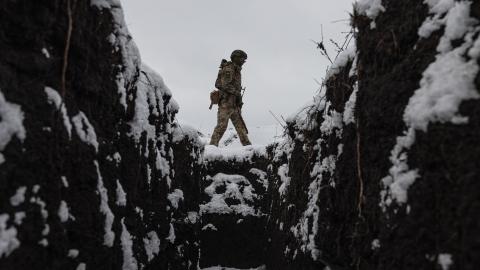
Yet despite persistent pressure at numerous flashpoints, Ukrainian defenses have held, denying the Russian military any significant confirmed gains thus far in 2026. And with heavy snow impeding maneuver warfare, both sides have resorted to the use of small infantry formations. The Russian infantry relies on motorbikes for rapid movement, while Ukrainian drone operators prey on these detachments with first-person-view drones.
Russia also continued to wage its aerial terror campaign, hitting Ukraine with hundreds of bombs, loitering munitions, and air-launched cruise missiles. The Russian army’s artillery and fire-support units also conducted extensive shelling.
Additionally, Russia’s Rubicon drone warfare corps intensified its combat activity, operating as a dedicated hunter-killer force across the battle space. Russian drones surveilled and struck Ukraine’s principal artillery systems and heavy armor, underscoring Moscow’s increasing strategic focus on drone-driven attrition. In return, Ukraine’s Shahed-hunting STING drone marked 24 kills in a single night, a new record for the defensive system.
2. Russia Equips Shahed Drones with MANPADS Missiles
An open-source intelligence assessment of a downed Russian Shahed drone revealed that the munition had been augmented with numerous assets, including a camera, a modem, and, for the first time, a man-portable air defense system (MANPADS) missile.
While this is the first documented instance of Russia pairing its Shahed drones with MANPADS, it is not the first time Moscow has attempted to equip its Shaheds with aerial missiles. In late 2025 a Ukrainian STING drone intercepted a Russian Shahed outfitted with an R-60 air-to-air missile.
Taken together, these new configurations suggest that Russia hopes to develop Shahed drones capable of downing manned aircraft. While these efforts are currently focused on conventional combat against rotary-wing platforms, one cannot rule out the possibility that Russia could target a European commercial airliner in a grey-zone false flag operation.
3. Ukraine Reshuffles Its Wartime Leadership
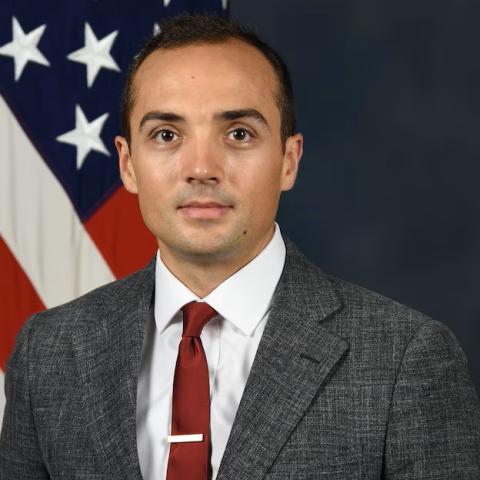
President Volodymyr Zelenskyy ordered a profound reshuffle of Ukraine’s defense and security leadership. Zelenskyy named the country’s former defense intelligence chief, General Kyrylo Budanov, as his new chief of staff, and nominated Mykhailo Fedorov, the minister of digital transformation and deputy prime minister, as defense minister. The move is likely an attempt to reassure Ukraine’s allies and restore public trust in the wake of corruption allegations leveled at Zelenskyy’s administration.
Budanov, 39, is a veteran soldier and spy chief rather than a career politician. He had already been wounded multiple times in combat with Russian forces before Moscow launched its full-scale invasion, and he even infiltrated enemy lines in Russian-occupied Crimea in 2016. A highly decorated general, he has been awarded the Golden Star Order as a Hero of Ukraine.
As the head of Ukraine’s Main Directorate of Intelligence (GUR), Budanov reshaped the agency into an operationally aggressive branch, expanding its remit to include robotic naval warfare, air-mobile raids behind enemy lines, cyberattacks, and targeted killings of senior Russian military figures. The architect of Ukraine’s deep-strike campaigns against Russia, Budanov told ABC News that his forces would hit “deeper and deeper” inside Russia as the war progressed. In another interview during a visit to Washington, DC, Budanov spoke to the cognitive warfare dimensions of Ukraine’s deep-strike campaign. He noted that high-profile strikes against Moscow skyscrapers are designed to shake the Kremlin’s image of strength to its very foundations by showing the Russian people the truth they cannot find on state television.
Fedorov is one of the few officials who has remained by Zelenskyy’s side since the president’s political ascent in 2019. Fedorov is the sole cabinet member to have endured successive government reshuffles, reflecting both his trustworthiness and wartime skill set. Deeply engaged in the development of Ukraine’s Drone Line initiative (a project designed to equip all Ukrainian combat formations with drones), Fedorov has driven the digitalization of the country’s public administration by (a) applying data-centered methods to disrupt Russian decision-making and (b) making operational shifts based on feedback from frontline formations. His focus on technological innovation is particularly timely, as Ukraine enters 2026 facing acute manpower constraints. In an interview last year, Fedorov suggested that Ukraine’s wartime combat data and telemetry records are a valuable asset and could be a bargaining chip to offer to Kyiv’s allies.
Together, these leadership changes offer Zelenskyy an opportunity to turn the page on recent corruption scandals and signal to Ukraine’s partners that Kyiv is serious about governance. Militarily, the duo may bring a more drone-driven approach to the war, with a critical emphasis on deep strikes inside Russia. Perhaps most important, Budanov and Fedorov represent the postwar future—and the post-Soviet identity—of Ukrainian military doctrine and statecraft.
4. What to Monitor in the Coming Weeks
- Deeper shifts in the Ukrainian ranks. Fedorov, as defense minister, may initiate a reshuffle in the general ranks of the Armed Forces of Ukraine, with younger officers trained by North Atlantic Treaty Organization militaries likely to replace the Soviet-vintage generation.
- How Russia uses its new drone configurations. The Russian military’s latest Shahed variants could target manned aircraft in the near future. Washington and its NATO allies should monitor Eastern European airspace closely to guard against Russian probing attempts and possible false-flag operations.
- The weather. Heavy winter conditions will likely delay any large-scale offensive maneuvers for several weeks, promising both static battlefield geometry and highly attritional fighting.