Caption
A weapon is mounted on the Lehit ground robotic system, developed by specialists of the International Legion under the Defence Intelligence of Ukraine, during a demonstration in Ukraine on December 9, 2025. (Getty Images)





The first Trump administration warned Americans that depending on foreign manufacturing had eroded the United States’ industrial base over the previous 30 years. Both parties now recognize the danger of US supply chains relying on China—a dependence that includes common consumer goods and extends to critical inputs for US military systems. Fortunately, the second Trump administration is continuing to rebuild the US defense industrial base and restore American manufacturing. The Department of War is a primary driver of this effort.
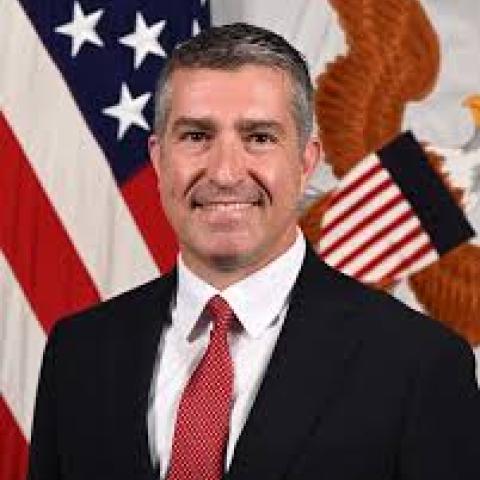
Join Hudson for a conversation with Assistant Secretary of War for Industrial Base Policy Michael Cadenazzi, who leads the DoW’s efforts to develop and maintain the US defense industrial base to secure critical national security supply chains. Assistant Secretary Cadenazzi will give remarks on the department’s new initiatives and priorities, then sit down for a fireside chat with Senior Fellow Nadia Schadlow. The event will conclude with audience Q&A.
Listen on Spotify and Apple Podcasts.
Nadia Schadlow:
Hi everyone. Welcome to Hudson, and thanks so much for taking the time to come. I’m really excited about the discussion this afternoon. It’s my pleasure to introduce Assistant Secretary of War for Industrial Based Policy, Mike Cadenazzi. In this position, he serves as the Principal Advisor to the Undersecretary of War for Acquisition and Sustainment. He focuses on the department’s efforts to develop and maintain the US industrial base to ensure that our country has what it needs to deter war and if that fails, to win. I’m not going to list all of Mike’s qualifications, which are many and which are impressive, but I will highlight a few. Having served in the US Navy earlier in his career, he’s coming into this job with a deep understanding of the importance of delivering to our war fighters what they need, when they need it, over sustained periods of time.
Given the intersection of private sector and defense requirements, Mike’s extensive business background will also directly inform how he thinks about this sector and about the challenges in front of him. And I have no doubt that he can improve and simplify the department’s capacities in this area, investment authorities, and its overall approach to the private sector to build a more resilient industrial base. His earlier education as an engineer means he will also understand implementation and how to get the outcomes that we need as a country. Mike recently observed that Washington’s usual approach of more money going down the same pipes to the same programs, same companies, and same people will not result in different outcomes. He’s going to change that and avoid the crisis of repetition that’s affected this sector for decades.
And on a personal level, I’d like to note that Mike has a quality that’s especially valuable in this job. He actually listens. He’s the rare policymaker who wants to learn and he genuinely values other people’s ideas. In Washington, that sort of makes him a unicorn. As Mike said in his confirmation hearing, he wanted this role because he wants America to win and he wants to contribute to America’s future victories. The country is lucky to have Assistant Secretary Mike Cadenazzi here in this role, and Hudson is privileged to have him here this afternoon. Thank you.
Michael Cadenazzi:
Thanks, Nadia. Thanks everyone. Thrilled to be here today. Thank you so much. Good afternoon. Nadia, I appreciate the introduction and you quoted some of my best lines. What am I going to do with it? So I’m honored to be here at this critical moment for the nation with regards to our industrial capacity and what we’re doing. Secretary Hegseth has called for a revival of our industrial base, an all American effort to go ahead and drive a fundamental transformation in how we view defense production. He’s on his Arsenal of Freedom Tour. He was just in Newport Rhode Island or sorry, Quonset Point just across from my hometown in Newport, Rhode Island. Yesterday, he talked about the linkage from factory to foxhole and the importance of both at the industrial level down to the worker at the shop floor and what we’re trying to build going forward. I’m responsible for guiding the department’s efforts to revitalize and sustain the DIB to meet our nation’s needs now and for the future, to meet our partner’s needs as our allies and partners ask for more capacity to meet their own security challenges.
And the urgency of the moment is real. Nadia has written and heard about all the problems of the past 30 years erosion of the DIB. We’ve spent billions on the DIB over just the past decade. And if you look at GAO reports, and I encourage you to use this amazing tool to look at all the amazing reporting about defense weapons and programs and readiness, almost all of it is worse over the past 10 years. Some places are better in increments, but net net, we’re late, we’re more expensive. We’ve had a struggle to go ahead and fix things. And the problems that existed 10, 15 years ago are sometimes worse. That’s a terrible investment.
Here’s some examples. This is from GAO. No army vehicles met ready minus targets in 2024. No accountability for 90 percent of army ammunition produced at plants. F-35 deliveries were late on an average of 238 days, and that’s our largest single sustained aircraft production platform. These are not good things. And that frames the struggle macroeconomically versus China, which is China dominates global manufacturing nearly 30 percent of global output as opposed to something like 17 percent of US. There’s probably 200 times greater shipbuilding capacity in China relative to the US. And this allows them to go ahead and scale production and delivery, not just in the naval domain, but across multiple domains as well. There are more than 800,000 defense manufacturing jobs that are open today, and that’s in advance of some projected four million over the next decade. This is really, really bad. We need some radically different outcomes, and that means we need some radically different approaches.
I do have the best job at the Pentagon. I say that to my wife all the time. Leading industrial-based policy at the best time when industrial bases at the center of the discussion from the White House on down. And I’ve been gratified by the amount of support for industrial base. I’ve discussed this with many people before, that I’ve found the bipartisan support for industrial-based initiatives to be incredibly gratifying. That a time when there’s a lot of contention here in the beltway, everyone is really interested in fixing the numerous problems that exist, and they believe and are contributing and working together to solve those problems in the most effective way.
So industrial-based policy has three sort of main legs to it. One is our office of small business programs, which strengthens the role of small and non-traditional programs, helps them connect with DIB players, help them with customers, and to meet the requirements for entering and operating and succeeding in the DIB. We also manage 90 plus APEX Accelerators, which provides suites of services to small businesses, usually at no cost, to help them understand how to connect and offer their services to the government.
And last year, those 96 accelerators operating in 300 locations connected with over 26,000 clients and secured almost $65 billion of contracts. That’s incredible value for the investment and an example of the kind of things you can do when you have a distributed network capability and a willingness to work without everyone owning every piece of the pie. We also launched Links IT Solutions, which is part of our approach for providing a comprehensive suite of IT tools to help with cybersecurity, growth, and other requirements for small businesses. So collectively, we’re providing a one-stop shop for small businesses and non-traditionals to come and work with the Department of Defense. So if you’re on board, you’re listening and you haven’t done this before, please contact your local APEX Accelerator, come to the Link Solution at our website and get registered. We’d love to have you join.
The Industrial Based Resilience Team houses our Defense Production Act Title III and industrial based analysis and sustainment programs that have invested nearly two billion last year to bolster a supply chain resiliency. These investments were in critical minerals. They were in solid rocket motor production, a whole host of things, including $100 million into rocket motor nozzles just in September alone.
We do also have diverse investments in the industrial based team. So we have more than 50 workforce development programs we’ve developed over time, 40 that are currently in operation all across the country. And we’re about to launch a nationwide workforce initiative to link all those programs together and provide the fundamentals for developing a new national campaign to connect people, not just with jobs, with careers in the skilled trades, which is at the core of the enterprise that we believe we need to drive for the future. We also need to go ahead and support our battery initiatives. We have multiple investments we make across the market to stabilize and standardize the number of batteries, of which there are thousands that are procured by the Defense Department every year of different types and configurations.
And we’re trying to drive those into a set of standard configurations that make it easier for us to aggregate demand and buy the right mix for the department for the future. Electronics for special applications, including radiation hardened tools. These are all examples of how and where the Industrial Base Resilience Team is providing value today. And then the Global Investments and Economic Security Team, which is responsible for economic security. We believe that a strong economy is the bedrock of a strong defense, and therefore we need to go ahead and be aware of adversarial capital and malign influence that is happening through defense M&A transactions. So, we run the committee on foreign investment in the US analysis, which supports our inter-agency partners to assess individual transactions that may represent a threat to the country. We also published the 1260H list of Chinese military affiliated companies operating in the US.
And this year, more importantly even, we’re going to be driving analysis through our Section 805 authorities, which allow us to go ahead and analyze those companies that are doing business with 1260H companies, which is something we encourage all defense firms to assess internally and get ahead of. IBP is playing a big role in the administration’s plans, and there’s a bias for action at every level. We are getting calls from the White House about some of our capabilities, which is a great thing to show the interest from the top down. That kind of leadership and commitment to changes in the DIB cannot be replaced. And I think they’re responsible for many of the great activities you’re seeing in the press today and all the big changes that are underway across the market.
Last fall, Secretary Hegseth announced the first ever acquisition transformation strategy, a significant leap forward of which one of the major lines of effort was to rebuild the DIB. This is a transformational approach. The reason why I’m super excited about it is that it’s not that it’s all new things. I think almost anybody that’s been around the Defense Department for the past couple of decades would see many topics that they’re familiar with. However, we’re doing it. We’re doing it with leadership support. This is not in isolation. This is not one office. It’s not just a piece of paper. There’s a fundamental commitment, again, from Secretary Hegseth through Deputy Feinberg on down for us to operate in contents with the tenants of that acquisition transformation strategy. If you haven’t read it, I encourage you to read it and think about what the business implications are to you, what they mean to your organization going forward.
So, part of what we’re trying to do is expand the number of companies in the DIB. So that’s a great thing. We’re working very hard to accelerate and make it easier for companies to work with us. We’re doing supply chain illumination to try and help uncover opportunities for us to invest and address problems in the DIB. As we’ve talked about for many decades, there’s fragility at every level. My friends here from Indian Head can talk about the fragility and the energetics industrial base that’s existed for a long time. And I think is an example of the kind of capability that despite a lot of attention and money thrown at the problem, it remains a fundamental gap in sort of the lower tier of the defense industrial base and the one that we need to address. So, we’re trying to find those tier two, three, and four companies that need investment. We’re partnered with our friends in R&E in the Office of Strategic Capital to provide loans and capabilities and funding to those firms and help them drive the kind of capacity building that they need to meet our war fighter demands for the future.
We want to help everyone understand defense acquisitions, the programs, sort of the changes we’re making. So, we’re trying to be very, very transparent about these things. So we’re trying to have folks come into us. I have probably three or four meetings a day with companies, some of them I never heard of, and it’s a great thing to go ahead and have them come in and present these incredible capabilities that they’re working on. This is a real change. I mean, 10, 15 years ago, we didn’t have Silicon Valley crowd eager to go in and bang the door and start working with the Department of War. Now we do. And they’ve come with companies, with capital, with products, with incredible talent, and they want in, and this is an amazing opportunity for us to take advantage of those capabilities for the future. We’ve established portfolio acquisition executives, which is a new approach to centralizing the challenging trade-offs of speed, volume, cost, not just within one weapon’s portfolio or one weapon’s program, but a portfolio weapons to make it even more compelling in terms of how we use our resources for the future.
And we look forward to partnering with our friends and colleagues on the Hill to make sure that we empower those authorities for the future to take full advantage of them. And we’re encouraging more companies to join the DIB. I mean, that’s one of the things I’m most excited about wherever possible is encouraging people to send me an email, give me a card, hop on a website, buzz me on LinkedIn, whatever that might be to make sure we understand what you have to offer and how we can take advantage of it for the future.
The whole purpose of the acquisition transformation strategy is to, we’re accepting acquisition risk to lessen operational risk, right? That’s a real change, right? We’ve often. . . It’s not a rhetorical change. We’ve talked about it. We’ve actually embedded that change at the heart of this system, which is a willingness to make real trade-offs in terms of acquisition, to do hard things, and to actually make that the vehicle by which we approve the operational outcomes, that is the readiness, the delivery, the volume of capabilities we have for the war fighter so they can go ahead and do their job every single day.
The 26 NDA supports the acquisition transformation strategy and our partners in the Hill came through very strong for us with these multi-year procurements. These are different style multi-year procurements, five and seven year contracts that allow us the authority to do much longer term contracting with industry to go ahead and help us stabilize the supply chain for them to invest. And that’s the key element here, is that we want to go ahead and get more private capital. We want companies to have skin in the game, but we want to make sure that they have the certainty that we’re actually going to go ahead and buy that product.
And that has been one of the fundamental challenges of the past, is that FitUp goes up one year, FitUp goes down the next year, and all of a sudden you wind up with a company and an investor that says, “I don’t know what to do with this situation. Why would I bet on this?” It’s perfectly fair to go ahead and understand the reasons why those industries didn’t get the investment they need. We need to rectify that on our side, and we’re working very, very hard again with our colleagues in the Hill and across the services to stabilize that demand signal and make sure that it’s attractive for the investors and industry for the future.
The Congress has stepped up with the one Big Beautiful Bill Act providing $150 billion for all sorts of defensive activities. There’s more than eight billion alone in the industrial based fund, which we manage through the industrial based analysis and sustainment team, and as well as 25 million to expand IBP staff to go ahead and actually drive more analysis and do more of the kind of things we want to do. It’s really rewarding to take this program that I’ve inherited from some really talented people in the past and actually see the excitement and energy around it, the enthusiasm from industry for the authorities and the application of it, and then to see the Hill rewarding us with the resources to actually take it to the next level and scale the impact. I mean, that is the best that you could ever inherit, is something that’s working and working well, and you just need to go ahead and keep driving it into the future. And I’m really honored to be a part of that evolution.
There was $5 billion increased munitions around deals like Tomahawk, SM6, LRASM PAC-3, $650 million for SRM production, solid rocket motors, $500 million for SRM manufacturers to modernize and expand. These are meaningful investments that start to bend the needle on the kind of change that’s necessary. One of the things I’ve seen in the past from a lot of these programs and our investments is that we under-resource them. What we did is we get 10, 15 million dollars, we spend that 10 or 15 million dollars and we declare victory here in DC and we move on to the next thing. Meanwhile, the problem persists, right? Most of these problems are not easy fixes. They require long, they’re suffering from years of neglect oftentimes. The scale of the market and the changes necessary to actually bend the needle towards the future requires much more money.
And for me, it’s exciting to be part of teams and initiatives to actually go ahead and fund them at the scale necessary to actually bend the needle and sort of make a difference there for the future. I get to go and travel a lot too, which is really great. Oh, actually, let me go back to that investments. So part of what we’re trying to do for the future is these longer term high volume investments. So, to us, this is the key, is the demand signal, and that’s the core of the acquisition transformation strategy. The core of how we plan to use our funding for the future is to create a much more stable demand signal for the future that basically sets that we’re working top down on the demand signal, that is we want to buy more weapons over a longer period of time to stabilize supply chains.
We’re working bottom up. You’ve seen all our investments in minerals and materials, which allows you to go ahead and bet on the activity that all this material is going to be available to you as you think about scaling. And then we’re working across the middle of the supply chain to find those gaps and issues where individual vendors need money for CapEx or facilities or capabilities. This is an incredible opportunity to work at all three sides, and that’s really at the core of what the ATS is. It’s a very tactical initiative. This is not some airy fairy thing floating around the Pentagon. Yes, you go ahead and sign your strategy documents, but the real value of this is getting out of the field, working with the companies and manifesting it as contracts and ultimately as money on contract for the units that we need to get to the war fighter as soon as possible. We travel a lot, which is great. I got to see incredible factories and initiative . . . I was recently in California. I got to see a whole bunch of new entrants from additive and advanced manufacturing to AI, UASs and how they’re manifesting and thinking about the delivery of capabilities for the future. It’s really quite impressive.
I was in Hawaii where we have a Honolulu Community College workforce initiative, which is quite interesting. Basically, filling a gap that has not been around since the 1970s for skilled trades training in Hawaii. We’re partnered with INDOPAYCOM and PACFLEET on the creation of the Forge, which is basically a facility to go ahead and provide expeditionary manufacturing capabilities to the services in Hawaii so that junior soldiers, sailors, airmen, Marines, and guardians can come and build parts. They can go ahead and actually make things there. They can make drones and they can get familiar with the kinds of expeditionary capabilities they’ll need to use to fix things in the field when they deploy whatever the contingency in the theater. That’s really exciting that came from IBAS and our team, and we’ll be going back over to Hawaii soon to make sure we’re delivering for Admiral Paparo and his leadership.
We have a long way to go, obviously. This is the beginning. We’re one year in, but the goals are aggressive. We want to go ahead and make sure that we’re having impact at each stage. We want to make sure that industry understands, that our stakeholders in the Hill understand, and our constituents in the local areas that we’re servicing around the DIB and in DC for that matter, actually understand the scale and the aggressiveness that we’re counting on for the future. And so to me, this is a matter of immense urgency. Right? And so we want to engage you in this effort. It’s not going to be us that does it. It’s going to be a collective thing.
We want you to share your expertise. Again, I urge you to come forward with ideas. Let me know what you’re thinking about, what we’re missing, how else we can have impact. Luckily, I’ve had some incredible people come in with ideas that we’re already acting on with funding, and sometimes it’s just connecting you with the right people to make sure that the right folks understand how to take advantage of those capabilities. Bring us your most disruptive and most unconstrained ideas. We need new thinking. Right? The old stuff didn’t work. Nadia said before, more money down the same pipes to the same people and programs forever is not the solution. It has not been the solution. It will not be the solution.
This is going to go ahead and cause change. And I think that’s one of the risks. But in a time of great demand, you have to accept risk. That’s what this team is doing. The leadership of the department, the leadership at the White House has charged us and me personally with the need to go ahead and make sure that we’re delivering on the promise of that. And I take it very seriously. Engage with us. Again, follow me LinkedIn, buzz me, grab my card afterwards, call Nadia. Let’s go ahead and have a conversation about what you can do and how you can help. If you’re looking for a job, come to IBP, we are hiring.
And in closing, I’d say war fighters are counting us to get this right. They’ve heard a lot of rhetoric. They’re the ones that get yelled at in the line when something isn’t run. It’s the 19-year-old air crew mechanic that’s in trouble because they don’t have enough parts. It’s not the guys in the beltway. It’s not the folks at a corporate headquarters. We need to fix that. And I’m committed to working hard on a model that allows us to incentivize industry to deliver those capabilities in the right way for those war fighters at a great time of need. And I’m honored to be here to talk to you today. Look forward to your questions. Thank you.
Do you care where I sit, Nadia?
Nadia Schadlow:
Thanks so much. You sit here. Yeah.
Michael Cadenazzi:
Okay.
Nadia Schadlow:
So that’s what I was told to do. Well, you covered a lot, Mike, a lot, making it hard to figure out which areas—
Michael Cadenazzi:
I’m ready. Hit me.
Nadia Schadlow:
. . . we should go into. So, part of me was thinking, but I’ll ask this now, but give you time to think about it toward the end. A year from now, when you come back to Hudson to sort of report on how everything’s been going, what do you hope you’ll be able to say differently? What are the markers and outcomes that you really hope over the next year to achieve? But I’ll let you answer that at the end because that’s one of those questions I should have given you in advance, but didn’t.
So, let’s see. Let’s take a couple of things. I mean, you covered sort of your four key priority areas, supply chain, transparency, the analysis of the supply chain, defending it, CFIUS, making sure that it’s not corrupted and we reduce our vulnerabilities, featuring small businesses. And then for, I mean, what I’ve read, allies and partners, you didn’t talk as much about some of those re-industrialization efforts, the Indo-Pacific partnership in that area. How do we manage and think about the allies and partners component of this while we face a lot of problems ourselves? How do we think about that?
Michael Cadenazzi:
Sure. I think it’s a perfectly fair point. So, we consume a lot of material from our allies and partners in the defense department. Sometimes we’re not even aware at the highest levels, but I think the challenge is we are not likely to consume lots of all up round end item final products from our allies and partners. So we’re not going to buy a lot of Grippen Fighters. We’re not going to buy a lot of MBDA end item weapons. But we are going to partner with those firms. And just as we’ve done with something like the T7 where we use the Griffin as the baseline for the T7 aircraft, and then an American firm builds the final aircraft using the capabilities. We’re doing that every level of supply chain.
And I think we’re really excited about do our efforts with our partners to accelerate and increase the amount of business to business impact at the assembly, sub-assembly level, the kind of components, that our allies and partners can provide. And that’s a place that we have a lot of opportunity to grow because we do have supply chain challenges here. There are capabilities there that we can buy from and bring in that we should do that. That’ll allow us to mitigate our challenges while we ramp up here. And our allies and partners are trying to ramp up in many places as well. We’ve heard the discussion about increases in percentage of GDP, focuses on investment, the recent Japanese election and commitment to changes there.
So there’s a lot of high points for places where we’ll find new synergies. One of the challenges and opportunities as well as in commercial supply chains where we have capabilities, say for something like chips or PCBs, printed circuit boards, where there are tools and capabilities that we’re almost wholly dependent upon from our overseas partners, and we need to balance that out by having some additional capacity here. And so, you’re going to see investments where we’re trying to go ahead and provide some reasonable, like a second sourcing kind of capability that if needed, we could go ahead and ramp up in the event of a crisis. And so we’ll continue to invest and try and develop those tools for the future.
Nadia Schadlow:
Thanks. So that’s part of the model for re-industrialization. Another aspect of this you mentioned when you just mentioned the Forge Act and giving soldiers the capability to adapt in the field and sort of Greenfield versus Brownfield, right? What do we refurbish? What do we fix up in the industrial base versus what do we start fresh with? How do we use advanced manufacturing, additive manufacturing, a lot of the lessons from Ukraine in terms of adaptability. So how are you thinking? What’s the model? Do we have a model out there?
Michael Cadenazzi:
So, I think we want to leave that to industry to go ahead and decide when and where they need new capacity. And so, there’s certainly some older factories. I mean, you can go to the army ammunition plants themselves, and most of those facilities date from sometime in the 1800s, some of them before the Civil War, I’m pretty sure. And so that’s probably a place where you’d like, “Well, we just need new capabilities overall.” But at the company level, I think there’s a mix of both. There’s an entrenched capability level where there’s CapEx, there’s machining tools, there’s the workforce that understands the art and the science of how to produce. And it’s a delicate balance to go ahead and transition to new manufacturing capabilities and tools.
So, we want to leave that to them. We want to incentivize them to pick the best path that meets our requirements by, again, driving that higher level longer term demand signal, that that hopefully is the mechanism by which they can make the decision, which is, do I continue to limp along or invest in or sort of like slowly increase the capability of this dated manufacturing facility, which may be good enough.
Nadia Schadlow:
Right.
Michael Cadenazzi:
Or is it the time that I need to pivot into something that’s much more advanced and new. And then concurrently, it’s the idea of incentivizing and encouraging the structures that allow for the use of more additive and advanced manufacturing. And that’s been a problem historically because the services have been struggling to invest the capacity to qualify those tools. And so, some of it’s not malign intent, it’s just there aren’t enough engineers who understand it. And ultimately that individual has to sign in the bottom line and say, “I assume the risk.” There’s a lot of reasons why we do things the way we do. Generally involve accidents. Oftentimes they involve the death of people involved.
You see that particularly in places like the aircraft maintenance side where we take a high level of concern and there’s a low risk tolerance because when a plane crashes, it’s very expensive and people usually die. And so, there’s probably some bound there where we can go ahead and start to use additive manufacturing advanced tools to meet some of our needs for the future and a way that balances that risk profile, but also sort of meets the needs for the future. The more we do that, we’re confident that there’ll be more places we can find value and drive speed and scale.
And sometimes you’re just trying to solve a problem for 24 hours instead of a part that’s going to last for 40 years. And I think that’s part of the tension here is we often plan an index on the part that’s good enough for 30 or 40 years or shelf stable life for 20 years. Maybe we don’t need that. Maybe there’s parts and places we can go and save money or accelerate where that capability can be good enough for the next year or two years. And there’s tremendous savings and speed opportunities in doing that well as well.
Nadia Schadlow:
And I think that’s probably part of the rationale for the new acquisition executives thinking about these operational problem sets and how they need to fill them with flexibility.
Michael Cadenazzi:
Yes.
Nadia Schadlow:
And can you talk a little bit more about the importance of that change? Because I think it’s a really important one.
Michael Cadenazzi:
Sure. We’re great to see the service that the Army was out in front of us, which is exciting to see. They’re completely enthusiastic about this. It’s the idea of changing the operating model to make more discrete trades. In the past, we’ve been bound by the structures of the programs and I can trade money within a program, which there’s some trades you can make on schedule and costs. But when you start to look across a portfolio, multiple programs, it starts to be more impactful with regards to, I’m really making discreet choices about taking risk in this program to slow it down because I’ve got to go ahead and accelerate a program over here.
That is going to be enabled by the super talented individuals that we nominate to be those program acquisition executives, their decision making, their authority, and I think it’s going to have to be backed up by a lot of work from the Hill and we’re having those discussions now about how we can start to make those trades in a more effective way. I think luckily everyone wants the same outcome. And I think that’s when, again, the most gratifying part of this is, everyone’s been frustrated by the lack of progress in some of these capabilities, how slow delivery is, how expensive it is, behind scale, the challenges of workforce.
We now have the ability to go ahead and do it in a different way. And the challenge is convincing people about the business case, which is it may look a lot different. And I understand in DC that it is a challenge because it sort of threatens the standard revenue model for folks. It threatens jobs and authorities, but we’ve got to do some of that. What we need to do is convince people that it’s worth it. And I think that’s on the challenge for the department at this time is for us to continue to make the case that it’s worth it, right?
That the outcome over the long haul is going to be much better for everyone. It’s going to be better business models. It’s going to be better for the war fighter. They’re going to have the gear they need and it’s going to be better for the nation, which our national security needs will be met.
Nadia Schadlow:
So, I’d like to cover two more areas. One, sort of the pots of money, right? We use these acronyms, DPA, Title III, IBAS, OSC, Office of Strategic Capital. Can you tell us a little bit about what’s the difference and then how they’re used and are they used as effectively as they might be in terms of complimenting each other? Your job is really hard and the previous person who had it’s really hard, everyone works really hard, but can we do better in that area of complementarity?
Michael Cadenazzi:
I think so. You can always be better. I think I’ll refer to my comments from before that. Part of the challenge in the past is that we haven’t had enough resources to go ahead and actually push to make things that were red into green. That is, I would go ahead and put $5 million down when I really needed $55. And that was hard choices because we were trying to go ahead and peanut butter spread limited resources over a lot of problems. First of all, we have a lot more resources thanks to our sponsors in the Congress, which has been incredible to see how excited they are by the application of these funds for the past.
But also we’re making real choices to go ahead and choose certain areas to focus in. So we’re trying to go ahead as a team peanut butter spread less and focus our resources on more bigger wins or fewer bigger wins. And so you’re seeing that particularly in the minerals investments where I’ll highlight the combination of direct investment with the industrial based analysis and sustainment fund and the industrial based fund, coupled with office of strategic capital, debt, coupled with private capital to go ahead and shape an investment into a minerals problem. That’s phenomenal.
It takes an incredible amount of coordination, not just to strike the deals, but to find the right company, make sure that they’re on board for delivering the capability you want, orchestrating all of the Pentagon bureaucracy to go ahead and do it, make sure everyone’s aligned there, and then seeing it through all the way to execution. And it’s been incredible from that standpoint to be part of a team that’s giving us the authority and backing us up to actually execute these kind of transactions. Do I want it better? Yes. I think the Defense Production Act is a historical fund that’s tied to authorities granted in the 1950s. It does many similar things to the industrial based analysis and sustainment teams work. It’s money. It’s money that’s to be used for critical capabilities.
There are some additional authorities under DPA which allow you to go ahead and take action in the event of crisis and enable you to sort of like skip the line for supply chain ordering, those kind of things, which are pretty powerful. There’s also some unique capabilities under DPA for emergencies around voluntary agreements and the way that industry can come together to help solve national problems and the National Defense Executive Reserve, which is basically a manpower reserve in the time of crisis for executive experts to come in and help us solve problems.
So those are really fantastic things. Office of Strategic Capital is kind of like a perfect compliment to that because it is a gigantic debt fund that basically allows us to go ahead and make loans to industry that allows them to go ahead and then sue their initiatives at really great rates, so generally below what they would sort of borrow money at from the market. And we can go ahead and drive those funds in a way that actually helps us achieve our outcomes. A lot of people have said like, “Why is the department investing in these minerals things?” And it’s not because we want to, I think. Frankly, we’ve been left with no choice.
The market as it is today would take our 95 percent dependents on China for rare earths and tomorrow it would be 96. And the day after that, it’d be 97. We have to go ahead and engage in pushing that curve back the other way. The only way you can do that is with effort, leadership, and with dollars. And so, we’re committed to making sure that the war fighters needs are met, and this is one of the things we need to do to deliver on that.
Nadia Schadlow:
What about the role of incentives? So, their purchase guarantees, their loans, loan guarantees. Is there a bigger role for incentives in this mix? And I guess that links to another question I had about what are you hearing from businesses that come in and meet with you? What do they most want? Do they-
Michael Cadenazzi:
They just love it, Nadia. Of course they will.
Nadia Schadlow:
I mean, they want money, but what form. Do they want money? Do they just want you to purchase what they’re making? Do they just want a better environment with tax incentives? What are you hearing from them?
Michael Cadenazzi:
Sure. I’ve been, again, very pleased that most of the discussion we’ve had around our outcomes has been super positive. That is, they’re very interested in us developing, refining, and deploying this new model to doing demand-driven changes to the way that they operate. That is, give me the contract. And again, you could look at almost any 10K for the past 20 years and you could see almost every CEO says, “If the DOD would give us the demand signal and have it be stable, I would ramp up and invest.” Okay. So that’s pretty clear. So I think we’ve met that requirement. And we’ve met that because it’s the only way to solve the problem is we understand it. We’ve tried to go ahead and do it through other mechanisms. They have not worked. This is actually going to go ahead and drive an incredible amount of capacity improvement in industry because we’re incentivizing them to go ahead invest their own money to meet these demand signal needs.
It’s great. The volume means that they get to go ahead and plan for longer periods of time. They get to stabilize their supply chains. They get to buy and lock in materials now at lower prices than in say two, three, or four, or five years, and they get to go and improve operationally. And that’s one of the things that’s been a challenge in defense for a long time, is that there’s very little incentive to go ahead and be better at the shop floor, to produce faster, to make those investments. Because we would go ahead and get some improvement, and then we would negotiate that value out of the company’s performance. So the margins would go up from 12 percent to 13 percent. We would then renegotiate the lot back down to 11 percent or 12 percent, and all the gains are gone. And they’re just like, “Why would I bother to under 12 percent. And all the gains are gone and they’re just like, why would I bother to do this? And they do it on their own periodically here and there. But systemically, for a program over long periods of time, they’ll be able to keep a huge portion of that upside in a way we think is very fair. And we’re really excited about what that means for private capital coming to those businesses and helping them for the future. That is as this model comes forward and we start to deliver, we should see more private capital flowing into defense firms as they start to demonstrate their ability to execute this model and see the financial outcomes, which should be good.
Nadia Schadlow:
Right. And government is willing . . . I think the department now is really willing to take more investment risk as well. I mean, you spoke about acquisition risk and operational risk. Acquisition risk increasing, which is a good thing, to allow reduced operational risk. But that element of investment risk as well. The government is sharing in some of this risk, mitigating it for the private sector.
Michael Cadenazzi:
Absolutely. I refer you to the discussion that Lockheed Martin CEO, Jim Taiclet, and Honorable Mike Duffy had following the announcement on the PAC-3 deal, where they talked about the fact that we’ve provided guarantees to the firm, that we’ll go ahead and cover their investment. The goal here is for us to get the weapons we need, not to make it difficult for the companies. I think that’s an incredible change, is that in that sense, that deal is structured to go ahead and incentivize them to deliver the weapons we want on the timeline we want, and volumes that would’ve been unheard of in the past. And to do it on an aggressive timeline. And we’d love for them to do it sooner, but we are asking them to go ahead and basically quadruple production in four to five years. It’s not a trivial ask.
We’re going to ask more of industry going forward, because we think we need it to meet the requirements for the war fighter. But again, we’re excited that these numerous deals we’ve seen with RTX, with Lockheed Martin, with L3 Harris on solid rocket motors are reflective of the type of change for the future necessary to meet our requirements.
Nadia Schadlow:
I’ll ask one last question and then we’ll go to the audience, so please think of questions. I know there are a lot of people here representing different areas. Congress, what do you need from Congress? You mentioned this a bit in your remarks, but are they giving you, for the most part, most of what you need? What are your asks?
Michael Cadenazzi:
Sure. So, obviously, you always want more money. And I think in particular now, the department’s interested in making sure that we’re moving towards the president’s target of 1.5 trillion for next year. However, the combinations that the White House and senior leadership are talking about, well above my pay grade. And then the idea of funding these munitions programs in a different way, that is a commitment to allowing us to help industry ramp up that capacity. And again, we believe that our initiatives align directly with Congress’s intentions. That is, they have said many times, and they’ve asked us to go ahead and actually buy more munitions. And we have it. We used it as a bill payer, so we’ve flipped that model. We’ve said we want to build it, and we’ve come with the contract model to go ahead and actually meet their requirements of the future. And that’s incredibly exciting and gratifying.
I generally think it’s openness to the business model, the new ways of doing business from both sides will be super helpful. We have an incredible array of authorities and I give Congress an incredible amount of credit. When my confirmation process, I went through it. First of all, it was bipartisan and really interesting. But a huge number of senators said to me, “I don’t understand why things are so bad. How is it when we give you a trillion dollars and all these authorities, OTAs, adaptive acquisition, milestone authorities, software decision authorities, that the outcomes are so poor?” And you’re sort of forced with like, “It’s a fair question.” And I do think it’s about how we use the authorities. And I think one of the great things about this team at this time is a willingness to go ahead and use those authorities to the max.
And we are taking advantage of those authorities, we’re pushing, we’re communicating with them about what we need. If we had no more authorities, we could probably still do what we needed to do. It’s obviously going to be easier and better with more. If we get the funding to go ahead and meet those deliveries for the future. And again, that’s where we’re relentlessly focused on how do we go ahead and get the war fighter the requirements they need for the future. That is our sole effort every single day.
Nadia Schadlow:
Right. And that’s where risk comes in again. A willingness to take risk, use the authorities you have, push to the limit.
Michael Cadenazzi:
Absolutely. Yes.
Nadia Schadlow:
So, I think we’ll switch-
Michael Cadenazzi:
You want to come back to your first question?
Nadia Schadlow:
Yeah, I do. I didn’t want to put you on the spot, but yes, I do. I can already think of things.
Michael Cadenazzi:
No, that’s good. So, first of all, I’d love to see Congress embrace the approach to munitions procurement that we’ve laid out in a big way, to understand the value to the businesses and how it’s going to result in better outcomes at the production line. We’re really excited about making that business case to them going forward, so that’s going to be exciting. Two, I’d love for them to continue to fund my team and what we’re doing. That would be great. I’d love to demonstrate that what we’re doing with the resources they’ve given us are providing the impact that they’d expect, that we’re actually working to solve problems for the future. That’s incredibly exhilarating as well.
And then I’d love to see private sector industrial investment. Actually, it’s incredible that, again, the number of Silicon Valley firms, private equity firms, small firms, startups that are coming in or trying to do things around rocket motors, supersonics, missiles, you name it. It is phenomenal. And I would love to go ahead and get some of those over the line in the next year. And start to quantify the volume investment in this space, as we start to think about, while solidifying our core, industrial investors are primes that we’re very familiar with and we need those capabilities for the future. How we start to go ahead, and see the evolution of these new firms, and their new capabilities, and what that will mean for the future of war fighting.
Nadia Schadlow:
Great. So, when you come back next year, we’ll make sure all those points are in the speech.
Michael Cadenazzi:
Roger that.
Nadia Schadlow:
I promise I’ll get to questions. You mentioned one point about assessing what you’ve done. I think in some of my work, in Hudson’s work, it’s easy to go back and look at all the vulnerabilities assessments. I mean, there are a ton of vulnerability assessments. Department of Commerce has done them, DOD has done them. Make sure my advice would be, unsolicited, as you go forward, that you’re assessing and capturing all of your successes, so there’re actually assessments on what’s been accomplished over the past two years in a systematic way. If you go online and try to find these things, it’s actually remarkably hard to identify the actual successes. And I think that could be really helpful.
Michael Cadenazzi:
Give me 90 days, Nadia. I’ll start doing that.
Nadia Schadlow:
Perfect. Okay. We have someone walking around, I think with a microphone. So, this gentleman here on the left in the blue jacket. And I’ll take . . .
Audience Member Robie Samanta Roy:
Hi, Mike. Robie Samanta Roy with Cerberus. And a shout-out to your team, Jeff Frankston and Josh Pavlik. Doing a great job interacting with the industry.
Michael Cadenazzi:
It’s an honor to work with them.
Audience Member Robie Samanta Roy:
Question is that as you look at the illumination of the supply chain, do you have venues in the appropriate environments, whether it’s CUI or even classified, to share where some of these pinch points are with the broader industry? Thank you.
Michael Cadenazzi:
Absolutely. I think that’s one of the great things about the industrial-based resilience team is it’s made up of dozens of experts, incredibly smart PhDs, technical experts, analysts that are deeply focused in their areas. Our batteries team two weeks ago, speaking of a success, convened in all of government discussion, classified at ODNI, to talk about all of our batteries issues. And so, we’re able to bring in folks from industry, folks from all across the federal agencies, across the DOW, to discuss all the challenges we have in the space from a supply chain and technology perspective. And to actually go through, and work out solutions and figure out who’s going to work what part of it. We’ll take this, you take that, we’ve got money for this, we’ll borrow money for that. That’s an incredible thing. And so, I would encourage you, much of that we don’t want to share publicly.
We’d love you to go ahead and reach out to the industrial-based resilience team directly. If you’re in electronics, minerals, kinetics, whatever that might be, I’d recommend that you have a discussion with us about where you want to play and how we can help you.
Nadia Schadlow:
Thanks. The woman in the blue and then the gentleman in the gray.
Audience Member Briana Reilly:
Hi, thank you so much for doing this. Briana Reilly with Punchbowl News. I have a question about the implementation of President Trump’s recent executive order, seeking to incentivize defense contractors to make more internal investments, and focus on delivering capabilities on time and on budget. The Pentagon said that they’ve completed an initial review and are now embarking on an extended review period in which they’ll make non-compliance determinations. I’m curious if you could talk about the timetable the Pentagon is working on or more broadly, how you hope that this will reshape contractor behavior going forward. Thank you.
Michael Cadenazzi:
No. That’s a great question. First of all, I’m not going to comment on timelines. I can’t at this point. But I think the EO is pretty clear, which is it reflects a general frustration with delivery of defense weapons platforms, overall an extended period of time by a variety of vendors. And the goal is to go ahead and provide an approach which is focused on a level of accountability. The goal ultimately is to go ahead and drive performance of the weapons system. That is, we want the weapons we’ve paid for or plan to pay for on time so we can get them to the war fighter. It’s not an effort to go ahead and punish firms specifically. I mean, the issue is, and the goal is to go ahead and drive performance improvement, and to go ahead and drive more and additional investment into the supply chains, into the production floors.
And so, that is the effort that’s underway. We’re excited about the analysis that we’ve done and the opportunity to take that forward. And there’ll be more to come on that certainly in the next couple of weeks.
Nadia Schadlow:
This gentlemen here, and then I’ll go to the back.
Audience Member 3:
Thank you. It’s been very informative. Last night, I was with Kennedy. And he mentioned a statistic where eight out of 10 youth coming into a place to be able to qualify for military, don’t qualify currently because of health reasons. Who do we talk to and what path do we take to bring solutions to the table so the next generation is able to go to war, is able to protect, is able to serve? Because right now, we’re coming up against something that’s never been seen before in the history of our species.
Michael Cadenazzi:
That is not my area of expertise as an engineer, but I would say that the P&R, personnel readiness, is the team to go through and talk about for the future. So, under Secretary Tata, would be the terse and his team there. And the Defense Health Agency would probably be the two locations I’d go to, to discuss issues and opportunities for the department to work on recruiting, retention, and health of the force.
Nadia Schadlow:
The gentleman in the far back, standing.
Audience Member Heberto Limas:
Very much. I’m Heberto Limas with SkySeal Global. One key pillar of our innovation in the United States is on higher education, specifically our public universities, our federal labs, and who focus on the research and development. How does the Pentagon intend to leverage or partner with these higher education institutions, with the defense industrial base, given the fact that we’ve done this before, at least in the national defense or at least in aerospace?
Michael Cadenazzi:
Sure. So, the research and engineering team under Honorable Emil Michael has a comprehensive effort to go ahead and make sure that we’re investing in the right capabilities for the future. We spend a lot of time looking at war fighter requirements, the evolution of technology, and where investments and capabilities are within our lab system, to make sure that we’re betting on the next generation of talent. Some of these things may need some change. I mean, I’ll speak to the rare earths thing, which I talked to before. We basically seeded our rarest production capability to China in the 1990s, because it was dirty, and then we stopped investing in that capability.
So, we’ve missed two generations of scientists and capabilities to reduce rare earths and would hopefully be a cleaner, better way. We need to restart that effort. And so, we’re going to make that case to Mr. Michael and to the team. And they’re already well underway in finding the capabilities for the future that we’ll need to go ahead and unlock those new tools in fusion, quantum, AI, you name it. There are billions of dollars being invested in there. And we’re hopeful to see more and more impactful outcomes in those areas for the future.
Nadia Schadlow:
Thanks. I have the gentleman here in the green vest, and then I’ll move to the red tie. Luckily, everyone’s wearing different colors. Thank you.
Audience Member Jason Hsu:
Thank you for being here. Jason Hsu, former legislator from Taiwan, currently a senior fellow at Hudson Institute. In your blueprint of defense industrial base, is there any plan in collaborating with allies in the Indo-Pacific region? How do we foster more co-development and co-production opportunities in the region? Thank you.
Michael Cadenazzi:
Absolutely. So, as Nadia alluded to, the partnership for Indo-Pacific Industrial Resilience Piper is an initiative through my other hat, which is as the Assistant Secretary of War for Industrial International Armaments Cooperation, where I’m currently performing the duties of. And so, the team that’s there, we’ve recently reorganized the entire foreign military sales, and direct commercial sales apparatus underneath acquisition and sustainment, which is an exciting development, to have DSCA and DTSA underneath us. That’s the Defense Security Cooperation and the Defense Technology Security Administration that administers those programs largely from the practical standpoint, are now aligned.
And so, we’re working for Honorable Duffy, in terms of streamlining those capabilities. The recent EO that came out on America first arms transfer strategy is the underpinning of that for the future. We’re really excited about what that means for accelerating our relationship with our partners. And again, I’ll refer to one of the earlier comments Nadia made. We’re really eager to find ways to go ahead and drive production level improvements, to buy assemblies and components from our partners. We’re doing that all over the place.
It’s amazing how many times I talk to a supply chain firm that says, “We’re one of three providers where one is here and there are two in Japan or there’s one in Korea, one in Japan and one here in the States.” That’s a very common thing, particularly in microelectronics, and PCBs, and those sorts of things. And so, I think there’s a robust relationship we want to build on. And so, more than anything else, it’s around business to business and B2G relationships overseas, that is where the host country wants to bring in the capability. They’ve really got to make the business case, which includes generally a lot of demand, that is they got to buy more weapons.
That has been the challenge with co-production in the past is they want to build low volumes of weapons that sometimes are not super economical. And so, if you’re a US firm that’s building a weapon, a munition, I have to take my supply chain, stretch it, take my engineering capacity, and my details, and invest it all to make it run overseas. Unless there’s enough aggregate demand to make it worthwhile, a lot of times it’s not economically saying even it might make sense to the partners involved. And so, what we’re trying to do is have really robust discussions about that.
We had a team over Japan talking about co-production initiatives earlier this week. We have teams going forward to talk about co-production initiatives in Australia. So, we’re really excited around the number and mix of opportunities for us to do this for the future.
Nadia Schadlow:
And that can be another fourth point in your future speech, the success of several co-production opportunities.
Michael Cadenazzi:
Yes, that’d be good. I like that. That’d be good.
Nadia Schadlow:
The gentlemen in the red tie and then I think—
Michael Cadenazzi:
I’d also like someone to be nominated as assistant secretary.
Nadia Schadlow:
Exactly.
Audience Member Jonathan Fisher:
Jonathan Fisher. I’d like to talk about gaps and things that keep you up at night. So, we’ve already been having trouble just with legacy systems and skills training. So, the big gap that we have in terms of now onshoring more, and now already having the gap with our skills, and our workforce, along with technology gaps, et cetera, what keeps you up at night in your top three?
Michael Cadenazzi:
I think you talk about the rare earths piece and sort of the minerals piece, the ability to go ahead and have access to the raw materials necessary to make production run is critical. And so, I think for all the delusions of scaling, they are delusions if you don’t have access to gallium-germanium, and trium, and rare earths. And so, we’ve got to solve that structurally. That is a macroeconomic problem for the United States of America. And in particular, a problem for the Department of War and the industrial base. Beyond that, I think, as you mentioned, workforce is the critical limitation. I mentioned 800,000 unfilled DIB jobs. There’s more to come. The idea of going and creating incentives for people to join the skilled labor trade, so being a welder, those kind of things, working in a yard, we need as a nation to go ahead and make that more palatable, exciting, and interesting again.
The salaries are getting there. When you’re a skilled laborer or skilled tradesman working in a yard, you can make a lot of money. You can be pushing $200,000 a year. These are not the skilled trades jobs of the past 50 years. There’s a lot of need for this. You can go ahead and take those off to other skills as well. So, if you’re a undersea welder working for the oil rigs, you can make probably twice that, but you got to sit in an oil rig. So, the goal for us is to essentially increase the overall number of people that are involved in skilled trades, and so all of our 41 programs are focused on trades of different types. Some of them are more or less DIB focused, but we want to increase the aggregate level of capability. And then we want to do is incentivize new and other programs.
And so, we’re looking to partner with some really exciting leaders in this field, and increase the amount and mix of money in places that we can fund. So, we’re always looking for new geographies to partner. So, where we’re putting in new defense capacity, we want to help them go ahead and focus on the capabilities that they have inherent to the region. So, whatever they’re doing locally around the industrial base for us, we want to draft off that for want of a better term and make sure that-
Michael Cadenazzi:
For us, we want to draft off that for want of a better term and make sure that we’re touching base with the right people on the right levels. And that is a K through 12 all the way through to grandma thing because you got to have the kids excited by fourth or fifth grade. If they’re not excited about bending metal and about things exploding, you’re not going to go ahead and get them later on down the line. You also have their parents. Their parents need to go ahead and tell that kid in high school, this is a great thing. 25 years ago, they said you got to go to college.
What we need to do is convince those parents that they need to go ahead and convince that kid that this is a good thing for them. And the grandparents who told their kids to go to college back in the 50s and 60s need to do the same thing. They all need to be on board that this is a great career. It’s a great opportunity for them. They can build a family. They can go ahead and have a home and a life and it’s stable and it’s good and valued. We’re really excited about doing what we can to contribute to that message on a nationwide scale.
Nadia Schadlow:
We’ll go to the gentleman in the pink. I’m going to just quickly—
Michael Cadenazzi:
Please.
Nadia Schadlow:
I mean, I think a key theme here too is state level cooperation and communication, because a lot of what you’re talking about, the workforce, the education, and even the building of factories, obviously. It’s all occurring at the state level. And do you have good structures to communicate with states? You’re going all around the country and talking to governors?
Michael Cadenazzi:
Sure. We’ve a great partnership at every level. And I was recently in Hawaii and met with state officials at every level, Honolulu Community College, as well as the local military commands and talked specifically about what our programs were intended to do, how they were going to operate. And they’re all being done in continence with leaders at the state level. We have great relationships and a team that’s focused solely on workforce that incorporates multidisciplinary from recruiting and retention to education, as well as the practical side of how do you teach someone to go ahead and do a trade. And then we’re coupling that with the ability to actually invest in the right tools for the future. So how do you actually gather the right mix of tools and structure the program so that someone that wants to come in over the course of a week and learn how to do some basic things with a CNC machine or a lay or whatever it might be.
And actually, get satisfaction from that as part of a longer term program. That might be something like in Danville, Virginia, we have a program that teaches welding and a 16-week scholarship program that includes housing in the works, and then almost always results in a job offer at the end somewhere in the industrial base, not just the defense industrial base or the maritime industrial base, but really teaching people how to go ahead and become that first level of welder capability where they’re providing value day one on the floor when they get there.
Audience Member 7:
I’d like to drill down on the maritime piece, the huge gap in the merchant marine, sea lift, ready reserve. Seems like the ship building we were promised hasn’t fully materialized yet. There’s technology for shipyards, there’s maritime technology, there’s supplies for shipbuilding and for shipyards. So, what are you guys doing, particularly in the maritime area, given the huge gaps there?
Michael Cadenazzi:
Fantastic. So the Industrial Base Analysis and Sustainment Fund, the Defense Production Act Fund through the Industrial Base Policy Office have invested in numerous technologies, castings and forgings, robotic welding. You name it, we’ve done investments over the course of the past 10 years or so. We also have substantial commitment to workforce initiatives. As I mentioned, Hawaii, the Gulf Coast, Michigan, New England. So we’re working diligently in those locations to do what we can. It’s a nationwide challenge. I don’t think we have in ourselves the resources and the capacity to bend the curve in this. What we want to do is contribute in a synergistic way with the Navy, all the various initiatives that are underway by Department of Labor to go ahead and improve what we can. And we think workforce is a good place for us to play. I think there’s a couple of niche capability areas where we can continue to invest.
And if you haven’t had a chance, I’d encourage you to visit our shipyards and see every day what people are doing to make ships and how challenging it is and how exciting it is to be a part of that evolution of watching a ship go from zero to one and then from one to complete. And it’s truly an amazing experience. And it’s an exciting place to be in an exciting time to see the additional opportunity and interest in the problem.
Nadia Schadlow:
So I had the gentleman in the back there with the blue tie and then right here and go over here.
Audience Member Chris Gordon:
Hi, thank you. Chris Gordon, Air & Space Forces Magazine. Yesterday, the department announced that it had made an investment in reverse engineering obsolete parts through your office. It’s not new that the US military has old equipment and it’s not new that it has tried to reverse engineer some parts. So the announcement referenced three particular prototypes that you were working on as part of that effort. First of all, what are those? And more broadly, what is this new reverse engineering effort that your office is working on focused on? What specific platforms or areas are you trying to achieve there?
Michael Cadenazzi:
So I’m not familiar with the exact three parts. I mean, whatever NINS and NSNs those are not familiar to me. Pardon me. In general, we’re very interested in finding and leveraging the organic industrial base and some of our tools to improve our ability to deliver on parts challenges and readiness challenges across the enterprise. As I mentioned before, not a single army vehicle in 2024 met its 90 percent readiness standards. You could go ahead again to the GAO website and see all the different places where there are challenges in aircraft readiness and system readiness. So there’s a tremendous need to go ahead and find and develop the capability to get and produce those parts organically or to make them available from complimentary firms where the opportunity exists. So we’re really excited about the abilities of new tools that will facilitate our ability to get that done.
The challenge will remain for a long time that the certification sort of process for these new parts will remain a bit of a challenge. And so, we’re eager to find ways to go ahead and demonstrate that these approaches will work, that the services can rely upon them, and that we can demonstrate the economic use case for it. That is, it’s valuable to have this capability as part of the portfolio. It’s not going to go ahead and replace vendors in the field, but it’s going to compliment them, particularly in pinches where you have an aircraft that’s down and it needs to fly and you can replace one part and it can just do that day. So it’ll get me from A to B. And then you can take that part out and then wait for the act of the real part that you need, the certified part.
That’s a real opportunity to go ahead and provide real value, and that’ll actually help us dramatically. Just that one use case could be quite powerful. And so we’re thinking through that in a very coherent way. I don’t think there’s any unlocks I have prepared to announce today, unfortunately, but I’ll look forward to adding that to Nadia’s list for next year.
Nadia Schadlow:
So, we have two last questions. I’ll take both at once. Did you have a question in the red tie and then here? And then Mike is actually going to be, has graciously agreed to stay for about a half an hour and mingle and we have some nice appetizers in the back. So, feel free to stay and mingle and ask him some questions, but let him eat a little bit too.
Audience Member Nathan Hitchen:
Thanks again so much, Nathan Hitchen. I’m glad you mentioned the workforce development in the long run and parents telling their children, if you want to go to college, not when, which is what I do with my kids. One question that I had was, as you talked about the partnerships within the department, I didn’t hear you mention the economic defense unit. I wanted to know what is the division of labor or mandate between your office, that office, and is there any economic policy doctrine that’s governing how these offices work and relate to each other?
Michael Cadenazzi:
Sure. So, the economic defense unit is a new creation of the department. It reports directly to Deputy Secretary Feinberg and is responsible for largely negotiating the deals that we’re doing. So they’ve got market private sector, commercial expertise in transactions. So they’re driving a lot of our interaction with industry. They’re the ones structuring the deals to make sure that they work.
And then we’re also working with them to make sure that we’re providing the right level of insight from the market standpoint to say, these are the kind of capabilities we need. This is the volume of weapons we need. These are the problems we’re facing in the industrial base. And they’re helping us think through how to execute that with a private capital sort of lens on it. That is, what’s the right ownership structure, what’s the right capital structure, what’s the right contract structure to make it a win-win for everybody. We get the weapons we want, the companies get the economic and financial returns that they seek. And it’s been a fantastic partnership just as it is with R&E and the Office of Strategic Capital and our other partners across the Department of War.
Nadia Schadlow:
Thanks. And then we had a final question here. No, it was here. Well, okay. Okay. Quick last two questions, that one, and then here, and then we’ll break. Yeah. And then—
Audience Member Chip Walter:
Chip Walter, Marlinspike Partners, local VC fund. Love your approach to DPA, the Defense Production Act. Also really appreciate the opportunity to call out the primes. I’m a VC, but I still like the primes. I think we have to have a dual track approach to this. You need what they can do behind the door and you need what venture can do quickly. When you think about everything that’s going on right now with Taiwan and China and all the stuff you’re trying to solidify in this supply chain, how do you think about TRL levels in terms of tier level seven and above right now seems to be focused compared to maybe a more venture focused fund or TRL level, which would be three to five. So how do you square that when you’re trying to prioritize the funding you have?
Michael Cadenazzi:
Sure.
Audience Member Marlinspike Partners:
Thank you.
Michael Cadenazzi:
I think it’s a fair point. So, I think the challenge at the moment is that the leadership here from the White House on down from the president on down has said there are gaps that need to be filled in our weapons inventory and capability level. Readiness needs to go up. We need more weapons. We need more platforms and we need them on time. Pretty simple debate that is I need to go ahead and spend more money on solving those problems and we need new approaches that are going to help us. Hence, the deal structure we’re talking about, the ways we’re trying to talk to Congress about how we intend to address these issues. And so that necessarily means that given your sort of finite top line, large though it is, the challenges are very expensive to go ahead and sort. And therefore we’re emphasizing these production initiatives, but there’s still robust funding across R&E, across other enterprises.
You’re going to see deals with many other firms. You’re going to see transactions and support and interest in all the new players at every level. We’re really excited about the capabilities that they bring, most of which are complimentary to what kind of the entrenched defense industry does. So if you said that they’ve talked about the 80 percent solutions, and that’s a fantastic opportunity for us to go ahead and have kind of a high and mid-end capability for the future that meets our needs. And we’re seeing that in the way we support Ukraine with many of the capabilities that we’re deploying over there are made by new firms or were made by new firms at some point before they became big firms. And that’s really great to have the opportunity to work with them in that regard.
Nadia Schadlow:
Thanks. And final question here in the beige tie.
Audience Member Han Chen:
Thank you. Good afternoon, sir. Han Chen, visiting fellow from CSIS. As you mentioned earlier that usually when we talk about co-development, co-production with partners and allies, usually the case is they want to co-develop and produce in foreign country. However, that economic skill usually becomes a problem. As right now, we are in a challenging time with security challenging Indo-Pacific and we need to revamp production rates very fastly. Similar, taking an example from like Hanwha Ocean investing in Fieldship Yard or TSMC or Samsung building plants in Arizona, do you have a dream list of what kind of supply chain or industry you would like other partners and ally to invest in the US defense industry base or in what would some of the priority would be? More chips, more ship building, shipyard investment, and so we can revamp the industrial base and bring up the production rate ASAP. Thank you.
Michael Cadenazzi:
Great. So, I think it’s fantastic. And the US has always been very eager to have foreign defense companies produce in the US. We have a very robust ecosystem of firms that operate under a variety of special security arrangements and proxy board type things that allow them to go ahead and have their headquarters overseas, serve their international audience and customer base from an overseas headquarters, and then have production facilities and capabilities in the US that we buy from without hesitation just as we would any US firm. And we could run down the list of those companies, that’ll be Dallas. So, we’re very interested in expanding those models. We want America to be the most liquid, most robust market for defense capabilities in the world.
We continue to be committed to developing the world’s best weapon systems and want those weapon systems made here wherever possible. We also want to make sure that we’re complementing our allies and partners by developing things and selling to them, things that allow us to operate with them more effectively, hence the business case for foreign military sales and direct commercial sales and where foreign partners want to go ahead and produce in the US and then sell overseas, we’re interested in that.
And there are companies that are doing that right now. And so, we’re really excited again about opportunities to continue that. And it’s more around the business case, right? I think there’s no obstacles to it. We do it all the time. The challenge is working through the economics and making sure that we aggregate enough demand across the board. And that’s part of what we’re working with our Department of War colleagues across the enterprise to do is make sure that we’re pulling all the demand from all the different corners together to find and create the best outcomes for everyone. More demand, the better the outcome in most cases.
Nadia Schadlow:
Well, thank you so much, Mike. I think hopefully I’ve shown you in real life how sincere Mike is in actually interacting with all of you, learning from you and bringing you all a part of this incredible challenge we have. Thank you so much, Mike.
Michael Cadenazzi:
Thank you. Thank you.
Join Nina Shea in a discussion with Ethan Gutmann and Congressman Chris Smith, the author of the Stop Forced Organ Harvesting bill.

Please join Acting Chairman of the Council of Economic Advisers Pierre Yared for a conversation with Senior Fellow Tom Duesterberg on the first year of the Trump administration’s economic agenda and the key factors shaping the US economy’s outlook.


Experts and policymakers will discuss how to close regulatory gaps, improve compliance, and build more resilient and trusted infrastructure.

Please join Ambassador Greer for a fireside chat with Senior Fellow Peter Rough on the Trump administration’s first year back in office and what’s next for US trade policy.