













After the successful and audacious military operation to capture Venezuela’s narco-terrorist dictator, Nicolás Maduro, attention has unexpectedly shifted north to Greenland. This reignited a debate that few Americans, and nobody in NATO, want.
President Trump first floated the prospect of acquiring Greenland during his first term, only to abandon it after the proposal proved deeply unpopular. Now, early in his second term, the idea has resurfaced—this time with more momentum. The timing is curious, particularly given that President Trump’s recently released National Security Strategy emphasizes U.S. interests in the Western Hemisphere but does not mention the Arctic at all. Greenland, despite its strategic location, is entirely absent from the document.
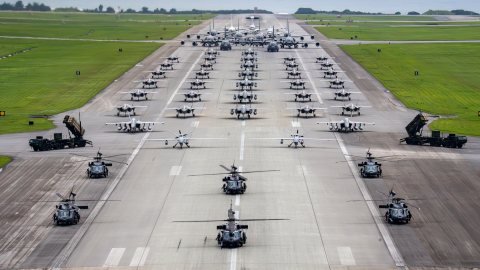
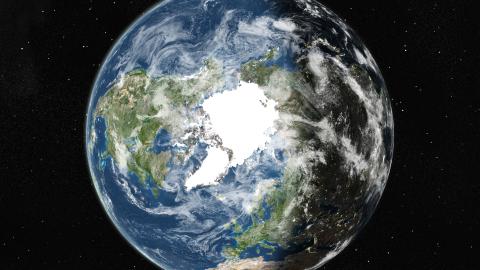
But President Trump is right about one thing: Greenland matters to U.S. national security. Its geographic position in the High North makes it indispensable for early-warning radar, missile defense, and monitoring airborne threats approaching North America. These capabilities are critical to protecting the U.S. homeland and why the U.S. operates an airbase in the country.
Fortunately, the United States already achieves these objectives without annexing Greenland. A U.S.–Denmark defense agreement dating back to 1951 establishes America as the primary security guarantor of the island. In addition, through its association with Denmark, Greenland falls within NATO’s area of responsibility.
Despite frequent claims to the contrary, Greenland is not encircled by hostile forces. Russian naval activity in the broader region is long-standing and has occurred periodically since the Cold War. The United States and its NATO allies have tried-and-tested practices in place to monitor and track this activity. Anyway, the best way to weaken any Russian threat in the Arctic is to help the Ukrainians fight them in Ukraine—something that President Trump seems reluctant to do.
As for China, there are legitimate reasons to worry about Beijing’s growing role in Arctic affairs, but China’s presence in Greenland is not one of them—at least for now. There are no Chinese naval vessels operating in waters near Greenland, and Chinese economic involvement on the island remains limited. While Greenland maintains a trading relationship with China, primarily involving seafood exports, there is no meaningful Chinese strategic footprint. China does not operate a single mine in Greenland, and Beijing’s previous attempts to finance airport construction or purchase a former U.S.–Danish military installation were blocked, demonstrating that existing safeguards are working.
There is also a persistent misconception that Denmark lacks a legitimate claim to Greenland. In reality, Danish sovereignty over Greenland dates back to 1721 and has been recognized repeatedly by the United States. Today, Greenland is an autonomous constituent country within the Kingdom of Denmark. The Greenlandic government now exercises authority over nearly all domestic policy areas, with foreign affairs, defense, and monetary policy remaining under Danish responsibility. The island’s roughly 57,000 residents are spread across dozens of communities, with the capital, Nuuk, home to about one-third of the population. No two towns or villages are connected by a road.
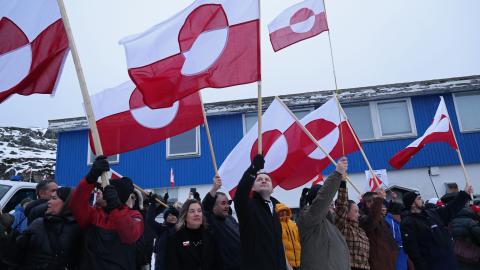
Greenland’s long-term political aspiration is full independence from Denmark—an outcome Copenhagen has said it would support when Greenlanders believe the time is right. Importantly, no major political party in Greenland currently supports joining the United States. Their wishes should be respected.
If Washington wants to deepen its relationship with Greenland, it has many constructive options. It can deploy additional military assets under existing agreements, expand economic and trade ties, support direct flights from North America, and finally establish a direct shipping route between Greenland and the U.S. East Coast—an idea discussed for years but never realized. If access to rare earth minerals is a genuine priority, the United States could pursue a cooperative resource agreement with Greenland similar to its arrangement with Ukraine.
Arguing that Greenland lies in America’s “backyard,” that its people are dissatisfied with their governance, or that U.S. security requires territorial control echoes the same justifications Russia uses when speaking about Ukraine. That is not an analogy the United States should embrace.
If the U.S. is worried about a growing security threat in Arctic, the solution is to help its ally Denmark—not to annex Greenland. However, if one day Greenland becomes independent and later seeks a closer association with the United States, that conversation can take place then. Until that time, annexation rhetoric is premature and counterproductive. At a moment when transatlantic unity is essential—particularly as Russia continues its war against Ukraine—unnecessary divisions serve no one but Moscow and Beijing.