











In this week’s episode of China Insider, Miles Yu reviews the capture of Venezuelan leader Nicolas Maduro by US special operations forces, and details China’s response to the operation including the impact this will have on China-Venezuela oil deals. Next, Miles breaks down the PLA’s the recent Justice Mission 2025 military exercise, and what this means for the continued multilateral defense of Taiwan against mainland incursion. Finally, Miles unpacks Japan’s cabinet approval for a record spending increase in the 2026 defense budget, and examines the impact this move will have on Japan’s evolving security strategy toward China. China Insider is a weekly podcast project from Hudson Institute’s China Center, hosted by China Center Director and Senior Fellow, Dr. Miles Yu, who provides weekly news that mainstream American outlets often miss, as well as in-depth commentary and analysis on the China challenge and the free world’s future.
China Insider is a weekly podcast project from Hudson Institute’s China Center, hosted by China Center Director and Senior Fellow, Dr. Miles Yu, who provides weekly news that mainstream American outlets often miss, as well as in-depth commentary and analysis on the China challenge and the free world’s future.
Episode Transcript
This transcription is automatically generated and edited lightly for accuracy. Please excuse any errors.
Miles Yu:
Welcome to China Insider, a podcast from the Hudson Institute's China Center. I'm Miles Yu, senior fellow and director of the China Center. Join me each week for our analysis of the major events concerning China, China threat, and their implications to the US and beyond.
Colin Tessier-Kay:
It's Tuesday, January 6th, and we have three topics this week. First, we cover the biggest headline from over the weekend with the capture of Venezuelan leader Nicholas Maduro by US special operations forces and analyze China's response as well as the potential impact this regime change will have on existing relations between the two countries. Next, we review the PLA's recent maritime blockade exercise coined Justice Mission 2025 and what this means for the continued defense of Taiwan against mainland incursion. Finally, we unpack Japan's cabinet approval for a planned record spending increase to the defense budget for the fiscal year 2026, and look into how this will impact Japan's new security strategy towards China moving forward. Miles, happy new year to you and great to be with you again to start off another year of China Insider.
Miles Yu:
Happy New Year to you too, Colin, and hopefully we'll have more fruitful and more lively conversation in 2026.
Colin Tessier-Kay:
Looking forward to it. So to kick us off this year, not even five days into the new year, and we likely have what might be the biggest headline of the year already. Over the weekend, US special operations forces captured Venezuelan later Nicholas Maduro and his wife, leaving an interim government still favorable to the old Maduro regime in place for the time being. But among the many ripples from this is the impact this might have on the existing Venezuela-China relationship, one that has been critical, let's say for China's procurement of natural resources, namely oil and minerals, and has provided a significant foothold for China in the Western hemisphere, really since the early 2000s. So Miles, we could start anywhere here, but give us a brief historical overview of the China-Venezuela bilateral relationship and how has China responded to the events from over the weekend?
Miles Yu:
Well, that's a very good question. And let me begin by saying that you said this happened just right after New Year. As a matter of fact, it was January 3rd. I just sent a note to the Pentagon suggesting that we should make January 3rd US Special Operations Day. It's a holiday because this is a very eventful day. Six years ago, exactly on January 3rd, 2020, the Iranian terrorist leader, Soleimani was killed in Iraq. And if you go back to 1990, on January 3rd, 1990, the Panamanian strong men, Manuel Noriega, surrendered to US forces. So this is a very, very coincidental date. The China-Venezuela relationship has been very substantial. It basically began to take shape during the former dictator socialist mastermind of Venezuela, Hugo Chavez, a guy who single-handedly destroyed the Venezuela economy. And so in 2007, Venezuela got the first big deal with China by borrowing 60 billion US dollars alone from China.
So China used that basically as a way to put Venezuela in debt and by providing Chinese cheap, heavy crude. Heavy crude oil from Venezuela is very, very important and very good. By the way, China is interested in Venezuela, has many, many layers of schemes. One of the most important one is the fact that Venezuela has the world's largest oil reserve. China is the world's largest oil importer. So as of a week ago, China imports about somewhere 600,000 to 700,000 barrels a day from Venezuela. Even though it constitutes about 4% of China's overall oil import, but is a heavy crude and very important. Most of that kind of oil import to China did not take in the open market rather through shadow fleet, through some kind of transshipping, so in a very furtive way. But most importantly, the Chinese-Venezuela relationship is built on geopolitical consideration.
That is China's indomitable desire to defeat and displace the United States as global leader. And by using Venezuela as one of the major operational springboards in the Western hemisphere to distract the United States and by arming and propping up the socialist regime of Chavez and Nicholas Maduro. And just a note, two years ago, actually almost two and a half years ago, in September 2023, China and Venezuela signed a deal. It's called all-weather comprehensive strategic partnership. And this was signed actually still. There are two all-weather partners of China. One is Pakistan, the other one is Venezuela. It's very, very important. And through which China has shipped a lot of arms and most prominently the Chinese version of this most advanced radar array in Venezuela, which was actually deployed there, which actually mysteriously malfunctioned when the operation took place a few days ago. And then you have a new one just about a half a year ago in May.
In Moscow of all places, China and Venezuela signed another deal, and Xi Jinping called the elevated bilateral relationship to the highest strategic level and the long-term perspective. And he called this ironclad friendship. So this is basically right now, Venezuela is deeply indebted to China, to the term of about $110 billion. And the way Venezuela paid this loan back to China is through cheap oil. So that's why oil embargo by the United States against Venezuela is very, very important. It's not nearly just any about Venezuela - it's also about China. So that basically is a very brief description of the Chinese-Venezuela relationship. Now, there's also another thing. In American law, there are six countries that were designated officially by the US government as a foreign adversaries. Two of them are in Latin America: Cuba and Venezuela. Cuba has been the long one and sometimes play in a shadowy background against the United States, which we can talk about some other time, but Venezuela is openly aggressive.
Another four foreign adversaries obviously designated by US law are China, North Korea, Iran, and Russia. So six of them. And the Venezuela one is very particular because China wants to use Venezuela to create chaos in Latin America so that the United States will be pinned down in its own hemisphere and lessening pressure on China because US strategic focus has been on China right now. And what they have been doing is to want Venezuela to become the Hezbollah, the Hamas, of the Latin America by creating chaos. And Nicholas Maduro announced three years ago that he would like to invade neighboring Guyana. And by annexing two-thirds of it, many people say it's basically for oil. Venezuela doesn't need oil from Guyana. The only purpose is that Nicholas Maduro following Beijing's instructions, trying to create chaos so that when he invented a neighboring country, Latin American countries will be divided.
Some of them will fight with him like Columbia, Brazil, most likely, because those were run by leftist sort of semi-socialist leaders. And then other countries will take arms against it, and like Ecuador, Peru and plus other countries. So this will basically engulf the Latin America into another fire of chaos and destruction. So the US would have to intervene. That's basically the plan. That's why Nichols Maduro is a very, very dangerous person. And to do that and to get US get involved, Nicholas Maduro has done something that's really sort of quite silly, but from his point of view, it's very important strategic. That is, he brought in Russia and Iran. There are two other countries of extreme danger to Venezuela. If you look at Venezuela's defense system, its air defense is mostly armed with Russian's S300 air defense systems and its radar is provided by China.
And Venezuela has also developed a lot of drones. This is from Iran. Those are the Shaheed drones that have been going flying all over the place in Ukraine in particular. So that's why you see to go after Nicholas Maduro is not just to bring him to just to face the drug charge, but also it serves a much greater global strategy from the United States point of view.
Colin Tessier-Kay:
I got to say, when I saw this, I was seeing shades of 1999 Belgrade because just the day before the operation, Chinese diplomats were in Venezuela meeting with Maduro and were on mission to extend existing oil deals and continue financing development projects, continuing the pattern of Chinese foreign visits preceding major security events. But more pointedly, as you detailed Miles, Venezuela and China have maintained rather significant relations over the past couple decades with over a hundred billion dollars financing deals in exchange for Venezuelan oil. And given the recent events, it's unclear how China plans to recoup the remaining debt or if they even will at this point. So Miles, I'm curious, where exactly does China go from here with regard to Venezuela to recover the remaining balance? And I'm also curious what this means for their existing foreign policy goals regionally in South America. You commented a little bit on Cuba as well, but where else do they go from here?
Miles Yu:
Oh, China is going to rely more and more on Cuba right now. Cuba and China have had a very substantial intelligence and military cooperation for decades now. And most of the Chinese diplomats were trained in Cuba for learning Spanish. And Cuba has housed China's very large eavesdropping operations in Cuba, focused on all the military facilities in Florida, because it is in Florida that a lot of Americans global operations are planned and trained and commanded. You look at the CNCOM, right - special operations, SOCOM as well. So a lot of Navy and Air Force bases there, plus it's also our primary facilities for space programs. So that's why Cuba is going to be playing much more important role for China. Now, you asked me about the debt. Now the debt, China and Venezuela sort of just swapping is in UN, in Chinese money. So I don't think the new government, whoever is going to be in charge, is going to be very, very cultural to that.
And that has to be either renegotiated or totally just forget about it. And I think right now, much of the oil deal, by the way, is illegal. China basically uses a shadow fleet of its own and others to ship oil, embargoed oil from Venezuela through say Brazil or Malaysia. So that route has to be ended. So I think that's basically is going to be the case. And if you do not recognize the legitimacy of Chavez and Maduro, and then those deals may not have any legal status anyway. Now, you mentioned about Chinese delegation went to Caracas to meet with Maduro just a few hours before he was captured. And they actually signed close to 60 new agreements providing comprehensive infrastructure support and another kind of very shadowy deals with Venezuela. So I don't think any of this will be sort of implemented under the new arrangement.
And by the way, excuse me, just I'd like to really, really point out one thing that's very important. Even though China's oil import from Venezuela constitutes about four or 5% of its entire global intake every day, but Venezuela's export of its oil, 80% of them, more than 80% of them goes to China. So that's why it's very crucial for Venezuela regime to survive with the Chinese government. And this is the entire entrapment by the Chinese government anyway. So I don't think any people in Venezuela under the new regime would really tolerate that kind of a deadly dependency. President Trump said it very well. Venezuela oil will be for open market. Americans will go in and it will be basically traded in international free market system. So that's basically the way to go. It's going to benefit not only for the Americans, but mostly for the people of Venezuela.
Colin Tessier-Kay:
Yeah. And we're going to continue to track that because these developments are going to have a significant impact that's going to unfold over the next few months and throughout the year in terms of China's supply chain sourcing for natural resources, namely oil, and of course, looking into regional dynamics. But turning to our next topic today, we look at the Eastern Theater Command of the People's Liberation Army that conducted a two-day military exercise dubbed Justice Mission 2025, focused on sea and air combat readiness patrols, seizing comprehensive superiority, blockading key ports and territory, and three-dimensional external line deterrents all according to military command spokespeople. Before the end of the year, this was the second major maritime exercise in 2025 conducted by the PLA around Taiwan, not including the near daily sorties of aircraft that incur in Taiwan's AIDS. And this indicates a growing concern that China will make good on its threats to enact a blockade potentially within the next year or two.
So Miles, walk us through Justice Mission 2025. What did we learn from the exercise? And do you believe this is forecasting things towards an actual blockade of Taiwan?
Miles Yu:
Well, first of all, let me just say one of the most important functions of this sort of exercise which China has done routinely is to intimidate people in Taiwan. And I'll tell you what happened. On the day of the exercise, so- called the justice mission 2025, China launched some kind of 170 aircraft and fire dozens of missiles. The Taiwanese start market, which is the indicator of Taiwanese people's mood, went way up. As a matter of fact, hitting all-time record on that day. So in other words, it really did not achieve its intended main objective that is to intimidate people in Taiwan. So second thing happened in May when China did another version of this kind of intimidated campaign. So back to the drill itself, it says, it's very interesting, the Chinese state media from the central government announced this as a response to Taiwan independence movement forces, which basically is a red herring, as I've said many times on this platform in other places.
And what Japanese Prime Minister Takaichi said in the Japanese parliament about whatever happened to Taiwan will be regarded as similar to what happened to Japan. And the interesting thing is, even though there's a anti-Japanese angle there by the government, which is very, very strong, when you listen to the announcement by the military from the Eastern Theater Command, it's different. It says it's going to conduct a joint drill in a Taiwan state and the waters north, southwest, southeast, and east of Taiwan. The only direction that is a conspicuous mission is northeast. That's the water closest to Japan and to US military forces in Okinawa. So what we're saying here is there is kind of the subtle difference between what government is trying to say and also the military people trying to say. In other words, this is not really encirclement because there's a big hole in their announced map of areas of exercises there, that is northeast part of it.
So it's not necessarily encirclement. Secondly, it's been said this is a blockade drill. Now, blockade is not easy, to be honest with you, because blockade style drills around Taiwan is not just about how many ships are over there, mostly it's about sustenance, right? You have to really be able to endure a long time and also you also have to really consider the logistics, the refueling, re-arming. All the things, I don't think Chinese people's Russian army at this point is really ready to do that. I mean, they do not have that kind of capability, in my view. Blockade is a very, very difficult issue. And another thing is, China's Eastern Theater Command had two of its recent commanders purged by Xi Jinping. The guy who is now conducting this is a new guy. He's the Air Force guy. So he does a lot of air authorities and missile firing.
Missile firing, fire power strike, of course, is important, but it's not really about taking Taiwan, seize the land. I mean, based upon the idea of destruction, but not seizing the land. So I don't know how this would work in the real scenario, plus the exercise, in my view, this kind of give the opportunities for the Americans, for the Taiwanese, and for the Japanese as well, to see the weakness of vulnerabilities of the Chinese military. For example, it give out the water battle indicators and flight profiles, operating areas, logistic reasons, and it's command and control signatures. And all those things can be very valuable information for people who actually will do the counter strike when China does invade Taiwan.
And another thing is, this time, the Chinese exercise focused on air and missile fire, but they do not have nearly as many ships, Navish assets as before. So conspiracy absence is the submarines because Chinese military submarine force is vulnerable to Taiwanese led, the US-led, the Japanese-led anti-submarine warfare, corner strike. So because it's very difficult to conduct the submarine warfare in the Taiwan state because water's very shallow and there's acoustic clutter, lot of noises over there, took points and complexity. There is also the idea that it's going to severely disrupt the commercial and civilian shipping and navigation, even airflights. So that will cause a international transformation if China does do the kind of stuff. So overall, I think it's intimidating and I feel that this is some kind of exercise that China had to do because of political pressure and you have to answer the $11 billion arms sale to Taiwan from the United States.
You have to answer what Japanese prime minister was saying. And also you have to intimidate the Taiwanese people on a constant basis. Whether China reached the goal or not, it's hard to say.
Colin Tessier-Kay:
That's a really great way to wrap it all up because I think there's a lot to be involved with the blockade just in terms of resources, capacity, endurance, and time. And in a way, the exercise itself likely tipped a lot of what China's tipped their hand basically in terms of what they had in terms of a strategy. I think the two-day exercise comprised over, I think, 200 roughly sorties by PLA aircraft. Roughly, I think about half of those transgressed the median line, additional plan and coast guard vessels, as well as rocket firing and tactical amphibious drills. But I think you hit the nail on the head there when you said, even without the guarantee of action, there is the political and propaganda elements of the exercise here as well. I think foreign ministry spokesperson Lin Jen linked the exercise with alleged separatist actions by the Lai administration, a pretty standard line from the foreign ministry, and in response to the US aid package and arms deals in mid-December.
So to wrap this topic up, Miles, what has Taiwan's response been to the drill? I know you mentioned the stock market at the beginning there, but more directly, is there anything that the Lai administration and the government is doing to bolster existing Island defenses or is this more or less just another development in the cross trade tensions here?
Miles Yu:
Absolutely. This is the excellent opportunity for Taiwanese government to mobilize the whole nation. I mean, I think during the exercise, the light administration is something very remarkable. They basically roll out the tanks and armored president of vehicles to the streets to basically to raise the level of what the Taiwanese government says, resilient defense. So that's very important. I mean, without the Chinese military's help, this kind of military maneuver and mobilization would have caused a lot of criticism, a lot of disturbances within the Taiwanese body politics, but this time everybody agreed this is the right thing to do. So I think this is a very good opportunity for Taiwanese government to conduct national mobilization. Now, this is not just in Taiwan. Japan is the same thing. The Japanese government right now doesn't even have to convince very peace loving people that there is an executive threat from China.
That's why the current prime minister, Ms. Sanei Takichi, is enjoying the highest proof rating in recent memory. Her highest rating is jumping to close to 80% in Japan. So that's really, really is amazing. In a vibrant democracy where opposition politics play a very important role, 80% approved rating is really historic and really is amazing all thanks to China.
Colin Tessier-Kay:
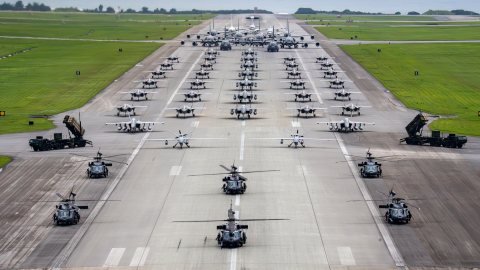
I think that's actually a great segue into our final topic for today because Japan has stepped up big time on defense spending. As of last Friday, Japan's cabinet approved a record defense budget plan exceeding nine trillion yen, which roughly is about 58 billion in US dollars. For the coming fiscal year, some of the highlights include planned fortifications to Japan's strike back capability and coastal defense with cruise missiles and unmanned arsenals. I think the total budget for 2026 is up 9.4% from last year due to this increase alone and takes us into, I think it's year four of Japan's ongoing five-year program to double annual arm spending to 2% of its GDP. So Miles, take us through the new defense budget and what impact will this have on Japan's existing military capabilities? Where exactly will the bulk of the money be going?
Miles Yu:
I think it's highly likely that China's most formidable adversary may not be the Taiwanese, may not even be the United States, maybe the Japanese, because what Japanese has focused on is something that even United States has not really openly announced, that is they're focusing on developing counterstrike capabilities against China. Now think about that. Japanese say, "You know what? We have to really strike you if you really try to sort of intimidate us." And Japan has bought 400 Tomahawk missiles. Those are deep striking missiles with a range of over 1000 miles that deep into China's interior. So Japan will be armed with that and some of them I believe is already delivered. Japan also has some of the very innovative defense concepts. For example, we all know China has this pretty impressive shipbuilding capability. They roll out their new ships, warships at the rate much faster than many other countries in recent history, but Japan therefore focus on developing anti-ship missiles.
And they have this missile that can reach like 60 miles range and all deploy along the UQ island, which basically means that their anti-ship capabilities is potentially increasing and this is most likely it's going to be the type 12 anti-ship missiles. Those are very significant. Japan also has a very impressive, I think first rate diesel electric submarine force. Japan operate about 25 to 26 submarines. They're all first rate. There are about half of the size of Chinese submarine fleet, but Japanese submarine fleet is much, much more advanced and much, much more little and much quieter than Chinese submarines. So that's a very, very significant counter China weaponry. Japan also bought the largest number of the fifth generation, the best fighter jets, F35B, and those were very important.
The largest operator of the A35s, of course, the United States, the second largest one is Japan. So they have a lot of them. They can beat the Chinese J15s, even J20s pretty easily in my view. And I think Japan also has developed something that's Very important. Now, if you must have a condo strike capabilities against China's interior, what you're going to do is going to develop a whole system of fire management and detention, early warning system. So Japan has this kind of powerful radar and it has multi-bands. It has expand that deals with the short range, mostly the terminal stage of missile. You counter it. That's why Thad, for example, use the kind of expand. But Japan also has this radar that they use expand that can go really, really far and you can detect Chinese missile launch at very early stage. And therefore you can do counter strike at a timely manner.
And I think most importantly, Japan has really surpassed the United States in developing some of the most innovative and most deadly and most lethal weapons developed by the United States, but a lot of times abandoned by the United Midway due to procurement, due to design flows. The most telling example is the rail gun, the electromagnetic gun. The United States tried to do it, but because of high pressure created by firing, it's hard to find this material to build this kind of barrel. So United States basically give up halfway. The Japanese did not. So Japanese right now are in the deployment stage of the rail guns on its worships. And it's just beginning, but it's going to be very fast. And what rail gun does is use pure kinetic power and to destroy enemy vessels and targets at a high velocity. That is about five to six times of the speed of sound.
So all you need is just the metal ball and put into the gun and then the fire through electromagnetic pulse and hit the target. There's no way you can miss that. So Japan also has developing this kind of a rare radar that can shoot down a whole bunch of drones. So not just one by one. So in addition to this kind of rail gun laser, the Japanese innovating a lot of things that Chinese government really have to catch up. So what I'm saying here is the Japanese military budget is big.
It has reached the level of the NATO, that's 2%, which is very historically amazing if you know the Japanese history after World War II. So this is basically something. And I think Japanese defense budget is going to be very important. And plus, Japan has changed its doctrinal approach to China's threat. Honor the Prime Minister Kashida's guidance, Japan no longer consider North Korea as a primary target. It's a target, but it's not primary. The primary threat to Japan security is China. That's very clear. Japan is going to focus on developing counter strike and even primitive weapons and capabilities. So I think China has found its formidable fall just outside of the
Colin Tessier-Kay:
Store. Well, that's all the time we have for this week's conversation. Thank you to our listeners for joining us for the first episode in the new year. And thank you Miles as always for lending us your time and expert insight. Looking forward to chatting with you again next week.
Miles Yu:
All right. See you next week.