10
February 2026
Past Event
Year One of Trump’s Foreign Policy: A Discussion with Congressman Pat Fallon

Event will also air live on this page.


Inquiries: tmagnuson@hudson.org.

Year One of Trump’s Foreign Policy: A Discussion with Congressman Pat Fallon

Past Event
Hudson Institute
February 10, 2026
Getty Images
Caption
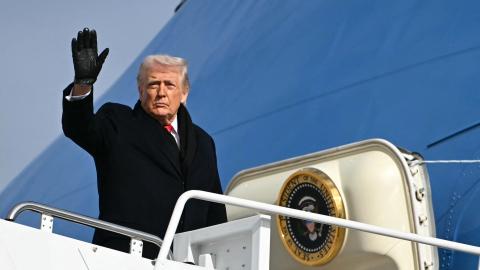
President Donald Trump waves as he boards Air Force One at Joint Base Andrews in Maryland on January 16, 2026. (Getty Images)
10
February 2026
Past Event

Event will also air live on this page.


Inquiries: tmagnuson@hudson.org.

Speakers:
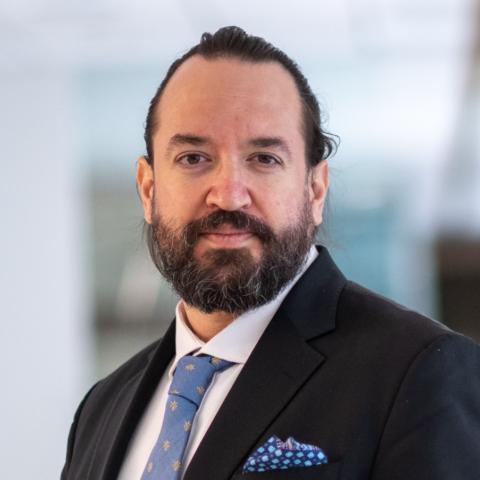
heinrichs
Rebeccah L. Heinrichs

Senior Fellow and Director, Keystone Defense Initiative

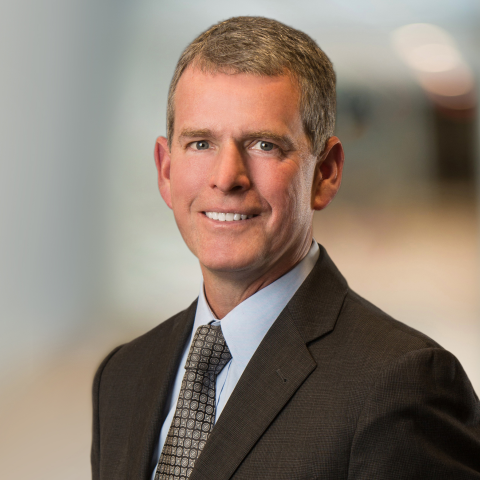
PF
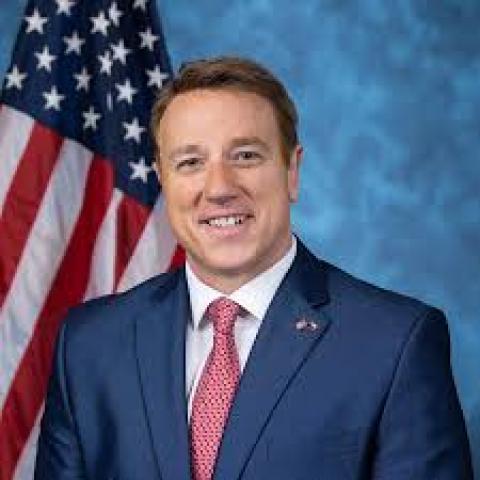
Congressman Pat Fallon

United States Representative, Fourth District of Texas

President Donald Trump has opened his second term with several major foreign policy moves: targeted strikes on Iran’s nuclear program, sweeping trade negotiations and tariff regimes, a meeting with Chinese leader Xi Jinping in Busan, and a landmark North Atlantic Treaty Organization summit in The Hague. All these underscore the president’s emphasis on proactive diplomacy, peace talks, and conflict resolution—exemplified by his achievement of an Israel-Hamas ceasefire framework.

The National Security Strategy and National Defense Strategy both outline the administration’s approach of “flexible realism” and prioritize the Western Hemisphere and Indo-Pacific.

In January 2026 alone, the Trump administration has continued its rapid pace of foreign policy with the removal of Venezuelan dictator Nicolás Maduro, a major trade and investment deal with Taiwan, and renewed focus on the emerging Arctic security competition.

Join Senior Fellow Rebeccah Heinrichs and Congressman Pat Fallon (R-TX) for a discussion on the Trump administration’s first year of foreign policy and the risks and opportunities ahead.

Listen on Spotify and Apple Podcasts.

Rebeccah L. Heinrichs:

Well, good morning, everyone. Welcome to Hudson Institute. I’m Rebecca Heinrichs, I’m a senior fellow here at Hudson. I’m also the director of our Keystone Defense Initiative where I focus on strategic deterrence and try to explain to people, I’m just trying to prevent major power war. It’s a big task, but that is what I do here at Hudson. I have a great team, and so I want to thank Sammy and Taylor for all of their help in putting this together as well today.

I am pleased to introduce our guest today, Congressman Pat Fallon, who represents Texas’s fourth congressional district, and he has since 2021. He is a great leader on the House Armed Services Committee. He is a fierce advocate against authoritarianism and threats to American security and prosperity, which is why I’m so excited to have him here. I work closely with his great team that he has put together over in his office, and so his district is very well-served by those folks.

He is an outspoken critic of repression at the hands of Russia, Iran, and the Chinese Communist Party. This is reflected in legislation he’s introduced such as the Ukraine Human Rights Policy Act of 2023, which bolsters the United States’s ability to hold Russia accountable for its grave human rights violations, and safe from PRC Investments Act, which requires certain security and fund exchanges to disclose connections to China. And as chairman of the House Armed Services Subcommittee on Military Personnel, Congressman Fallon is directly involved in creating strong defense policy to protect service members and their families.

We could go on, graduate of Notre Dame. Great background. We’re super thankful to have you here, sir, and I look forward to having this good conversation. I thought what we would do today is start off talking about, we’re just going to go around the world a little bit. Since I mentioned Russia right off the top, you just got back from a congressional delegation, so why don’t we start there and talk about how that trip went and where we are on Russia?

Congressman Pat Fallon:

No, thank you. So, I had a CODEL to Bulgaria, Romania, and Barcelona. And the thing that struck me as soon as we landed in Bulgaria was the fact that they couldn’t remember the last time a congressional delegation visited the country. And they were so very thankful and grateful that we came and one of the things they said was, “Geography matters.” And being that they’re the bulk work of Southeast front really of NATO and a country of only seven million people, former Warsaw Pact, of course, they really don’t want to be overlooked, and they want us to understand the importance of the alliance, which I assured them this administration does. A lot of people in mainstream media want to twist the president’s words. And I said, “Sometimes the president might use sandpaper when he could use some polish, but nonetheless, he gets the job done.”

And nobody would have thought in 2014 when NATO, each NATO country made a commitment that they would spend at least two percent of their budget, two percent of the GDP on military defense, that we would now be talking about five percent. And that’s one of the things the president said. And he wasn’t talking about the small countries. He was talking about some of the freeloaders like Germany, Italy, Canada, Spain come to mind that just neglected their own defense and their own militaries for so long. And Bulgaria has been a wonderful partner in every regard, and that’s according to the embassy in Sophia.

They also have different histories, right? If I want to get to know you, I need to know your backstory. I need to know that you’re from a small town in Ohio. We were talking earlier. And what makes you you? Well, what makes a country who they are? And their outlook today is what has happened to them in the past and sometimes hundreds of years ago, if not a thousand years ago. And with Bulgaria, they do have an affinity to Russia, because they’re Slavs and because the Russians in the 1870s helped them get free of the bondage of the Turks and of the Ottomans. Well, outside of our hotel room, there’s a giant statue, it looked like Nelson, you see in London, it was of the Russian tsar from that era. So they have an affinity to Russia, but not now with Putin, because they’re very upset about what Putin has done with Ukraine.

Now, then we went to Romania, went to Bucharest, neighboring country right to the north. They don’t have any affinity for Russia or Putin. So, it’s easier to accomplish certain things because of their domestic audience. I found it interesting that there’s several, because it’s a preliminary system, several different political parties in Romania. They all try to outdo themselves as to who is pro-American. So it doesn’t matter if you’re left-of-center, right-of-center, the first thing they come with is, “No, but we’re going to have even a better relationship with America.” You don’t tend to see that in Western European countries. It’s almost the opposite, right? That even the right-wing parties say they have a slight aversion to the United States. So that was refreshing in that regard. But they’re on the front lines. They realize that and they definitely want to see more of a US partnership and commitment to Eastern Europe.

Rebeccah L. Heinrichs:

As you were talking there, what made me think of this, that’s strategic culture. Each country has its own strategic culture because it has its own history, it has its own democracy. So different things are going to be easier or harder to do and move depending on which country you’re talking about specifically.

Let’s talk about the Russia threat. So, you mentioned Ukraine. What is your view on sort of the status of that war and also its implication for the NATO Alliance? There is this view that the NATO Alliance sort of brought this on itself, that Russia is only attacking Ukraine out of some sort of twisted understanding of self-defense. And you and I were talking about that. That is not your view or your assessment of the situation.

Congressman Pat Fallon:

No. Well, I think you could easily teach a three-credit college course just on the Russian-Ukrainian conflict, the history of it, and what has happened really over the last four years. Certainly, what Putin and his propaganda, RT News, et al, have been saying is, “This is merely a defense of the Russian homeland. This is the motherland, the defense of.” And some of their apologists in the West, particularly in the United States, will say, “Well, his hand was forced, because look at all the Eastern expansion of NATO over the last 30 years.”

And I had a very interesting conversation with Wesley Clark right after the war kicked off. And I asked him what his view on that was, being that he’d been, I believe the Supreme Commander of NATO under the Clinton administration, and he said, “Not one of those countries, we didn’t approach any of them. They all approached us, because they understood what the Russian bear has been. Whether it’s a tsar, whether it’s a communist dictatorship or now authoritarian, it’s a bear, it’s got claws, it’s got sharp teeth and it’s hungry.”

And look at the position, let’s say the Baltic States, Lithuania, Latvia, Estonia, would be in right now if they hadn’t been in NATO. If they weren’t in NATO now, like Moldova, it’s in a very precarious situation because they aren’t part of NATO. And when we met with the Moldovan president, who just got reelected back in ‘22, she looked right at us, a delegation of six members of Congress, and said, “Please,” and her concluding remarks were, “Please help us remain a member of the free world.” I mean, those are weighty words when she means it. It’s not hyperbolic. It’s truly like we might get taken over by a foreign adversary now.

And we’re just so safe with our moats, the Atlantic and the Pacific, that we forget that it’s a dangerous world out there, and it’s getting ever smaller. So, for Russia and Putin to say that, “Well, we’re only doing this to protect ourselves,” is patently absurd. All of those nations join NATO because they feared you. And Ukraine, that’s why they put such a priority on NATO membership, is because if they had been part of NATO, because of Article Five, Putin would’ve never crossed the border in ‘22.

Rebeccah L. Heinrichs:

And then of course, Article Three, I tell people, and I got this from President Trump’s former envoy to Ukraine, General Kellogg, said, “There’s another article in the NATO Treaty, which is Article Three. So each member of the alliance is also supposed to also significantly contribute to defense and collective security. And it’s something that has been neglected.” And so, you raise a great point about how President Trump has now encouraged members of the alliance to spend more on defense.

Do you find it challenging when you go back home to Texas, explaining to constituents about the importance of NATO today, or do they get it? Do they understand that NATO needs to be stronger, but it’s not of altruism or charity that the United States leads this alliance; it’s because it does keep us safe too? Does that resonate still with your constituents?

Congressman Pat Fallon:

It’s a self-interest matter. And I’ve got to be honest with you, that’s one of the best questions I’ve been asked in the five plus years I’ve been in Congress. And when I go home to the fourth district of Texas, which is Frisco, Plano, the district has changed three times. I’m trying to count the counties down. I think we reduced to eight counties now. But I do want to impress upon them, because I’ll have a town hall of, say 300, and we’ve done probably 50 in-person town halls, because this is the closest form of . . . The federal government, this is the closest level to the people, right? I mean, we’ve got to get out there.

The senators can have their powdered wigs and speak with their British accents. And when the House member comes over to the Senate, they can ask us, “Oh my goodness, this is a lowly House man. Has he been checked for lice?” Things of that nature. But we need to get down and gritty, so that’s why I have the town halls. And when the Ukrainian war kicked off, and there were tens of billions, and then it added up to hundreds of billions of dollars of American taxpayer money going to Ukraine under the Biden administration, a lot of the folks that were in that audience would say, “We can’t even secure our own border. Now this is a Texas district, right? And we’re worried about a border half a world away.”

Now, that’s not a bad point to make. So my counter to that was, “I do want to secure our border. And simply because the Biden administration has failed miserably at that, doesn’t necessitate us ignoring the rest of the world.” Now, President Trump has absolutely secured the border in the last year. So I would gently inform and share, because this is part of my job now, is to learn things that a typical person wouldn’t know because they’re out living their lives and they’re busy, raising their families, working hard at their jobs and vocations.

So, I would say Ukraine has the fourth most natural resources of any nation-state in the world. They’re very wealthy. And what happens there directly affects us, because if Putin were to roll over Ukraine within six to eight weeks, you don’t think Xi Jinping in Beijing is paying attention and would think the world . . . Crimea, the world went back to normal after about six months. That’s what Putin’s calculus was here. He thought he’d win quickly, he’d be punished for six months or a year, and then everybody get on with their lives. And if Xi had seen that, he’s far more likely to cross those straits and try to take Taiwan once and for all.

Now, how does that affect somebody in the fourth district of Texas? I said, “You want to buy a new car? You want an appliance that works?” Those chips that drive all those conveniences of life, most of them are made overwhelmingly in Taiwan, and China would either control it and then hold the world economy hostage, or it could destroy it in the process of taking Taiwan. Regardless, three to five years before the United States and the West can revamp and make those and produce those ourselves. So, it all affects how you live your life.”

And then we had an extensive discussion on it. At the end, it would only be a few sour faces when I had mentioned our support for Ukraine and NATO. And if we don’t have NATO now after carrying them for 70, 80 years, and we do get into a hot war with China, that’s exactly when you need those friends. So, we don’t want to jettison it.

Rebeccah L. Heinrichs:

Yeah. Or one thing, whenever I go back home and I talk to folks know how to . . . Even in the president’s national security strategy, it still said that Europe is still a vital trading partner for the United States. And so, there’s a lot of states in the Midwest and in the South who trade and do direct trade with European countries. And if you have an unstable Europe, you’re going to disrupt the prosperity, the American people here at home as well.

Congressman Pat Fallon:

No doubt.

Rebeccah L. Heinrichs:

Sticking with Europe, I thought you had this great line when we were going through the Greenland news cycle there. One of the points that you made was that President Trump and Rutte, the Secretary General of NATO are both on the same page here. And the two of them understand that we do need to secure the Arctic and now we’re in a better place now to do that with the Arctic. Anything else you want to add to that just in terms of the importance of the Arctic and the High North?

Congressman Pat Fallon:

I’m going to use an interesting analogy. I love the Bible. I don’t take it literally, I take it that the good Lord has blessed all of us with trillions of brain cells and I take it as a strong book to guide your life, but not every single word in it should be taken literally in 2025, 2026 now. Same thing with President Trump. He does certain things, says certain things because he is like a chess player thinking eight, 10 moves ahead. If you’re in a negotiation and your goal is to get the maximum value, say on a one to 10 scale, but you’re going to be very happy with, say a six. He never asks for the six, he asks for the 10, the whole enchilada, if you will, and knowing that then he can fall back.

That’s exactly what he did with Greenland. Say, “We’re going to take it over, Denmark, come hell or high water.” He didn’t literally mean that. He said those things to get their attention, certainly got CNN’s attention, because they lost their ever-living minds. “We’re going to go to war, Craven.” I think that’s the way they talk in their editorial room. I don’t know, I’ve never been in there, but I suspect that’s the case.

And then, what did he really want? He wanted to make sure that we had the access that we needed maybe with Iron Dome or Golden Dome and other things, but the Arctic is becoming increasingly important strategically and we need . . . If you look, just get a globe out and look at where Greenland is. And maybe some of our friends on the left can do that as well to understand the importance. And he has really put it as a top priority, get everybody talking about it, and he ended up getting what he wanted.

Rebeccah L. Heinrichs:

So, before we move over to talk about China, since you mentioned Golden Dome, let’s just stick there for a second, because this has been something that you’ve been supportive of, missile defense, Golden Dome, something that I’ve worked on over many years. I say there’s several issues that President Trump has actually been very, very consistent on over the last 40 years, one of them is this idea that the United States really should have a much more robust missile defense system. I think he gave an interview with Wolf Blitzer back in the 80s about how we needed a missile defense system. Can you talk to us about the importance of that and the committee’s work on trying to help President Trump implement that plan?

Congressman Pat Fallon:

Yeah, we’re a very long way from making intercontinental ballistic missiles obsolete, but wouldn’t that be a great day if we could do that? It would be tremendous. Now, the Chinese and the Russians say it’s destabilizing, simply because we’re further ahead in that pursuit and that endeavor. If they were, they would say that it would be—

Congressman Pat Fallon:

If they were, they would say that it would secure peace in our world. So, I find that very interesting. We did fall behind with hypersonic research, because we spent 4,000 billion in Iraq and Afghanistan over the last 25 years, and some of things get neglected, that was one of them. But we’re catching up now, and that’s very important effort to have a strategic balance. But we just had a discussion this morning about the SALT treaties and the fact that things have lapsed with us and the Russians, and Russia wants to . . . They don’t want to include China in any discussion. And I thought, “Well, that’s great, but what do the Chinese think?” And Chinese aren’t interested right now, because they’re so far behind. They want parody with the United States and Russia, and then they want to talk about treaties. So, it’s going to be a difficult moving ahead.

And given that, it would be a very, I think, smart to pivot to talking about an iron dome and having that kind of counter ability in your arsenal. And so, I applaud that. I mean, Ronald Reagan Star Wars, you remember when we were kids, he got made fun of for that. And it ended up bankrupting the Soviet Union, so history proved him right.

Rebeccah L. Heinrichs:

I thought, so let’s talk about, so New START expired, and President Trump let it expire. For the reasons that you just gave, Secretary Rubio came out with the reasons for that. It was a bilateral treaty with the Russians. The Chinese are not party to it. President Trump in his first term, got out of the INF Treaty. For a similar reason, he let New START expire, which is that the Chinese aren’t roped into it. So, now we’re living in a world in which we have two major nuclear peer adversaries that we’re going to have to deter. China eventually appear in the next five or six years.

I thought this was so interesting when President Obama criticized Trump for not doing something to have an extension of the New START Treaty. Your response was, “Paralyzing fear of escalation is what failed to deter Putin in the first place. Your time in office, as well as your VPs, only emboldened the Kremlin.” I thought that was such an important point, this sort of fear of escalation, that if the United States does something in our interest, that therefore that would provoke the adversary to do something that would be against our interest. And you said, “That’s actually how we got in this mess to begin with.”

Congressman Pat Fallon:

Peace through strength. I was having a discussion this morning as well with someone and I asked them one question: “Name me the last time there was a major war between two democracies.” And he kind of smiled and we could see his head, his eyes rolled back into his head trying to think of it. And obviously, it’s never happened. And there’s a reason for that. Democracies, the people aren’t going to allow their sons and daughters, mostly sons, to go into war and be butchered over an issue that can be solved diplomatically. But authoritarians are more than happy to do so, because they put a price on life and they don’t view it as priceless. So, the only way to really deter them is to be strong. And if they fear you, they won’t act. And when Putin clearly didn’t . . . Fear Putin, in fact, I’m going to pivot a little bit and sidebar with this. There’s very few times where folks like us get to be part of history and get to talk literally to history.

When you talk to a President of the United States, you’re talking to history, right? So President Trump was with him in Bedminster in 2022, and there were about eight of us. And he asked, he said, “Everybody can ask me one question.” We’re at dinner. And I was the last person and he came to me. So, this was the question I asked him. No cameras around, just the eight of us talking.

I said, “Mr. President, I noticed something. And in 2007, Putin was emboldened enough under George W. Bush to take a couple provinces in Georgia. And then of course, ‘14, Obama, Crimea, and then full scale invasion under Biden. But your first four years, no new military adventures. Why do you think that is?” He made a joke at first, but then he said, “I told him, ‘Vlad, you can invade Ukraine, and if you do, I will unleash the American energy sector unlike anything anyone has ever seen, we will produce so much natural gas and so much oil. And being that it’s a global commodity, the two of them, it will depress the price to the point where you won’t be able to fund your war. So, don’t do it.”

And Putin clearly either respected/feared the president enough to no new military adventures. That’s a fact. That’s an inconvenient fact the left doesn’t want to talk about. Remember, Trump was supposed to be a Putin puppet, and they had something on him. All that was just blarney and it was word vomit, it was not true. And Putin didn’t fear Biden and he launched this massive invasion.

Rebeccah L. Heinrichs:

I also noted after President Trump had left office, President Biden had been sworn in, the war started. President Trump was asked on Fox Business, I think it was, “What would you do practically if this were you now? I mean, you said that it wouldn’t have happened if you’d been president, but would you do now?” The other thing he said was, “I would send a nuclear submarine their direction,” which I thought was remarkable that he said that. And then turns out when Medvedev, the Russian, what’s his job now? I don’t remember what Medvedev’s job is now with the Russian Federation.

Congressman Pat Fallon:

Sycophant.

Rebeccah L. Heinrichs:

He’s a sycophant, but he’s always in and out of jobs. But he’s still very close to Putin and he was on X just a couple of months ago doing it again, making some threats, making some nuclear threats. And what did President Trump do? He actually said he was going to send the nuclear submarine—

Congressman Pat Fallon:

Well, thank you for mentioning that, because I remember I did, because I was on armed services in ‘22, I did a series of interviews on television, and they were predominantly about the Ukrainian war, because it was on everyone’s mind at the time. And the Russian saber-rattling over, “We might use our nukes,” just drove me. That’s all it was. They were rattling a saber. You can’t take that seriously. I mean, they know that that’s mutually sure destruction is still in play. And Putin’s not doing that. And there was five, six people in that chain of command that are going to have to follow that order. They’re all going to die if they follow the order, but if they don’t follow the order, maybe they live. I don’t think it gets to that point. I think Putin commits suicide if he had submitted that order.

And so, don’t let them play you, you’ve got to play them. And we are in a far better position in conventional forces, and the president made that clear. And I really thought in Alaska, being that President Trump was gracious enough to offer this off ramp to get peace, and Putin didn’t take it. That’s very telling about where he is in his thought process.

Rebeccah L. Heinrichs:

Yeah. Well, and he’s still not. It doesn’t seem like there’s much progress on negotiations as well with the US diplomatic team and the Russians. I do want to ask you if you think that there is an opportunity here for Congress to actually pass these economic sanctions? And if you think now that Russia has a leg up now or is weaker than it was at the beginning of the war, and if these sanctions would be helpful in inducing the Russians to pursue a diplomatic off-ramp or maybe not. Or at least weaken them further sufficiently so that Ukraine can make some progress and we can better bolster the Eastern front of the alliance.

Congressman Pat Fallon:

That’s another great question. We know for a fact that they would prefer not to have increased sanctions, which is probably primarily one of the reasons why we should do it, to make them more uncomfortable. And I want to be clear about something too. When I said that President Trump was being gracious to have this off-ramp, it wasn’t trying to reward aggression, it was being realistic about what peace is going to look like. So, being on the Intel committee, we had two separate meetings last year with delegations from Ukraine outside the skiffs, so I can talk about what we discussed. One of them was a high-echelon military and the other was high-echelon intelligence, separate, about two, three weeks apart. And I asked them, “What does peace look like for you?” Because I had this extensive peace plan that absolutely nobody cared about, nor read and nobody within descent that had the power to implement it, cared to read it.

And so, I asked them, and they both said the same thing. Neither delegation expected any concessions with the territory that Putin has already stolen. Because that was just realistic. They do have some Black Sea Coast left, but even they didn’t think that could be part of a peace deal. So, when Zelenskyy was talking about, “We need to have the integrity of our territory prior to the invasion,” he knows that’s political for the domestic audience. That’s not really going to happen. And so, President Trump also knowing that, offered this chance, and Putin didn’t take it, because he is a dictator, because he isn’t seeing the world clearly, because everybody around him is a sycophant, yes man, and isn’t giving the reality on the ground of they are losing Russian young men by the bushel, and he doesn’t care. And that’s very telling.

Rebeccah L. Heinrichs:

Russian young men, and these are poor Russian young men, and some of their—

Congressman Pat Fallon:

The minorities, the ethnic minorities too. They’re not coming from St. Petersburg, they’re not coming from Moscow, because if he loses those cities and that domestic audience there, and they start to march, then he’s doomed.

Rebeccah L. Heinrichs:

Let’s talk then about . . . We could talk about Russia the whole time, because I think there’s so much here that is so important. But I do want to talk about the China threat. How do you view . . . And then also you had mentioned China in the context of Russia. Do you see China supporting Russia’s war? So, I will bring up Russia there. And then also, what is China’s ultimate objectives? How do you think about this as you’re trying to steer the Hell Storm Services Committee to authorize the right kinds of funding and force posture and that kind of thing? What is your view about what China’s trying to do here and its support for Russia?

Congressman Pat Fallon:

It’s interesting. In my lifetime, I’ve seen that they weren’t always an alliance. They had, when in 72, when Nixon was able to pivot and bring China more toward, I don’t want to say our side, but more sympathetic to the American cause rather than the Soviets in the split that Mao had with Khrushchev. But we’ve seen that senior partnership shift. It was clearly the Soviets, and now it’s clearly the Chinese. And look where we are today. China has roughly 11 times the population of Russia, and they have a GDP nearly on par with us. Where the Russians economically are laughable and that we’re going to be in . . . Hell Texas has a larger economy than Russia, which I guess makes me more powerful than Putin. That plays very well in Texas, by the way.

Rebeccah L. Heinrichs:

I bet.

Congressman Pat Fallon:

I say it’s us, not me. But if Russia didn’t have 5,000 or so, or thousands of nuclear weapons, they wouldn’t nearly be the player that they are, but they do, so it’s academic to discuss it otherwise. Because their conventional force has proven not to be the tiger that we thought it was, or the bear, I should say. So, clearly China is the greater threat; there’s just no doubt. And that’s why there’s been a pivot to Asia, and that’s why we have our force posture when we talk about the troops we have in Japan now. I mean, remember Germany used to be by far the country with the most American troops, now it’s Japan. And then it’s Japan. Then we have South Korea, we have a force posture obviously in Guam, but we need, I believe humbly, that we need to bolster our troops in Australia as well, because pre-position them forward base there where they’re safe, but they’re in theater to . . . I would rather have them in Australia than in California.

And so, that’s the threat moving forward. I remember as a kid at Thanksgiving, circa 1980, and on television, the commentator said, “The Chinese wish to be a superpower within the next 50 years.” That was their goal in 1980: they wanted. And I said, “Well, they’re 25 years early, because they made it rather quickly.”

Rebeccah L. Heinrichs:

And you started off talking about how geography is so important. And so, you just made the point there. For the United States’ perspective, having allies, again, it’s not just sort of this charity, the geography matters. So, for us to be closely integrated with those allies who are so close, much closer to us geographically, to our primary peer adversary that would like to see the end of the US-led international order, it’s good to collaborate with the Japanese, the South Koreans, the Australians.

Congressman Pat Fallon:

And I love to divide the commies, right? Vietnam would rather have a strong United States in a preeminent position and a perch than China, because geography matters. They don’t trust them, and they have a history that proves that they shouldn’t trust them.

Rebeccah L. Heinrichs:

Yeah, great point. And so, okay, so now the United States for the first time we have to deter two major nuclear powers that are increasingly collaborating, although one’s clearly the stronger power than the other one. So, Congress has been supportive of the president’s effort, the Big Beautiful Bill. House Armed Services Committee worked with SAS to make sure that the president’s priorities were in that. And then the president announced, I think, surprised some, and increased to $1.5 trillion for defense. Which again, I think it makes total sense that that is kind of what Chairman Wicker and the Senate has been saying we need to do. We need to reboot our own defense industrial base. So, we’ve been kind of jabbing our NATO allies for letting their defenses atrophy, but since the Cold War we’ve let our supply chains . . . So, talk about that, about how Congress is now trying to figure out and working with the administration, making sure that we spend it on the right things and that reboot the defense industrial base.

Congressman Pat Fallon:

You don’t spend just to spend for spending’s sake. There’s plenty of people in this town that would love to do that, because they line their pockets, but we need to be efficient with our spending. If we’re going to ask our NATO allies to hit 5 percent, well, that’s the mark for us hitting 5 percent. You can’t say one thing and do another; that’s not leadership. And as a budget hawk, two of the reasons I came to Congress, I know they’re pushing boulders uphills, but I wanted a secure border, and I wanted us to balance our budget. Bigger, boulder, up a bigger hill, but we almost passed a balanced budget amendment 25, 30 years ago, and now no one’s really talking about that anymore. So how can . . . I think a fair question would be, how can Fallon, how can you be a budget Hawk and want to spend 1.5 trillion on defense?

The simple answer is, you have nothing unless you’re secure, because fighting wars is incredibly costly. And you know what’s more expensive than fighting a war? Losing one. So, let’s not fight it at all. This isn’t so much as an expenditure as it is an investment to not have to get to that point, but you need defense acquisition reform. We need to be working . . . We need primes. We have seven primes. We used to have dozens. So, we need our primes, but we need to also appreciate and have an even footing and equal opportunity, not equal outcomes, but equal opportunity for those mid and small defense firms that are leading the way with innovation and ingenuity. And Palmer Luckey comes to mind, Alex Wang, those, kind of younger guys that are absolute geniuses, and they’re billionaires, and they’re so much younger than me. I hate . . .

Congressman Pat Fallon:

. . . geniuses, and they’re billionaires, and they’re so much younger than me. I hate those guys. But the value that they have for our Republic is immeasurable. That’s why the way you should have a budgeting process, if you’re going to do zero-sum budgeting, in my own opinion, is you start with defense, fund that first, and then we can talk about everything else.

Rebeccah L. Heinrichs:

And as you point out, it’s still only going to put . . . I mean, it’ll get us to five percent of GDP, which is what our NATO allies would be at as well. It’s still, as a percentage of GDP, smaller than what we were at the height of the Cold War.

Congressman Pat Fallon:

When you see that chart, another great point, when you do it as a chart for GDP expenditure, percentage of GDP, we’re at a nearly an all-time low. It’s not the figure. I mean, the figure has been inflationary. It’s to do it with percentage, and it’s an increasingly smaller and dangerous world, and we’re spending less and less when we have two geopolitical adversaries: the Russians, because of their nukes and their aggression, and then China, because they want to be the preeminent power. If we don’t show that we’re a strong leader and that we support our allies, then you know the fall of the United States and the Republic will be from that kind of a perch, is going to be when other nations start cutting deals with Beijing because they figure they’re going to be this preeminent power in 2050 and beyond.

And then you’re going to get countries like Thailand and others that have been traditionally very friendly with the United States. India could be another one that fought a hot war with China when Mao betrayed India and Nehru when he was being so overly gracious and naive to think, “If we treat China nicely, they’re going to be our buddy.” I feel like doing Clinton, “I want to be your friend.” And no, they’re not. They got bit by the cobra, right? But they’ll start cutting those deals, and then you can kiss the dollar goodbye. We won’t be the reserve currency. That’s going to hit us economically so hard. God knows we’ll be into a free fall, probably a recession, if not a depression, and then we’re going to have to hit austerity. So, all these people on the left, the only thing they ever want to cut in the government and federal spending, one thing: defense. Well, now ICE, right? Everything else, they want it just to grow into infinity, but we’ve got to be disciplined fiscally, and we just aren’t having those discussions.

Rebeccah L. Heinrichs:

So, kind of back to this, I always love asking members of the House to talk about their sense of what their constituents think, too. Do you still think. . . I mean, my view in all polling, the Reagan polling, Vandenberg Coalition polling, still shows that Republicans still support defense spending. So there isn’t this. . . You typically think, if there’s more an isolationist turn, that there would also be a lack of support for defense spending. But in fact, it seems to me, at least my reading is, people just want, they want to be able to live their lives. They want to be kept safe. They don’t want the bully to win. They’re happy to spend money on defense as long as it keeps them safe. Is that still generally kind of what you think of your constituents in Texas? Does that still resonate with them, like, “We need more ships. We need golden dome. We need nuclear modernization”? And they’re like, “Jet, Congressman, that makes sense to me”?

Congressman Pat Fallon:

Texas swagger, they understand you got big muscles, you’re less likely to get in a fight. You have to understand who the adversary is. So many folks in my district get the fact that these evil SOBs that we’re facing, the best thing to say and understand is a gun to the face. Look at Maduro, with all that bluster, look what happened to him. And it was so incredible to leave the country and go overseas to talk to allies. All I needed to say was, “I think the world just saw what happened in Venezuela. Our stuff works really well, and there’s dozen.” And they all got it. They saw that.

No, if we had this discussion, if we were sitting here six months ago, and you asked me a question, “Do you think we have the capability to go into a hostile nation a thousand or plus miles away from the United States and snatch their head of state in a secure facility in the middle of a military base without suffering any KIAs?” I would’ve loved to say that’s science fiction. If you made a movie, you couldn’t suspend disbelief. And it happened. This is historically great on Entebbe historic. And it got the world’s attention that we still are the big boy on the block. If we do things correctly over the next decade or two, because it’s very pivotal, we’re at a precipice, there’s no doubt, that the 21st century can still be the American century. It can be not only the 20th, but the 21st and beyond.

Rebeccah L. Heinrichs:

The next American century. Yeah. I want to talk about the importance of the Venezuela issue as well. If Secretary Rubio would hear, he would say the illegal president, he was not the actual president, Maduro, the illegal.

Congressman Pat Fallon:

Head of state, as you would say.

Rebeccah L. Heinrichs:

Yes, he is illegal. The other thing that I thought was really important about that, one, it demonstrated not just our military capabilities, but our military competency. So, the United States’ ability across services to carry that out. We had been testing quietly, surreptitiously, and practicing that raid, and then went ahead and did it. And we did it under the noses of the Chinese. There was a Chinese delegation in Venezuela. The Russians had just sworn their commitment to Maduro and Venezuela, and we did it in spite of that as well. The Venezuelans had bought those air defenses from those two adversaries, which is pretty amazing. And they’re a partner of the Iranians. So, for the United States to do that under the noses and in spite of the opposition from those three adversaries of ours, it had, I think, some significant signaling from deterrence perspective as well.

So two-part, you can answer both or either one. One, the importance then of the Western Hemisphere, how the president has focused on that. I don’t see it as sort of either or, like now we’re focused on Western Hemp so that we don’t have to worry about these things further from our shores, Indo-Pacific, or Europe, or the Middle East. To me, they’re related. You got to have a strong Western Hemp—

Congressman Pat Fallon:

They’re all intertwined, and you have to be a multitasker, right?

Rebeccah L. Heinrichs:

Yeah.

Congressman Pat Fallon:

You talk about Venezuela. Well, they are tied to the Russians and the Chinese. And the Chinese have—

Rebeccah L. Heinrichs:

And the Iranians.

Congressman Pat Fallon:

And the Iranians. David, China has a huge presence in Venezuela, but look at what President Trump has been able to do. With Netanyahu’s help vis-a-vis Iran, but the proxies that the Iranians have been funding and the amount of American deaths that we suffered in Iraq, so many of them had the fingerprints of the Republican guard and Tehran on them. And then they have Hezbollah and Houthis and Hamas. They are devastated. They are a shadow of who they used to be. They lost Syria, and that was devastating to the Russians as well and to the Iranians. And now their own regime is teetering.

And then you look at Venezuela, shock therapy. But that relates not only to Iran, but it also relates to Cuba. Because Cuba, and I think this is Marco Rubio, I haven’t spoken to the secretary about this, but I suspect, because Nunes is going to know Cuba better than him considering his backstory, if you will. They are to the point where if the Cuban people hit the streets anytime in the next few months, I think the regime falls. If we have a Tehran or Iranian type protest, hit Cuba, I don’t know if we will or not, but if that happens, they’re gone. And it’s very different. Iran, big country, very far away. Cuba, 90 miles off our shores, very small, and we have a history there.

But if, big ifs, if the regime in Tehran, which is stronger than the one in Cuba, falls, and Venezuela’s cooperative, and Cuba, look at what that does to China and Russia, our main adversaries. They don’t have any more powerful proxies. It would be seismic. Now, I don’t know if all those things are going to happen, but a few of them, it’s begun. The cracks have begun. I just don’t know how far the fissure is going to go.

Rebeccah L. Heinrichs:

So let’s go to Iran. Huge, massive amount of American military presence around Iran right now, Naval presence, air power. The president drew the red line, saying that if there was a massacre of Iranian protestors, that the United States would intervene. President Trump encouraged the protestors to keep protesting. Now there’s negotiations going on. Secretary Rubio says he wants the Iranians to get rid of their nuclear program, get rid of their ballistic missiles, and stop repressing their people. I think those were the big three. He doesn’t like their drone. And then, of course, the Iranians have been providing weapons to the Russians, and we can talk about drones too. Don’t let me forget to talk about drones.

So what is your view? You’re on both Intel and HASC. So don’t share with us everything you’re hearing. But what is your view now about what happens over the next couple of weeks? How do you see this playing out? And do you think that we might see. . . You also saw that military competency in Operation Midnight Hammer where we’d significantly degraded the illicit nuclear facilities in Iran as well. I mean, is the regime weaker than it’s ever been? I mean, we keep hearing that. I keep saying that too. I think it’s true, just materially speaking. So, is this the moment where the United States can knock off another proxy of our two peer adversaries, the Russians and the Chinese?

Congressman Pat Fallon:

You’re not wrong. Particularly now that I’ve been in Intel for a year, I find that committee so fascinating. Dan Crenshaw, Ronny Jackson, Darin LaHood all told me before I got on Intel that it’s the one main reason they remain in Congress. And I can now understand why that is. I spend more time on Intel matters than everything else I do in Congress combined, because it is so important, because we do get what I call the book of secrets every week and we have to find the time to read them. I had lunch with Dan “Raizin” Caine, Joint Chiefs of Staff chairman, who when we were young pups in the Air Force, we were friends and we worked together. He is probably, since Marshall, the best Joint Chiefs of Staff chairman that we’ve had. I go into his office, and we had a very frank conversation about things. I will be very careful with my words, but I will say all options are on the table with Iran with this administration. We are very capable, and they should know that.

President Trump made it, I thought, crystal clear that if you do certain things, there’s going to have consequences. The mullahs have been able to, for decades, just keep punching the United States in the face. And we do nothing. That in 2020, when President Trump put the screws to them, and they were exporting oil, I think it was $7.9 billion was the revenue in 2020. And then in 2022, when Biden took the cuffs off, it was 42.6 billion. Well, you can cause a lot more mayhem and murder in your region and around the globe when you have 35 billion additional dollars to do it with. And you saw the funding. I wonder if October 7 would have ever happened if we kept putting high pressure on them. We’ll never know that, right? But we should have, because that’s the best English they understand, is one of a cult right in their noggin.

Rebeccah L. Heinrichs:

So, the October 7 massacre against the Israelis from Hamas, you do see that directly connected to Iran and Iran’s—

Congressman Pat Fallon:

100 percent. Where’s Hamas get their money? I mean, primarily from Tehran. The Persian people have such a rich history, and they were on this path. I remember being a really nerdy young kid. Shah of Iran, the hostage crisis, I was very young when all that happened. But the Shah we were told by the American left and the mainstream media, I apologize for being redundant there, but they said the Shah was this evil Hitler type. Now look at the difference. Now, the Shah had his flaws, but comparatively what we’ve gotten for the last damn near half century with the mullahs, they’re way worse. I think that when you look at how freedom takes hold in a country that doesn’t have a history of the British or the Americans, it takes a while to have a functioning Jeffersonian democracy. It took Taiwan 50 years to get there. It took South Korea 50 years to get there. Japan and Germany are different because we were occupying the country. But on their own, it takes a while. Ukraine’s been 30 years into that 50-year journey. They’re imperfect, but they’re getting there. And I think Putin is really-

Rebeccah L. Heinrichs:

And they want to be there.

Congressman Pat Fallon:

Yeah. Putin has accelerated that process to where when this war’s over, mark my words, 15 years after that war ends, Ukraine is going to be like where Poland is today or beyond. They’re going to do tremendous things, but they need to get that peace first. So, it takes a while. But had the ‘79 revolution, ‘78-’79 revolution in Iran never taken place, I think you would see Iran as a functioning constitutional monarchy today and really the jewel of the region. But it did, and it went another way, and now they’ve regressed into really the 16th century. And it’s time to set those people free.

And I will never take seriously another freaking Palestinian protester that would accost us in the hallways. I always talk to them, and I said, “As long as you don’t use profanity and scream at me, I will discuss with you, because you should have that redress in our republic to take somebody with a pin on and give them the business, as long as we can have an intelligent conversation.” But now I’m going to look at them and say, “Where were you when Tehran marched? You didn’t care because you were choosing, because you were a puppet, a useful idiot to just anti-Westernism. You weren’t about freedom and liberty. You were in human rights. You were being very selective. So why don’t you go get your mocha at Starbucks and zip it?”

Rebeccah L. Heinrichs:

So then—

Congressman Pat Fallon:

Can I get an amen?

Rebeccah L. Heinrichs:

Amen.

[Audience Clap]

On that too, the other thing, because Operation Midnight Hammer, the United States under President Trump’s very, very close support for Israel’s right to defend itself, it didn’t just go after Hamas. It went after the Iranian proxies. Hezbollah helped us with the Houthis. So not only is Iran weaker than it’s ever been, the regime, the Islamic Republic, the regime, differentiating between the regime and the people, of course, but Israel is stronger relative to its neighbors-

Congressman Pat Fallon:

Such a good point.

Rebeccah L. Heinrichs:

. . . which presents, I think, an opportunity for a much more stable region and an opportunity for the United States to have possibly some more peaceful trade with our Gulf partners. So how do you see the status of the US-Israel alliance and how important that is for American security and prosperity as well?

Congressman Pat Fallon:

Because time goes by so quickly, like the days are long here, but the years are short. October 7th, was that in ‘23? I don’t even. . . Is it ‘23 or ‘24?

Rebeccah L. Heinrichs:

Yeah, it was. ‘23.

Congressman Pat Fallon:

Yeah. Okay. October ‘23. So after that happened, I want to be vague here, but we had interested parties in the region coming to speak to us. Some of them were not too favorable on the way Bibi Netanyahu was conducting things. History has proven them right. Literally and figuratively, he stuck to his guns, and he said, “No, we’re going to break Hamas’s back. We’re not ever going to let this happen again,” because this was the Israeli 9/11. I mean, proportionally it was worse, right? If you look at our populations relative to the US and Israel. He took the political heat and the international condemnation to continue to go. And he was right, he won. Israel could obliterate its neighbors, but you-

Congressman Pat Fallon:

He won. Israel could obliterate its neighbors but chooses not to. Why? Because they’re a moral democracy, and no one around them can make that same claim. And so I’m glad that he did what he did. And I was worried, admittedly, myself. Is he going a little too hard? No, he wasn’t. And President Trump, I trust his foreign policy. And you want to talk about not only Dan Caine being one of the best that we’ve had in this country in the last hundred years, but Marco Rubio. I was always a fan, because we’re roughly the same age. And I was a big fan of his. He came out of the state house in Florida, same with me in Texas. But what he has done as Secretary of State is beyond . . . And I had high expectations. He’s not only met them, he’s exceeded them. And I want them to continue.

And that’s why it’s so important, not only over the next three years. . . but I pray that we give an administration beyond this, whether it’s JD Vance, Marco Rubio working together again for an additional four, because they’re really reshaping the world, and they are making it a safer place.

Rebeccah L. Heinrichs:

All right. Let’s take some questions from you all. I do want to talk about your work, because you’ve done some great work on drone defense too.

Congressman Pat Fallon:

Oh, thank you. Yeah, we got to talk about drones. I’m reminding you.

Rebeccah L. Heinrichs:

I do want to talk about drones, because I do think that it’s really important, and I appreciate your leadership on this issue, drones and drone defense. But while you’re thinking about that, maybe I want to take a question from the audience, if you can just state your name and affiliation and keep your question brief, please, so we can. . . Right here.

Audience member: 

Thank you. My name is Hansen I’m a US correspondent for a Norwegian newspaper, and I want to ask a question about alliances. Because you guys, United States, you have friends. The Chinese do not. And you’re saying that President Trump, he tends to speak with sandpaper, not polish. Does that jeopardize the alliances?

Congressman Pat Fallon:

No, I certainly hope not. And I’d like to address your query in two ways, one personally. I personally believe very strongly and fervently that NATO is the most successful political and military alliance in human history. I’m a Cold War kid. I never would have thought I’d see the fall off the Berlin Wall. I never would have thought . . . I led the first CODEL to NATO Finland, in your neighborhood, right? I would have never thought the entire Scandinavian Peninsula is all in NATO, Sweden, and Finland. And then here we are, because no one unites NATO quite like Vladimir Putin. I think what the president’s trying to do is he wants to put heat on Russia, but he also wants to have a relationship with Putin, so maybe we can get to a peace deal. Because if he goes out there and does things that I can do . . .

I can’t go to Russia. I’m on that list. I’d never seen my name in the Cyrillic alphabet until I was banned from going to Russia. And so I can say things that I truly believe unvarnished about Putin, because Putin doesn’t care about me. If he did, I’d have poisoned coffee. But with President Trump, he needs that kind of relationship where he’s not going to be able to leverage. And maybe he won’t ever be able to leverage it. But knowing particularly Marco Rubio as well, this administration is committed to the NATO alliance. And they better be, because it’s not only in Europe’s interest, it’s in ours. When I went to Finland, the next country we visited, and it was in 2023, was Ireland. Now, same population size as roughly 5.5 million, but proximity to the threat, because geography matters, as you said.

Finland could field in an emergency situation 800,000 out of 5.5 million to their home defense. Then we go to Ireland, very far away from the threat, not in NATO, neutral nation, 5.5 million people. They can’t fill 11,000 military billets. They’re at 7,400 in strength. They had two vessels and no surface radar. You drink enough Guinness, you might take over the whole damn country, right? But in all seriousness, because they’re so far away from it. . . And this is what I told my Irish friends. I have Irish heritage. I said, “This is a time. You want-”

Rebeccah L. Heinrichs:

Irish and Texan.

Congressman Pat Fallon:

The Pope blessed me. But I said, “This is a time for choosing. If you want to lecture the United States about our support with the Ukraine, then join NATO. This is a time for choosing. You want a western?” I love the West. I love our values. I love the fact that we value the individual, and that there is a sanctity of life and dignity for every human. You want to really talk about the differences between the United States and Europe? We are splitting hairs, because we are very, very similar in every important regard. So, do you want that to be what we live for and what our kids see in the future, and our grandkids? Or is this darkness of authoritarianism that’s starting to descend, and they’re on the march?

We’re the only thing that’s going to keep humanity free together, because otherwise, with China, what’s China going to be like? What’s their strength in 2050 or 2100? And I saw something startling in Finland. They gave us a briefing in Helsinki, and they said by the year 2100, that Asia and Africa, the population of those two continents will be 83 percent of humanity. That is remarkable. The world is changing. And so, we need to be that beacon of freedom and hope, and you cannot do it alone. Europe’s not going to be able to do it alone. The United States isn’t. But together, our 700 million matter.

Rebeccah L. Heinrichs:

And that’s where that allied scale comes from too. It’s not just that we want our allies to do more because of the sense of fairness. We actually need our allies to do more because the United States faces, again, a China-led axis, China, Russia, North Korea. We didn’t talk about that yet today, and Iran. And so you need the collective strength of these open societies, these democracies in order to do this together.

Congressman Pat Fallon:

I’ve always been a Europhile anyway, but we really do need to value that. So just little old Pat Fallon thinks that NATO’s very important. But the administration, when I have private conversations, they say the same thing.

Rebeccah L. Heinrichs:

I think it also just shows the different role of Congress, how much more . . . I bet allies love to hear you talk about this as they try to navigate a different approach from the president on some things. Does anybody have another question right here?

Audience Member Steven Maswin:

Yes, I’m sorry. My name is Steven Maswin. I’m the China advisor to the National Guard Bureau, and I was wondering if you could talk a little bit as far as the balance of power is concerned in Northeast Asia. Heritage recently came out with a study, and of course there’s been RAND studies. As far as a hot conflict is concerned, who would have the advantage? But I’d like to get your thoughts, especially on the heels of the national security strategy and the national defense strategy, where they do talk about the balance of power within the first island chain, and I’d just like to get your thoughts as far as Northeast Asia is concerned. Going out to the first island chain, how do you think the balance of power is falling within that?

Congressman Pat Fallon:

I love being in a room with people smarter than me. We’re all in a pursuit of knowledge, right? Being intellectually curious. Chairman Mike Rogers on the Armed Services Committee had a graphic, and there’s certain things over the last five years that stick in my head. I think this discussion will be one of them, admittedly. So, he had it on a big screen, and he had the assets, really the assets that matter, China versus the United States in 2005. And boy, our side of the board was filled with assets. A lot of paint, a lot of colors. China, very few. And then he said, “Well, this is what that looks like now in 2025,” and it was much different.

Had there been a conflict, God forbid, a hot war 20 years ago, China, they would not have stood a chance. That’d have been wiped out. Regime probably would’ve fallen. Who knows where we go? Another Tiananmen, et cetera. Today, bloody. Hard to say. I think I’m very confident in our military capabilities, but it’s a fight you don’t want to have if you don’t have to have it. And the only way to continue to not have that fight and to deter is to have that uncertainty in Beijing. If they feel. . . I don’t think anybody in this room would think that if Xi . . . And let’s be honest. For some folks that may not know, I think a lot of people in this room, or everyone, knows Xi’s consolidated power more so than any Chinese leader since Mao.

I have friends that do a lot of business in China. They used to love going over to China in 2000, 2005, and the worldview was largely if we integrate and we cooperate economically, China will be such an integral part of the world system that they won’t want to cause any trouble, that they won’t be a rogue player. They’ll be the good communists, if you will, and we’ll let them do their domestic thing, but they’re not going to be a threat to the world at large. Well, that was an honest thought that was naive. It was proven to be naive, but I could understand how, in part, I had a little bit of that, but I was always wary, because communists lie. They’ve proven that. You know you can tell a communist is lying? They’re talking, right?

But if Xi honestly believed that he could do it successfully within six months, pacify and capture chip manufacturing intact, you think he wouldn’t? I think he would go. I think he would go immediately. That’s what I was really worried about. And I don’t mean to score political points here, but I will give credit to the Democrats on the Hill, because, getting back to Russia and Ukraine, when that war kicked off, the Democrats and Republicans on the Hill got it right. We wanted to deter when we found out it was going to happen, and then the Biden administration dragged their feet. They failed us. The Democrats on the Hill didn’t. The Democratic administration of the White House did. That’s why I was really concerned that Xi crossed the straits under Biden. Particularly as we saw when he debated President Trump, I think he wasn’t all there.

And I wish the guy the best now that he’s a private citizen, and I hope he remains healthy, but my goodness, he shouldn’t have been in that position. And that’s why I really wanted to get a Republican administration back in to give him some pause to act. He has that pause right now, because he also realizes if he crosses and fails, he’s gone. No way he remains in power. Maybe doesn’t even remain alive. Certainly will be under, at minimum, house arrest. That’s a lot to risk when you’re running the largest. . . as far as population goes, whether it’s India or China, but one of the largest populated countries in the world, and certainly a very powerful one. So we want to keep that doubt. Doubt equals deterrence equals no hot war, in my humble opinion. Great question.

Rebeccah L. Heinrichs:

Here’s my opening then too. So you have prioritized in your office the hypersonic missile file, not just offensive for the United States, because our adversaries are working on offensive hypersonic weapons, but also defense and drones. Those are the other issues. When you talk about where we need to invest our money, you have focused in on those specifically because you’re trying to prepare for. . . You want to deter, and if deterrence fails, you want to win in the war against those powers, and they are working assiduously on their production.

Congressman Pat Fallon:

You make such a great point. And by the way, if you ever run for office, I’m voting for you. I’ll donate. When you look at what every member of Congress’s job should be, humbly, again, all 535 of us, our number one job should be to secure the homeland. You don’t secure the homeland, you’re not going to have freedom of redress. You’re just not going to have any of the things that are guaranteed in the Constitution. How are you going to enforce any of that? You can’t. You have to be strong and domestic and internationally. And one of the ways to do that is. . . How’s the next war going to be fought? Well, you know what? The Civil War was a glimpse into how modern warfare had changed. And the Europeans were watching, the Prussians particularly, and it went well for them for roughly 40+ years, and then it all went to hell.

But we should be watching how Ukrainians and Russians are fighting one another. Who would have thought? One of the safest places you could have been 20 years ago on a battlefield was in a main battle tank, and now that’s the last place I’d want to be, because you’re going to get cooked alive. And then with drones, drones are becoming so efficient and so inexpensive, they’ll go after one sole soldier. It’s rare that you probably would have used artillery on one soldier. You just don’t want to expend the ordinance. But now that’s changed. And then with hypersonics as well, there’s nothing more terrifying than a hypersonic missile. Those things scare the bejesus out of me and so many others that are privy to their devastation. These are the ways things are going to happen.

But you have all these advancements, and then what do we have? Trench warfare. Isn’t that bizarre, that we go back 100 years in that regard? That static line of defense actually works now to some degree, and yet we’re fighting wars very differently. So that’s what we need to do, and integrate and create synergy within the NATO alliance, with our European friends to fight that war, prepare for a war we never hopefully have to fight in 2030, 2040, 2050, because it’s not going to be like the Gulf War. It’s not going to be like the invasion of Iraq. It’s going to be very different, particularly when you have a peer adversary. And one of the things that always shocked me, being a former Air Force officer. . . We always talked about not even air supremacy or air superiority, but air supremacy. We were dominant. You don’t have that anymore when you have drones, when you have UAV.

Rebeccah L. Heinrichs:

And the other thing that’s changed is because there’s so many . . . And especially China can produce these things at scale. And when the Ukrainians have been dealing with this with the Russians, you have to find a cost-effective way to shoot these things down.

Congressman Pat Fallon:

Yeah, you can’t spend 100 grand to shoot down something that costs them 500 bucks. We met with General George and had dinner, Ronny Jackson, myself, and some others, to talk about the importance of American manufacturing of drones, whether they be air, sea, surface. And Red River Army Depot happens to be in my district, and we’ve got this highly skilled workforce. We don’t want to disband that. We want to feed them. They’re not going to be making the tracks and repairing the Humvees and the JLTVs now as much as they had been in the past. That’s going to be less of our inventory moving forward. But drones are the future, and we need to have a massive capability to produce drones. And I’m talking about big numbers, and that can be updated software-wise so the hardware can be that much more lean moving forward, much like a B-52, insomuch the shell’s the same. But what’s inside it, the guts, is very different than when we first built them.

Rebeccah L. Heinrichs:

That’s great. Well, we are out of time, but I learned a lot, and I’m so thankful not only for the time that you spent here today with us, Congressman, but the fact that you are able to see the importance of protecting the American homeland and the importance of protecting our allies and our troops abroad, and how they’re linked, and how we can do both at the same time.

Congressman Pat Fallon:

No, thank you. And I’m surprised that I said China so many times and didn’t do it once as President Trump. Very proud of myself.

Rebeccah L. Heinrichs:

Next time. We’ll have to have you back. Please join me in thanking Congressman Fallon.

Related Events
20
February 2026
In-Person Event | Hudson Institute
Toward a Stronger US-Taiwan Partnership: Unpacking the Agreement on Reciprocal Trade
Featured Speakers:
Rupert Hammond-Chambers
Bonnie Glaser
Moderator:
Riley Walters
Getty Images
20
February 2026
In-Person Event | Hudson Institute
Toward a Stronger US-Taiwan Partnership: Unpacking the Agreement on Reciprocal Trade

Join Hudson for an expert panel on why these deals are so important for both nations, what they mean for the future of US supply chains, and what potential challenges remain for implementing these deals.

Getty Images
Featured Speakers:
Rupert Hammond-Chambers
Bonnie Glaser
Moderator:
Riley Walters
20
February 2026
In-Person Event | Hudson Institute
The Road to Lasting Peace: US Leadership in the South Caucasus
Featured Speakers:
Vinay Chawla
Luke Coffey
Sonata Coulter
Andrew D’Anieri
Efgan Nifti
Moderator:
Michael Doran
Getty Images
20
February 2026
In-Person Event | Hudson Institute
The Road to Lasting Peace: US Leadership in the South Caucasus

Join Hudson for a conversation with officials who have been at the center of these efforts, expert financiers, and leading regional analysts on what the deal achieved, what comes next, and why sustained US engagement in the South Caucasus matters.

Getty Images
Featured Speakers:
Vinay Chawla
Luke Coffey
Sonata Coulter
Andrew D’Anieri
Efgan Nifti
Moderator:
Michael Doran
20
February 2026
Virtual Event | Online Only
Nigeria: Country of Particular Concern or Counterterrorism Partner?
Featured Speakers:
Kabir Adamu
Yusuf Anka
Cheta Nwanze
Michael Walsh
Moderator:
James Barnett
Getty Images
20
February 2026
Virtual Event | Online Only
Nigeria: Country of Particular Concern or Counterterrorism Partner?

Will this security cooperation be the new normal for US-Nigeria relations, or will Trump escalate his diplomatic and economic pressure?

Getty Images
Featured Speakers:
Kabir Adamu
Yusuf Anka
Cheta Nwanze
Michael Walsh
Moderator:
James Barnett
19
February 2026
Past Event
The Economic Case for the US-Israel Partnership with Minister of Economic Affairs Noach Hacker
Featured Speaker:
Noach Hacker
Moderator:
Michael Doran
Tel Aviv’s skyline. (Getty Images)
19
February 2026
Past Event
The Economic Case for the US-Israel Partnership with Minister of Economic Affairs Noach Hacker
Tel Aviv’s skyline. (Getty Images)
Featured Speaker:
Noach Hacker
Moderator:
Michael Doran