Caption
A weapon is mounted on the Lehit ground robotic system, developed by specialists of the International Legion under the Defence Intelligence of Ukraine, during a demonstration in Ukraine on December 9, 2025. (Getty Images)



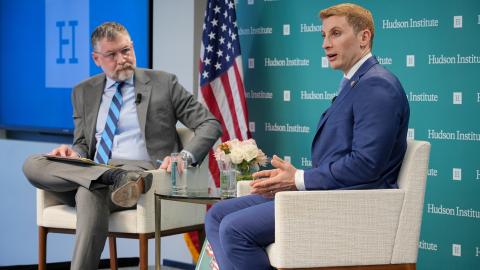
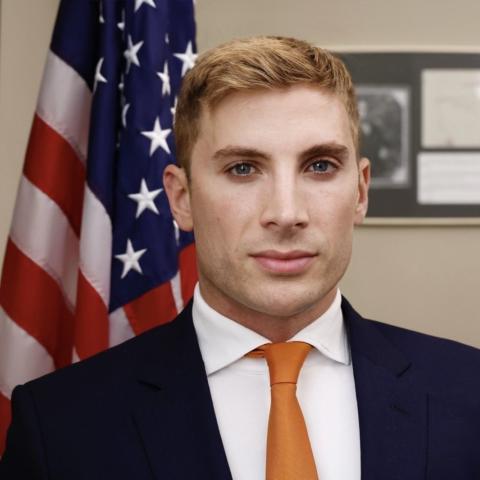
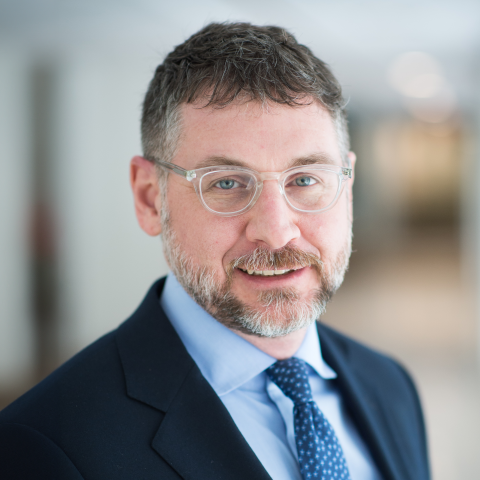
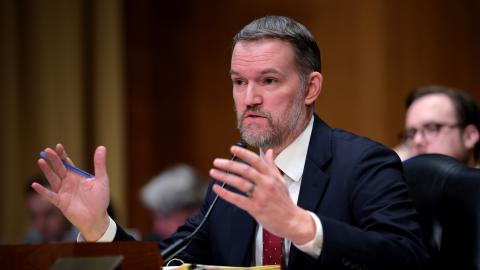
On December 12, 2025, Under Secretary of State for Economic Affairs Jacob Helberg and representatives from Japan, the State of Israel, Australia, the Republic of Singapore, the Republic of Korea, and the United Kingdom of Great Britain and Northern Ireland signed a declaration to mark the beginning of Pax Silica—a United States–led strategic initiative to build the secure, prosperous, and innovation-driven silicon supply chain essential for the future of artificial intelligence (AI). The State of Qatar and the United Arab Emirates joined the initiative as the eighth and ninth Pax Silica signatories, with others expected to follow. Their accession marks a significant milestone in the Trump administration’s economic statecraft strategy and signals a fast-expanding geopolitical consensus that economic security and national security are now inextricable.
As AI continues to transform global economics, politics, and security at an unprecedented pace, Under Secretary Helberg inaugurated Pax Silica based on the fundamental premise that the world’s most prosperous and secure countries will be those that prioritize resilient supply chains, trusted technologies, and strategic infrastructure as indispensable aspects of national power and economic growth.
Please join Under Secretary Helberg and Hudson Executive Vice President Joel Scanlon for a discussion on the Pax Silica initiative, America’s strategy to win the global AI race, and the new geopolitical imperatives of economic security and technology.
Joel Scanlon:
Good afternoon. Welcome to Hudson Institute. I’m Joel Scanlon, Executive Vice President here at Hudson. I can see by the size of today’s crowd that our guest needs no introduction, but it’s my pleasure to do it anyway. Jacob Helberg was confirmed as Under Secretary of State for Economic Affairs in October 2025 and stepped into that role well prepared by a career focused on the intersection of innovation, technological advancement, policymaking, and national security. He was the founder of The Hill and Valley Forum, a bipartisan coalition connecting the technologists and venture capitalists of Silicon Valley to policymakers on Capitol Hill. A senior advisor to Alex Carp at Palantir, worked at Google and was among the founding team at GeoQuant, a geopolitical risk and forecasting firm. He served as a commissioner on the US China Economic and Security Review Commission and as a senior advisor at Stanford’s program on geopolitics and technology. He has been a consistent voice on the national security and economic risks posed by China, including through his book, The Wires of War: Technology and the Global Struggle for Power.
He has been no less ambitious in his early days at the State Department, having launched the Pax Silica Initiative in December. After his recent trip to the Middle East, it is now up to nine signatory countries and a number of other key participants. We’re delighted to have him here today at Hudson, and now to welcome him for some opening remarks, Under Secretary Helberg.
Under Secretary Helberg:
Thank you. And it’s great to be here with the Hudson family. I want to thank John and Joel for hosting me today. And I want to take this opportunity to shed a little bit of light on our strategy at the State Department, what we’ve done so far, and how we’re planning on proceeding moving forward.
When we look back at the last decade, we see a world that fundamentally shifted beneath our feet. And for too long, the prevailing wisdom in Washington from people who claim to know better was that economic integration would inevitably lead to geopolitical stability. They operated under this comfortable, naive assumption that the global supply chain was neutral and purely in the commercial space. But as we stood at the dawn of this new era, the reality became impossible to ignore. The hardware of our modern life, the silicon that powers everything from your kids’ smartphones to our most advanced kinetic weapons, has become the primary theater of strategic competition.
We started with a massive structural vulnerability, a supply chain concentrated in a single volatile geographic point, and a technological infrastructure increasingly reliant on people who don’t have our best interests at heart. The core issue wasn’t just trade; it was the systemic weaponization of the supply chain.
Back in 2011, the experts at Goldman Sachs and the BBC issued a report that they called nearly a prophecy, declaring that China’s economy would inevitably overtake the United States by 2027. They looked at our hollowed-out towns and our shuttered factories and decided that American decline was a foregone conclusion. But those experts were wrong. They didn’t account for the resilience of the American worker, and they certainly didn’t account for President Donald J. Trump.
The American economy is growing at a breakneck 5.4 percent. We’re on track to add the equivalent of an entire Saudi Arabia to our GDP this year. And at the close of last year, the world’s 10 largest companies by market cap. Out of the world’s 10 largest companies by market cap, every single one was American, all of them, and nine of them were all technology companies.
This resurgence is not an accident. It’s the direct result of President Trump’s unwavering commitment to unleashing the full potential of American builders. And as the builder himself, President Trump’s leadership has restored the primal vitality of the American economy, ensuring that we lead not just by example, but by sheer gravitational force. As President Trump declared last July in his landmark speech, we will win the AI race. And this requires a comprehensive victory across three critical fronts. The race for innovation, we must produce the world’s best technology on a qualitative basis. The race for market share and diffusion, we must ensure American-led systems are the global default. And the race to secure our supply chains, we have to ensure that the physical and digital foundations that of the entire race depends on are secure and reliable.
This AI race is a fundamental struggle for the architecture of the 21st century. We must be clear-eyed that the supply chains of the AI revolution are being weaponized by our opponents as tools of political coercion, and dependency is being used as a leash. To address this, we have adopted a new strategic concept called Pax Silica. This is an economic security coalition built on the reality that our security is inseparable from our technological edge. The implementation of Pax Silica will unfold across three broad lines of effort: membership, policy, and projects.
On membership, we’re rapidly expanding this coalition of capable partners. We were pleased to welcome Qatar and the UAE to the partnership two weeks ago, and we look forward to welcoming India next month. Simultaneously, we’re holding ongoing discussions with other partners in various geographies, including Europe, Asia, and the Western Hemisphere, who possess unique capabilities in their own rights and respects. As we grow, we will create functional working groups that leverage the unique expertise of each partner country. This ensures that our work remains tangible and avoids dialogue for the sake of dialogue, and remains strictly focused on results.
On policy, we’re focused on results, and we will focus on securing our critical infrastructure, protecting sensitive technologies, promoting a pro-innovation agenda on AI, and implementing anti-dumping mechanisms. On projects, our vision for Pax Silica extends to powerful combinations of strategic partnerships and joint ventures at every layer of the supply chain stack, including energy, minerals, manufacturing, AI infrastructure, logistics, and financing. Projects will specifically focus on industrial capacity because we’re laser-focused on energy, minerals, and semiconductor fabrication, and we will work with the most talented foreign investors to accelerate the build-out of productivity-enhancing infrastructure right here in the US. On logistics, logistics are the arteries of industrial competitiveness. We will replace the brittle networks with intelligent systems to ensure that our companies are no longer at a systemic disadvantage. We want them to run faster, cheaper, and more reliably.
America is the most dynamic country in the world, first and foremost, because the talent and the ingenuity of our founders, our entrepreneurs, and our companies. The products we build, chant, and delight users, change lives and transform industries. Securing our supply chains will not only require policies, it will require products. At the state department, we’re committed to approaching supply chain security through a product-driven approach in partnership with our finest companies and most capable partners. By treating this challenge as a product, we will deliver better service for our companies and better outcomes for our economy. When it comes to AI, we will partner with our friends to ensure that they take part in this unprecedented economic boom.
By exporting American AI, we invite our allies to build their futures on our ecosystem of free and fair competition. Competing for market share means competing at the core, but it also means competing at the edge. We need to compete for data centers and for telecommunications. While we meet the needs of our partners for core AI infrastructure, we also need to compete through partnerships on 5G, 6G, and mobile communication systems. This is critical because the mobile edge is where the vast majority of the world’s internet users interface with AI systems on a day-to-day basis. We will ensure that when the world connects, it connects through a secure and trustworthy architecture.
We aren’t going to win by playing the other’s game. And if we truly beat out our competitors by simply copying their homework, we will end up with zero percent margins, so we’re not planning on matching them factory for factory in a race to the bottom, because that is a strategy to play a game we’ve already lost. We’re going to win the American way by out-innovating them and building a system that plays to our unique strengths while cutting out our biggest weaknesses. Agentic AI offers us the opportunity to do that. It is the nervous system that takes brittle old school supply chains and turns them into something that actually thinks and moves on its own. We will build this to ensure our factories and shipping lanes aren’t just sitting ducks for the next crisis, and this technology uses predictive powers to secure critical minerals and chips before shortages even start, all the while utilizing secure digital layers to keep our competitive edge unbroken.
In the months ahead, we will launch pilot programs to refine this approach, scale what works, and discard what doesn’t. Betting against America has never been a good bet, and it’s especially a bad one under President Trump. The era of American decline was a choice, and we have chosen to lead. As the President’s national security strategy makes clear, the future belongs to builders, and America will always be the future, so long as the future is built in America.
Thank you very much, and I look forward to today’s questions.
Joel Scanlon:
Well, thanks very much. A lot to start with. So let me maybe start at the broadest level. You mentioned the President’s focus on AI, the AI Action Plan, and the national security strategy, which identifies AI leadership and US tech leadership more broadly as a core US national interest. Where does the Pax Silica framework fit within the administration’s broader approach to AI leadership?
Under Secretary Helberg:
So, as I mentioned, the president laid out a very ambitious and necessary strategic goal in the AI Action Plan. He actually delivered that speech at an event called Winning the AI Race that I co-hosted with our colleague, David Sachs. And in that speech, he declared that America will win the AI race. America started the AI race and we’re going to win. And winning the AI race means winning on three fronts. We need to win the race for innovation. We need to win the race for diffusion, which is really market share, and we need to do that-
Under Secretary Helberg:
. . . when the race for diffusion, which is really market share. And we need to do that while securing our supply chains, because if we don’t secure our supply chains, we’re not going to have the most innovation. We’re going to have shortages of chips, slowdowns in infrastructure build-out, and ultimately, it’s going to slow us down at the top of the AI stack.
So, we’re pursuing a three-prong approach through Pax Silica. Pax Silica is a group of countries that brings together the world’s most technologically advanced economies. Together, we account for roughly, I think it’s 76 percent of the world’s semiconductor manufacturing capacity, so it’s obviously quite large. And this is the group of countries that actually has the companies that have the kind of unique capabilities to discuss things like increasing production capacity, setting dependency caps, and bringing those caps down over time, mineral security, in order to make sure that we actually have the kinds of minerals we need to produce the most leading-edge semiconductors.
So, Pax Silica is a framework that actually brings cohesion and a strategic concept to allow facilitating working with our partners, ranging from South Korea to Japan to Israel, on all of these issues.
Joel Scanlon:
Can I ask you, maybe on more of a functional question then? What are the policy tools here there? I mean, co-investment, funding, harmonization of regulatory regimes. Is it a division of labor based on comparative advantage, joint prioritization, all of those things? Or is it better to think of this as the government helps direct what are essentially going to be non-policy instruments on the private sector side?
Under Secretary Helberg:
So our biggest weapon, and I alluded to this in my speech, is our private sector. America thrives when we leverage our private sector and when our private builders build users that people love. And we really do less of a good job when we try to build things in-house as a government. Obviously, NASA is a great example. It really served its purpose, but nowadays, the vast majority of satellites that are getting launched in orbit are primarily being launched out of the private sector through SpaceX and Blue Origin and a number of other companies. And so ultimately that’s going to be our secret weapon.
The government has a lot of tools to create the right incentives in order to shape the kind of strategic environment that companies operate in. We can create on a government to government basis. A lot of agreements that actually removes hurdles and encourages and incentivizes private sector action. Ultimately, we don’t believe in these various projects being government run. We think the way that they’re going to be efficient, if the goal is to win this race, we have to have them be as efficient as possible, and they’re only going to be efficient if they’re run by private companies.
And so we’re working to make sure that we can actually implement deregulations in ways that are coordinated with our partners. We’re working to make sure that on the protection of sensitive technologies, that our companies can rely on working in an expansive space where their IP is going to be protected. We have to make sure that they have access to a logistics platform that allows our companies to move things around really quickly. If we want to secure our supply chains, we need to get minerals out of Africa and into places that have refineries and from the refineries into other geographies that probably have manufacturing facilities. And so the ability to move things around very efficiently at a competitive price point is critical.
The last point that I would add is for a long time, the ethos in our private sector was all about specialization and the horizontal outsourcing of different activities across the supply chain stack. So we have now the emergence of very large companies in our country that are fabless semiconductor companies that don’t have any fabs. And part of what we’re seeing is we actually need to get our companies to care in a much more vertically integrated way about their full supply chain stack.
They are really coming around, I will say. I mean, we saw Tim Koch in the Oval Office announced that he is looking to build an end-to-end secure silicon supply chain. The US government is working with companies like him to make sure that we remove regulatory hurdles, that we provide all the right incentives that actually allow him to move as fast as possible, but ultimately the private sector is in the driver’s seat, because that’s our biggest weapon. And so those are the people that we are working with the closest.
Joel Scanlon:
On that point, the relationship between the public and private sectors, as you just said, the private sector is generally speaking, going to be best positioned to know what their supply chains are, where their vulnerabilities and opportunities are. At the same time, at least my sense is there’s sometimes hesitancy to share that information. It’s privileged, proprietary, competitive advantage. How much of that is necessary? How much of it is governments just relying on private sector to direct where they need some help or need you to help facilitate agreements, logistics? What do you anticipate that relationship looking like?
Under Secretary Helberg:
So on logistics, the sad state of affairs is the reality is that a lot of companies don’t actually have that much information on what happens in their own supply chains a few degrees removed because if you’re a semiconductor company, you basically send your designs to a manufacturer that sends you the product that corresponds to the designs that you send, but you don’t necessarily know where the minerals are coming from and all the different vendors involved upstream of that supply chain. And since the crisis provoked by China’s export controls really on the global economy, companies are actually starting to care now and have really educated themselves on the incredible brittle state of our supply chains. And so ultimately, we are having conversations with them to figure out ways where the supply chains are de-risked.
I mean, this really isn’t about . . . Because when we have supply chain-related conversations, people immediately gravitate to saying, "This is a China strategy." And it’s actually not a China strategy, it’s an America strategy. It’s about our economy and making sure that our companies have access to logistics platform, to factories, to mining resources that are de-risked, that are reliable, and that are at a competitive price point.
So, we want them to care about every stack of their supply chain. They’re actually incredibly . . . They’ve been very receptive to that message and incredibly helpful. We work very, very well with them. And I think a lot of them actually view this as an opportunity, too. One of the lines of conversation through Pax Silica, which was really opened through the trade renegotiations, is talking about preferential access to markets with a lot of Pax Silica partners. And so we’re having those conversations. We’re having conversations right now about preferential access for minerals specifically, and it’s been incredibly well received by not only the countries but the companies as well.
Joel Scanlon:
You just described this as an American strategy, a pro-American strategy. There are nine signatory countries, another number of other key participants, Taiwan, and the Netherlands, of course. What have they signed up for? What are their roles and responsibilities? What are their expectations about what they get out of this framework?
Under Secretary Helberg:
So, I think everyone understands that we are going to have policy-related conversations on having a baseline understanding of what we mean by what counts as a sensitive technology, what we mean by what counts as critical infrastructure. And that matters because if we accept, if this is the cohort of countries with who we are making a generational decision about integrating our supply chains, because we’re saying these are the countries that we trust, we want to make sure that we’re not going to wake up tomorrow and read a headline that their biggest port is now owned by a foreign military, because that would be problematic for our own economic security.
So, we need to have a conversation about just having a shared basic understanding by what counts as sensitive tech and critical infrastructure. We also need to talk about anti-dumping because the reality is that there is a country that has a longstanding practice of dumping on the global market and sinking the price of commodities whenever competitors arise. And so, if anyone wants to have competitive industries in their respective countries in any of the cutting-edge technologies, we need to be able to have a healthy conversation on anti-dumping practices. And I think the countries are there.
Now, there’s still a long ways to go, but at a high level, notionally, people understand that those conversations need to take place. The flip side is we also want to talk about positive, proactive projects that we want to undertake together, because it’s not just about reacting to things like dumping or the theft of intellectual property. As I said earlier, it’s actually a positive agenda for the future, and it’s about making sure that our supply chains are competitive, but that we actually leapfrog a lot of the old technologies.
So, for example, in my introductory remarks, I talked about agentic AI because the goal is not actually to recreate the infrastructure of yesterday by building a road with an analog port. The goal is to use autonomy, is to use artificial intelligence, to have 24/7 throughput, and to actually have systems that are intelligent, that operate on their own, and that self-correct in an efficient way. If you can predict the demand for certain things, you know how to allocate resources geographically in a way where you never have shortages of anything, and it’s possible to do that.
Private sector companies already do that today. The canonical example is obviously Amazon, which has built probably one of the most sophisticated supply chain architectures in the world. That is how they deliver Amazon Prime and can guarantee a two-day delivery in almost any geography, is because they use software and data analysis to actually predict and anticipate the demand for certain things. They’ve created what’s called facilitation centers in various locations around the world, and they’re very well organized when it comes to the distribution of these products and commodities.
We can do the same thing for our technology supply chain in a way that completely leapfrogs the way that the supply chain operates today, but you can only do that if you have a vertically integrated approach. If you operate through—
Under Secretary Helberg:
Not if you have a vertically integrated approach. If you operate through a patchwork of 1,000 different small mom-and-pop shop vendors, it’s not going to work.
And so, we’re having conversations about ways of remaining nimble while actually bringing a certain amount of coordination and cohesion to how the supply chain system works. And those conversations are taking place in tandem with companies because the supply chain lives in the hands of private companies. The governments don’t control a lot of those businesses.
So, there are a lot of opportunities, if I could just add one last point. On the projects, the two big buckets of projects that we’re looking at are in industrial capacity and in logistics. We want to build out industrial capacity, industrial capacity including factories, refineries, and semiconductor fabrications. And in logistics, we want to build out a very modern logistics platform that allows our companies to move from point A to point B, because that is the artery of the supply chain system.
Joel Scanlon:
So do you see this as, is it a, sounds like not quite a clearinghouse, but a forum for sharing information for raising things that then you may take to other parts of the government to figure out how to actually solve, but this is a way to share information and to prioritize among the group of signatories? Is that?
Under Secretary Helberg:
So on the policy front, it really is a forum to discuss these policy-related issues that we all need to be on the same page about. On the project front, right now our plan is to remain flexible and plurilateral, not multilateral, because the reality is that not every country has every capability.
And I will say, the great thing about our country is we’re probably one of the only countries that actually has most capabilities. We have a lot of minerals, but we also have semiconductor fabs. We are quickly ramping up our manufacturing capacity, but most countries don’t have this kind of comprehensive breadth.
And so we’re talking. . . The beauty about Pax Silica, is really leveraging the unique expertise that different countries have. So for example, Singapore makes 10 percent of the world’s semiconductors, but they’re also world-class in port logistics. They have some of the most sophisticated port logistics infrastructure in the world, more sophisticated than ours.
And so it’s actually a strategic advantage and a benefit to be able to draw on their expertise in order to factor in for best-in-class practices and systems for how to actually implement the most modern form of autonomous logistics.
So for projects, we’re really looking to start with pilots on a bilateral or plurilateral basis. And then based off of how the pilots go, we’ll scale what works and across the entire cohort, basically.
Joel Scanlon:
Is it your expectation that the United States is going to be involved in every one of those bilateral or plurilateral agreements or do you think that somewhere down the line this is a forum where the other signatories may have interest, the line that the United States does not need to be involved in?
Under Secretary Helberg:
Look, right now we’re involved in everything, and frankly, other countries want us involved in everything. Countries are comfortable with the US leading on these things. And someone has to lead. And so, I think countries who are part of this view us as the natural leader.
It’s hard to project ourselves into the future to know if this will sort of become a more decentralized effort. Why not? But right now, we’re sort of helping drive a lot of this and we’re obviously very comfortable doing that.
I mean, I will say the other natural reason why I think a lot of people look to us is because most of the end customers of the entire supply chain system are American companies. I mean, if you’re talking about minerals in Africa and refineries in Korea, the end customer is going to be Nvidia and Apple and all of these trillion-dollar companies, and they’re all here basically, with a few exceptions. But the fact that we are home to companies that basically make up a GDP the size of the G20, if you exclude the US, gives us a lot of oxygen in these conversations.
Joel Scanlon:
Can I ask you about one of the participating but non-signatory entities that seems like does not always look to the US, and that’s the EU, at least on issues around AI? How do you see the either convergence or further divergence of the US and the EU on AI specifically and then what you anticipate their role being in Pax Silica?
Under Secretary Helberg:
Yeah, that’s such a great question and it really is such an important one and it’s made a lot of news recently with the president’s speech at the World Economic Forum.
As I have a lot of affinity for the EU, as do most of the people in the Trump administration, I lived there 18 years, I think one of the big misperceptions is that our administration is anti-EU. And that’s actually not the case. I would actually posit the opposite, we are pro EU. And the reason is that the EU is in incredibly ill health. And so the compassionate approach to a close friend is not to, if your friend is incredibly sick, it’s not to actually be indifferent and simply tell them, "You’re doing great."
Joel Scanlon:
Are you going to euthanasia here or is it something else?
Under Secretary Helberg:
No, it’s to actually tell them that they need to go to the ER and they need to actually take their systemic health issues seriously. The fact that their immigration is completely out of control, their macroeconomic situation is dire. We’re growing at five percent. They’re growing between zero and one percent, and that’s been the case for over a decade.
And it’s actually, when you adjust for the fact that they’re growing between zero and one, while the rest of the world is growing around three percent a year, their share of global GDP is collapsing. And they went from being I think around almost 60 percent of global GDP once upon a time now down to 15 percent, which is. . . And we actually, our economy is 50 percent larger despite the fact that we have 100 million less people.
So it’s really not looking great in the EU, and the impulse of the EU is to always regulate. They just regulate, regulate, regulate. It’s their biggest export and they try to export these regulations onto the world stage.
And you’re absolutely right that on software especially, it is the biggest paradox, because on the one hand, one of their deepest aspirations is to have a European Google or a European OpenAI. And on the other hand, they create the conditions that make it virtually impossible for intelligent, talented Europeans to actually build juggernauts.
The other fascinating thing is the EU was initially started as a common market for coal and steel, and now there’s no more coal, there’s no more steel. They have just passed a law regulating AI that basically ensures that they’re not going to have an AI industry. They’re regulating space.
And it’s a classic example of just bureaucratic overreach where they started very small and narrow, and it just grew and grew and grew over time. And now they’re passing a directive that basically is going to require every company in Europe to submit data to the EU on basically an ESG report card for every factory, every farm in the EU. It’s completely out of control. And ultimately, we’re going to be fine. It’s just they’re an ally and because we care about them, it’s deeply alarming.
Now, with that being said, to answer your initial question, so we deeply diverge on software and AI-related issues. We really don’t see eye to eye. Where we do see eye to eye and where our viewpoints do converge is on economic security matters, because now, and this is actually encouraging, the EU really is waking up to the fact that they have totally deindustrialized. They have been led by, similar to our country, a group of elites who for a long time saw China as a land of opportunity, a large market, et cetera.
And Volkswagen and all these European giants are now getting absolutely crushed by BYD and Chinese competitors. And so now they’re waking up about unfair competition and they’re actually undergoing sort of their own recalibration.
Ultimately, they’re on board with de-risking. They’re on board with the importance of having secure supply chains. They’re on board with a lot of these measures. So, we do have areas of convergence. We want to be able to work with them in a constructive way.
The biggest impediment and challenge to working with them and making progress on economic security is because our viewpoints on AI and software are just so distinctly apart right now. And ultimately, my hope is actually, there’s a chance I might go to Brussels to help have these conversations with our friends over at the EU, if not this month, next month, and hopefully we’ll make progress, but it’s been very difficult.
And one of the slightly insidious dynamics is the EU actively discourages national governments from being able to exercise their sovereign right over the economic policies of their country. So it’s been an interesting dynamic, but ultimately, it comes from a place of love and we want to work with our European colleagues very much, especially on economic security. We just hope that we could get to a more sane place on software and AI.
Joel Scanlon:
You wrote a piece a few years ago that you termed Decentralizing Deterrence sort of in the face of geopolitical threats that were no longer or that strain US capacity in our current state that we needed to shift more responsibility to allies, build redundancy among our network of alliances, accept some greater risk in terms of our transfer of weapons. It’s not a perfect analogy, but it strikes me that’s a little bit what you’re thinking about now where we’re trying to-
Joel Scanlon:
. . . thinking about now, where we’re trying to say in terms of the needs to stay ahead of this technology race, we have to accept a little bit more risk in how we share information, innovation, our technology with the right set of partners. On the other hand, there’s this question of, how much risk is too much risk? I know I think it was around the time that the Pax Silica Summit, you did a media round table where you talked about the balance between spreading innovation, diffusion, and protecting what we need to protect. How do you think about those things? How do you think about it in relation to other initiatives going on within the administration and how Pax Silica in particular can address that balance?
Under Secretary Helberg:
So that’s right. During that media round table, we talked a little bit about how, when one of the fundamental trade-offs is we want to compete on market share, which inherently involves exporting your technology. But whenever you export your technology, there’s a little bit of a trade-off with your qualitative edge because more people have more of your technology. And so how do you ensure that you can prevent technology leakage to jurisdictions and entities that you have concerns about? And ultimately, you’re correct that our view is, volume and quantity has a quality onto its own. When you have an app store, you want the app store that has the most apps. And so having exquisite technology that no one uses is ultimately not a recipe to win the race. So we want to export. We want everyone on the American stack.
And we’re looking at various creative ways to scale our exports while ensuring that we have security safeguards in place that actually prevent entities of concern and the like from being able to access that technology. Those constraints and those concerns have not disappeared. We still have the same national security concerns with respect to exporting high-end technologies. We’re just looking for ways that we can actually use advanced systems and other methods to prevent technology leakage.
Joel Scanlon:
Any concern about any of the partners within the framework who in the past, maybe let’s say, would be accused of straddling some of those lines between, they’re happy to take US market share, but Chinese market share as well?
Under Secretary Helberg:
Look, I think the reality is that a lot of countries went through phases when it was politically okay to do business with a lot of countries that today we obviously feel very differently about. And so ultimately, I think having a purity test is a little bit. . . If you held everyone to that standard, you would quickly run out of friends. We want to look to the future. We look at actions and we very much have a trust but verify approach, where we’re not just taking countries at their word, we’re asking them to actually implement very specific, pretty strict standards, not just through the policy related lines of effort, but also specific safeguards and systems that give us the kind of assurances that we’re looking for.
Joel Scanlon:
I’m going to open to the audience in just one second, but let me ask maybe one final question. Six months from now, a year from now, what does a successful initiative look like in your eyes? Are there specific projects? I know that you’ve alluded to them a couple of times that you can give us a little bit more information on that you see as sort of setting the stage.
Under Secretary Helberg:
So it’s a little hard to do a curtain raiser of specific projects while they’re still coming together, but I think broadly speaking, we’re very, very focused on logistics because we think it’s an area of the whole industrial debate that has been under explored. Our country has ramped up on these issues very, very fast. I mean, obviously, as a country, we’ve ramped up on semiconductors very fast, and the importance of semiconductors, how the best way to actually re-shore that here. We are now in a race to do the same thing with critical minerals. There’s a lot of different segments of the supply chain that we’re really moving on quickly. And it’s not just about industrial capacity, although industrial capacity is critical, is we need a way. . . if any cohesive successful supply chain strategy is going to inherently be based on our capacity to move things from point A to point B.
If it’s not to source key inputs from various distributed geographies, it’s to get our goods to market. Mobility is going to be essential, and so we’re taking a very close look at that in addition to industrial capacity.
Joel Scanlon:
Great. Please identify yourself, keep it to a question. We’ll try to get through maybe two in our time left, Ken Moriyasu.
Audience Member Ken Moriyasu:
Thank you very much. Ken Moriyasu from Nikkei Asia of Japan. You talked about this not being a counter China strategy, but an American strategy. President Trump’s Board of Peace for Gaza is also an American strategy. It’s a new group of countries that are willing to align with the US. If you look at the countries, the members on the Board of Peace, some of them are very rich in critical minerals, such as Vietnam, Indonesia, Kazakhstan, Azerbaijan, Mongolia. Are they high on your list to add to Pax Silica? But these are also kind of on the fence with China. They have good relations with China as well. Do you consider them too on the fence to include in Pax Silica? Thank you.
Under Secretary Helberg:
It really depends on what kind of partnership we’re talking about. And so the answer is, probably not. And the reason is that I don’t think China would have any qualms of adding our allies to the Belt and Road Initiative. I mean, they added Italy for a while before Italy pulled out. So I think, if you want to compete, you have to meet people where they are. And ultimately, bringing a better path to the future, to the table, is the best way to actually get buy-in for the kind of future you’re trying to build. I mean, as you point out through the Board of Peace, we’re in conversations with all of those countries. I’ve been in touch with most of them around Pax Silica related things, but minerals, for example, is just not that sensitive. It’s not semiconductor manufacturing. And so different issues raise different levels of sensitivity.
Our biggest sensitivities are around high end technologies. That’s the main reason why we care about critical infrastructure and the protection of IP, but we do have certain standards and practices that we expect of our partners, and so we’re going to have those conversations with them. One more.
Joel Scanlon:
Yes, ma’am.
Daniella Cheslow:
Thank you so much. Daniella Cheslow from POLITICO. Keir Starmer is in Beijing today. Canada is a non-signatory participant. They’ve been disinvited from the Board of Peace by Trump. I wondered if Trump’s erratic foreign policy is getting in the way of Pax Silica’s ability to get allies on board. And a second question, you seem to be avoiding China in your remarks, and I would like to hear you comment on that. Are you signaling a shift toward Beijing?
Under Secretary Helberg:
I don’t think I’ve avoided China at all. I think we’ve spent at least half of this conversation talking about China. So President Trump’s foreign policy has actually enabled this entire effort. First of all, the fact that our country’s growing at five percent gives us an enormous amount of momentum and leverage. The fact that our companies are dominating the top 10 tier of global rankings gives us an enormous amount of leverage. And then his tariff policy is probably our biggest source of leverage. So I’m sure because you all work at think tanks, or most of you, for a long time, the main line that we have heard out of the intellectual community is, "America’s home to five percent of the world’s consumers, therefore we need to trade in order to access the global markets." We’re home to the five percent of the world’s consumers, but we actually make up 30 percent of global consumption because the reality is that most consumers out there, not every consumer is equal on an economic basis.
Different consumers in different geographies have varying levels of purchasing power, and that is just the reality. And that’s why our companies actually do very little trade with Africa. Because Africa is not a large economic market, we’re actually in discussions with a number of companies to encourage them to do more business in Africa, even if the business there is much, much smaller margins, because we view it as strategic and important. And so, to answer your question, I mean, absolutely not. Look, these countries actually really like our president. I know it may seem mind-boggling to you because you’re probably in an atmosphere where you’re just living and breathing the New York Times every morning and not in the best of moods, but the reality is, you travel abroad and there is a huge amount of admiration for our president, for the fact that he’s a sample of one, everyone knows it.
He’s incredibly resilient, and world leaders respect and really like him. And that has actually been a huge source of advantage. If you go to any country in the Gulf, they adore him. In Israel, I mean, his approval rating is 90 percent. It’s crazy. And so I’d say, actually, his popularity overseas is a huge strategic benefit.
Joel Scanlon:
It’s a great place to wrap up and for me to plug the fact that next Wednesday morning, we’ll have US Trade Representative Jamieson Greer here at Hudson to talk more about the president’s trade policy. So that was a great intro to that. Thank you so much for your time today. Fantastic remarks and conversation. We really appreciate all of your efforts and hope we can welcome you back to Hudson before too long.
Under Secretary Helberg:
Thank you.
Joel Scanlon:
Please join me in thanking Under Secretary Jacob Helberg.
Join Nina Shea in a discussion with Ethan Gutmann and Congressman Chris Smith, the author of the Stop Forced Organ Harvesting bill.
Please join Acting Chairman of the Council of Economic Advisers Pierre Yared for a conversation with Senior Fellow Tom Duesterberg on the first year of the Trump administration’s economic agenda and the key factors shaping the US economy’s outlook.

Experts and policymakers will discuss how to close regulatory gaps, improve compliance, and build more resilient and trusted infrastructure.

Please join Ambassador Greer for a fireside chat with Senior Fellow Peter Rough on the Trump administration’s first year back in office and what’s next for US trade policy.