










What does war in the Middle East mean for the credibility and effectiveness of US-led deterrence of China in Asia? The rule of thumb is that the more the US is caught up in problems in other parts of the world, the less focused it is on Asia and deterring China.
There is a seductive logic to this argument. American reserves of hard power are finite. The more it is deployed in one part of the world, the less it can be used somewhere else. And the less US hard power available in Asia, the poorer its ability to deter China.
Such reasoning is not wrong, but it is inadequate. Donald Trump’s war against Iran is about Tehran’s nuclear and ballistic missile program, and not part of a 4-D chess game to outflank China. Even so, US-led deterrence has been strengthened due to events and developments over the past few weeks.
To be sure, war is very much a matter of reserves of weapons, supply chains and logistics. In the immediate term, the US military will be stretched if it is needed in Asia.
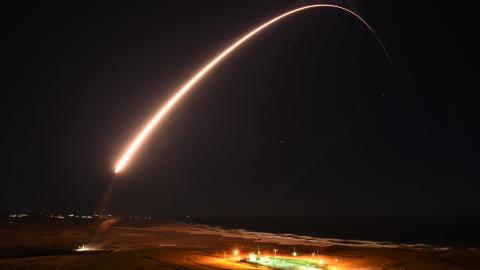
Operation Epic Fury is the most intensive air campaign in the opening days of a war in history. Estimates are that the US used over 5000 munitions in the first four days and over 11,000 in the first 16 days. This includes more than 300 Tomahawk cruise missiles in the opening days of the war ,when the Pentagon had planned to buy just 57 new ones in the current fiscal year.
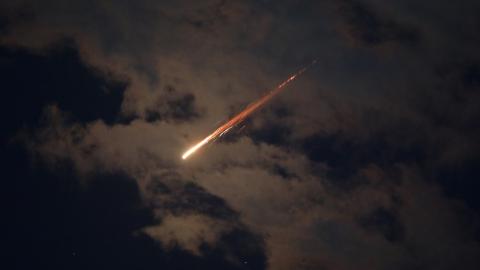
It is even more serious when it comes to expensive Patriot and THAAD (terminal high altitude area defence) interceptors. America used an estimated 140 and 150 of these interceptors respectively in the first few days of the war. Only 39 interceptors are slated for delivery in 2027. Stocks are a closely guarded secret, but the Trump administration has plans to raise production of Tomahawks from 60 to 1000 a year and Patriot interceptors from 600 to 2000. These are only plans and are as yet unfunded by Congress.
None of this means Xi Jinping is licking his lips in anticipation of a quick and successful campaign across the Taiwan Strait. For a start, his recent purges of senior military figures, including general Zhang Youxia – who was the most senior military officer in the People’s Liberation Army and the vice chairman of the all-powerful Central Military Commission – creates a short-term but debilitating gap in the leadership ranks of those who would direct any military campaign. That a high proportion of purges have occurred in the Rocket Force, which is the part of the PLA that was set up to lead military actions against Taiwan, is also revealing.
Moreover, just as we do not know the PLA’s true readiness, capabilities, and resources, China does not know how degraded the US stockpiles for a Taiwan contingency really are. Besides, rather than just a dispassionate calculation about what skill and resources each side can bring to the fight, deterrence is an inexact guessing game.
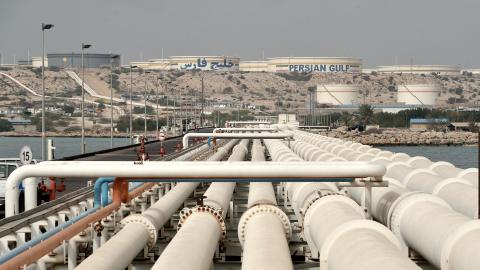
In the absence of verifiable information, some answers are nevertheless clear. Iran was never a genuine ally but was a significant Chinese strategic asset. That is no more. Iranian power is severely diminished and will be for some time. It is no longer the feared great power in the Middle East that it was only a few weeks ago.
More importantly, when thinking about any forceful seizure of Taiwan, the initial Chinese calculation is whether it can land forces in Taiwan without suffering unacceptable losses and whether Taiwan can be brought to its knees in a matter of weeks. Beijing does not really know the answer, which brings us to the next key question.
Does the US have the stomach for a fight? If it does, then any use of force against Taiwan is likely to be a disaster for all involved, especially China. And a foreign policy disaster might well be an existential threat to the ruling Communist Party and Xi himself. This is the ultimate reason for Chinese hesitation.
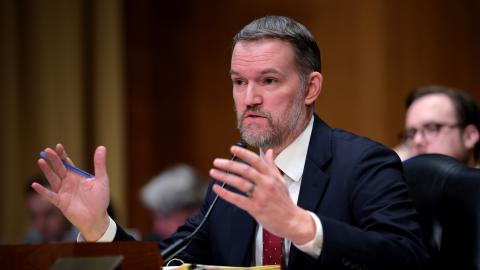
Most critically, it becomes not just a calculation about the balance of power in north-east Asia but an assessment of the balance of resolve between the two great powers, and in practice, a guessing game about Trump’s nerve and psychological willingness to escalate. I doubt Xi holds much stock in the TACO (Trump always chickens out) claim. The Iranians certainly do not.
Is Trump more likely to respond with force than his predecessors Joe Biden and Barack Obama? Is he more likely to use force when the adversary appears vulnerable, and he sees an opportunity for a big strategic pay-off? The answers are clearly yes.
The obvious caveat is that taking on Iran is not the same as taking on Russia (which he seems reluctant to do), let alone China. And Trump clearly admires the daring and risk-taking of Benjamin Netanyahu’s Israel, even if he has not yet shown an eagerness to support more cautious allies – which he needs to bring on board in Asia.
But all things considered, and regardless of what happens in Iran, Xi will be more uncomfortable and dissatisfied with the state of the world than he was not so long ago. This is good for deterrence.