










Introduction
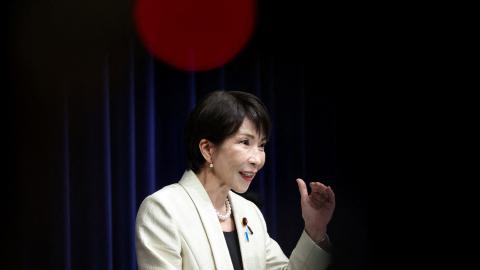
On March 19, Prime Minister Sanae Takaichi will be making her first trip to Washington as Japan’s leader, where she will have the opportunity to demonstrate two things: 1) Japan is an ally that follows through on its promises; 2) that American and Japanese priorities are closely aligned, and that collaboration are vital towards achieving the president’s agenda.
Takaichi previously met President Donald Trump back in October 2025, when Trump stopped in Tokyo on his way to the Asia Pacific Economic Community (APEC) meeting in Seoul. This visit, which occurred merely days after Takaichi became prime minister, was a success. The two governments signed agreements on critical minerals, shipbuilding, and energy. Perhaps more importantly, both leaders demonstrated personal chemistry, thanks to their shared political priorities and affection for former Japanese prime minister Shinzo Abe.
Since October, though, four key developments have occurred.
- Takaichi won a landslide electoral victory in February, and her Liberal Democratic Party (LDP) now holds a supermajority in the lower chamber.
- The two governments announced the first batch of projects under the $550 billion strategic industrial fund.
- China began using aggressive economic coercion against Japan after an opposition party politician forced Prime Minister Takaichi to affirm that a Chinese attack on Taiwan could constitute “survival-threatening situation,” in which case Japanese law would allow Tokyo to undertake collective self-defense.
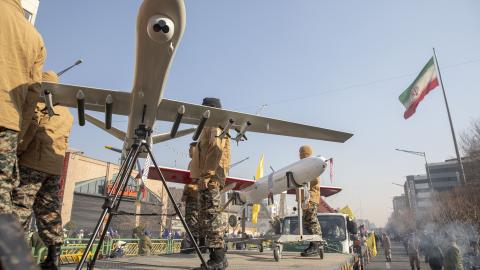
- The Trump administration began undertaking military operations against Iran, which is impacting global energy markets and undermining China’s partnership of convenience with Tehran.
Upcoming developments later this year will further shape the tenor of the United States–Japan relationship. For example, President Trump will likely visit China later this year, and the two nations will negotiate issues concerning host nation support this summer. Japan also plans to release its new national security documents at the end of this year.
Against this backdrop, Takaichi’s likely aim this trip is to affirm how the Japan is America’s most dependable ally, an ally that follows through on its promises. At a time when other countries make empty, unrealistic gestures or have a history of not fulfilling their agreements with the US, Japan stands apart. In the face of challenging global economic and security challenges, Takaichi will show how the two countries’ economic, technological, and security are aligned and benefit from stronger cooperation.
Much of the expected announcements out of the summit will focus on economic rather than security issues. However, the broader bilateral diplomatic relationship, as well as the uncertain regional and global environments, provide the implicit setting for the two leaders’ meetings. Here are several key issues that the visit will—or should—address.
Key Issues
The $550 Billion Strategic Industrial Fund
The foremost issue that the two leaders will address is the $550 billion strategic industrial fund, a key element of the two countries’ trade deal from July 2025. The fund—which will support projects in key strategic sectors including artificial intelligence, energy, and critical minerals—announced its first batch of projects on February 17. The three projects in this group consist of:
- A 9.2 gigawatt-hour gas power plant in Portsmouth, Ohio, that will power AI data centers. Total cost is estimated at $33 billion, and SB Energy, a subsidiary of Softbank, will be the operator. Japanese firms such as Toshiba, Hitachi, and Mitsubishi Electric are interested in providing relevant equipment.
- A deepwater oil export terminal in Brazoria County, Texas, that will generate $20–30 billion in US crude exports. Total cost is estimated at $2.1 billion, and Sentinel Midstream will be an operator. Mitsui O.S.K. Lines, Nippon Steel, JFE Steel, and MODEC have expressed interest in providing relevant equipment and materials.
- A high-pressure, high-temperature synthetic diamond grit facility in Georgia that will service the semiconductor, automotive, and energy industries. Total cost is estimated at $600 million, and Element Six, which is part of the De Beers group, will be the project operator. Japanese diamond toolmakers Asahi Diamond Industrial and Noritake are interested in offtake.
Neither government, however, has released the administrative or financial terms of these projects, suggesting they are still under negotiation. Discussions with the private sector indicate that more information about such terms, as well as solutions to address workforce availability and regulatory processes, will be vital for encouraging industry from both nations to propose further projects for the $550 billion fund.
The upcoming Trump–Takaichi summit will likely show continued momentum behind the $550 billion fund. In addition to clarifying the first projects’ terms, the summit should announce a second round of projects. One venture could be a $13 billion Japan Display plant that would service American automotive, medical, and defense needs. The two countries can also cooperate on nuclear energy or on a copper refining facility. Such projects can strengthen US-Japan cooperation in strategically important sectors.
Critical Minerals and Supply Chains
The two leaders will likely introduce new initiatives to cooperate on critical minerals, building on their October 2025 agreement to diversify their mining and processing of these materials. This builds off of a flurry of international bilateral agreements that the White House has advanced on critical minerals and rare earths, such as similar agreements with Australia, Malaysia, and Thailand last year. Subsequently, the Trump administration pushed ahead on a number of multilateral critical mineral initiatives, such as the State Department’s Pax Silica and the critical minerals ministerial from February 2026. At the same time, Japan has been proactive as well, signing rare earth development agreements with entities in France and Brazil, and collaboration with other G7 countries to secure critical minerals.
The common thread in these initiatives emanating out of Washington and Tokyo is opposition to Beijing’s dominance of rare earths and key supply chains. In the past year, Beijing instituted global restrictions against rare earth and legacy semiconductor exports, and more recently, “dual-use material” export restrictions targeting Japan. These coercive actions were in response to geopolitical or economic measures that angered Beijing, but they are also part of China’s larger desire to acquire downstream supply chains through technology theft. Such aggression may currently target Japanese firms, who occupy midstream positions in supply chains. But these policies also hurt American manufacturers who depend on Japanese suppliers, and who will eventually come under threat themselves from Chinese competitors.
Critical minerals cooperation will therefore be a key issue during the Trump–Takaichi summit, with preparatory work leading up to the meeting. The two countries just announced that they will create a “US-Japan Critical Minerals Project” in Indiana, North Carolina, and Arizona, to address rare earths, copper, and lithium development. Last weekend, Minister of Economy, Trade, and Industry Ryosei Akazawa announced at an Indo-Pacific energy ministerial that Japan will work with the US on a rapid-response group for supply chain disruptions that will entail information sharing. At the same ministerial, Japan and other Asian nations signed more than $57 billion in 22 agreements for energy and critical minerals. In addition, the US Trade and Development Agency renewed its partnership with the Japan Bank for International Cooperation to collaborate in the infrastructure investment needed for such energy and critical mineral projects. The Office of the US Trade Representative is working with the Japanese government to design a trade deal that will include a price floor and tariffs for materials to compete against Chinese market distortions. Finally, there is expectation that both countries will sign an agreement to cooperate on deep-sea mining for rare earths, especially off Japan’s Minami-Torishima island.
As China has made it clear that it will continue to double down on its dominance over critical mineral supply chains in its latest draft of its upcoming Five-Year plan, US-Japanese cooperation in this area bolsters both countries’ economic security. It will also give President Trump leverage in his upcoming trip to Beijing.
Shipbuilding
A third issue of likely announcements later this week will be shipbuilding. Shipbuilding is a high priority for both the United States and Japan, two maritime powers dependent on global commerce and the naval power needed to secure it. American shipbuilding—as exemplified by Liberty ships and Essex-class carriers—played a major role in our victory in World War II, while Japan became the world’s leading shipbuilder by 1956 and dominated global shipping well into the early 1990s. Since then, however, Japan’s share of global shipbuilding has declined to about 8 percent, and America’s share has declined to less than 1 percent.
Each country has introduced plans to revitalize its shipbuilding sector. In April 2025, the White House announced its intention to restore American maritime dominance. The Maritime Action Plan (MAP), finally published in February 2026, introduced several measures to strengthen American shipbuilding. This includes a universal fee on foreign-built vessels to fund future shipbuilding measures. It also includes the creation of a Strategic Commercial Fleet (SCF) of US-built and US-flagged ships. Finally, it encourages a “bridge” strategy that permits foreign construction while eventually shifting to US construction. Finnish icebreakers are the obvious case, but the “bridge” strategy will likely also extend to Japan and South Korea given the two nations’ shipbuilding agreements with the US.
Japan has had shipbuilding plans of its own for several years now. This includes measures within the 2022 Economic Security Promotion Act (ESPA) to support more resilient supply chains for ship components. In June 2025, the LDP proposed a 1 trillion-yen fund to support the shipping industry; the Japan Shipbuilding Industry Association matched it with a 350-billion pledge to double Japan’s shipbuilding volume. In December 2025, the Japanese government introduced a 720 billion yen, over 10 years, to support the shipping industry through doubling gross tonnage produced, automation and robotic ship construction, facility expansion, and equipment procurement.
The two countries’ shipbuilding priorities should prompt further announcements of cooperation during Takaichi’s visit this week. The US and Japan created a working group to address these goals after Trump’s visit to Tokyo in October 2025. The group has held extensive discussions on cooperation in shipbuilding, industrial base investments, increasing vessel demand, workforce development, and technological innovation. Yet conversations with working group members indicate there are differing priorities and investment timelines.
Such differences over policy and planning between close allies is natural. But at a time when Chinese shipbuilding is dominant—accounting for three-quarters of future LNG carrier orders—both Washington and Tokyo must work to address these differences to ensure maritime prosperity and security for our two nations.
Artificial Intelligence and Cutting-Edge Technology
Takaichi’s visit to Washington should also prompt new cooperative agreements in AI-driven research and development in cutting-edge technological fields. In November 2025, the White House announced the creation of the Genesis Mission, which seeks to “build an integrated AI platform to harness Federal scientific assets…to train scientific foundation models and create AI agents to test new hypotheses, automate research workflows, and to accelerate scientific breakthroughs.” Genesis is thus at the foundation of the Trump administration’s numerous efforts to support AI development and its application in order to support the priorities of industrial revitalization and technological leadership.
The Takaichi government, which has similar ambitions to spark Japanese economic growth and technological innovation through investment in 17 strategic sectors, is keen to collaborate with America. At the SupercomputingAsia conference in Osaka in January 2026, Japan became the first international partner to work with the US on the Genesis Mission. Takaichi has placed a great deal of emphasis on investment in critical technologies to fuel her plans to place the Japanese economy on a growth trajectory in the long term. As such, her visit this week is likely to yield further progress on areas of AI-powered research and development between the US and Japan, building on existing research efforts between Riken, Fujitsu, and Nvidia to develop a successor to Japan’s Fugaku supercomputer.
As technological innovation becomes the currency of geopolitical competition, both the US and Japan understand that continued R&D and implementation will be how we can deter unfair competitors. The two leaders in Washington and Tokyo understand this, and both will work during this summit and in the future for this effort to “run faster.”
Golden Dome
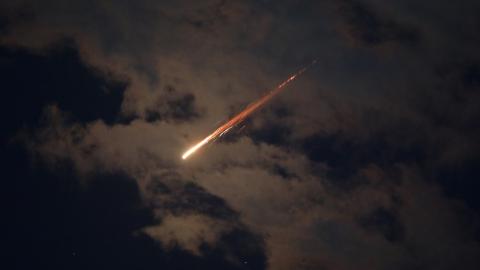
In addition to these economic and technological agreements, Trump and Takaichi are expected to discuss Japan’s participation in the “Golden Dome” missile initiative. The aim will be to cooperate in the joint development of interceptor missiles, the construction of a satellite network, and to improve Japan’s ability to counter hypersonic glide vehicles that China, Russia, and North Korea are currently deploying.
The president has made Golden Dome a priority for a long time, issuing a directive for planning development in January 2025, and then holding a conference in May 2025 announcing that it will be operational by the end of his term. Bringing such a project online will be a considerable feat, requiring operational scaling, technological integration, and security sufficient resources. Yet in the face of new missile challenges, existing ballistic missile defense may no longer be sufficient.
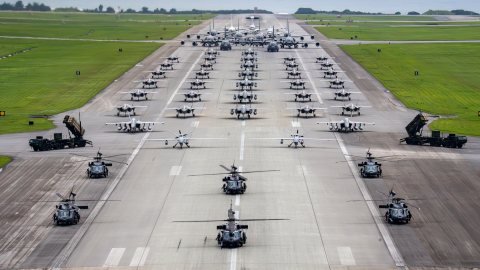
Japan, which lies at the front lines of hypersonic missile threats from China, Russia, and North Korea, and hosts 55,000 US service members, has both incentive and capabilities to contribute to Golden Dome. Tokyo plans to build a satellite constellation by March 2028 for missile intelligence and tracking. This capability and intelligence sharing will be vital to bilateral cooperation on Golden Dome, as will the development of the Glide Phase Interceptor (GPI).
At the same time, Golden Dome should not be conceived solely as a system for the defense of the continental United States. To be strategically effective, it must also contribute to the defense of forward US territories and allied operational spaces across the Pacific. This includes Hawaii and Guam, as well as the broader maritime and airspace extending toward Japan and Taiwan along the First and Second Island Chains. Integrating these regions into a more resilient missile defense architecture would strengthen deterrence and help safeguard the economic interests and long-term prosperity of the United States in the Indo-Pacific, where secure sea lines of communication and regional stability remain vital to American and allied economies.
Defense Coproduction
Bilateral cooperation on Golden Dome highlights the need for stepped-up defense industrial base cooperation between the two countries, even if specific announcements are not expected during Takaichi’s visit. There are three avenues for doing so going forward:
First, both countries should strengthen allied defense industrial supply chains by encouraging companies to release critical technical information to trusted allies. In the case of missile defense, technical data for key components, such as missile seekers, should be available for licensed production within the alliance. As they directly affect the alliance’s defensive capabilities, these decisions cannot be left entirely to corporate caution. Should firms be reluctant to release sensitive technologies, governments should support efforts to develop alternative component suppliers to provide comparable capabilities. Such efforts are already underway, such as in the case shipbuilding with South Korea; they should be expanded across the broader defense industrial base.
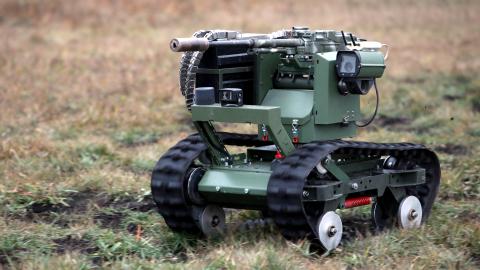
Second, defense industrial cooperation must expand to scalable and adaptable systems. US-Japan defense industrial cooperation has traditionally emphasized high-end systems, such as SM-3 Block 2A, which are highly capable but produced in limited quantities. Recent conflicts in Iran and Ukraine, however, suggest these systems alone cannot sustain prolonged operations. Affordable, sufficiently capable, and mass-produceable weapon systems must also be part of bilateral industrial cooperation. Candidates include low-cost precision munitions for counter-drone and point-defense missions, such as Advanced Precision Kill Weapon Systems (APKWS), as well as scalable stand-off strike systems like JDAM-LR and Barracuda. Systems such as anti-ship variant LUCAS-type loitering munitions and balloon-based high-altitude platforms (HAPS) also point toward new operational concepts built around scalable and adaptable capabilities.
Third, Japan must continue to revise its own policy framework to support and expand its defense industrial capacity. Japan is now moving to revise its defense exports policy, which previously limited exports to five nonlethal categories—rescue, transport, reconnaissance, surveillance, and minesweeping. Under the new proposal from the Liberal Democratic Party (LDP), the Japanese government will classify defense equipment into “lethal” and “nonlethal,” with the former exportable after review from Japan’s National Security Council, to countries with defense equipment and technology transfer agreements with Japan.
Such a shift aligns with how public sentiment in Japan increasingly supports helping allies and like-minded partners facing security challenges. Yet historically Japan’s defense industry has been largely focused on meeting domestic demand, leaving little capacity for exports. Revising the principles could change this dynamic by allowing Japan to build production capacity that includes surplus output capable of supporting allied demand. This would represent not merely a change in export policy but an opportunity to expand the industrial foundation that underpins alliance deterrence.
Conclusion
Prime Minister Takaichi’s visit to Washington will likely build upon the positive start that she and President Trump shared during their meeting in Tokyo last October. Though there have been several significant economic, security, and economic developments since their last meeting, both countries share numerous priorities and are in positions to support each other through deepened cooperation. At a time when economic and security challenges abound, Japan is earnest and serious in its efforts to implement collaboration in the areas of strategic industries, critical minerals, shipbuilding, advanced R&D, missile defense, and defense industrial base. As she heads to Washington, Takaichi understands that in these challenging circumstances, real and tangible results—even if the result of tough negotiations—are the currency of a true ally.