











Earlier this month, in an interview conducted at the Doha Forum, Tucker Carlson – one of the most influential media figures on the American right and a political actor closely aligned with President Donald Trump and Vice President JD Vance – called for a downgrading of Israel’s place in US strategy in favour of the Gulf states. Speaking with Ghida Fakhry, a veteran international journalist who hosted and moderated the forum, Carlson argued that the six energy-rich GCC states offer “very obvious benefits to the United States” and that these relationships are “infinitely more important” than America’s ties to Israel. He summed up his view by saying that the US relationship with Qatar alone is “so much more important” than its relationship with Israel.
Carlson did not merely argue that the Gulf states matter more. He went further, portraying Israel itself as a net burden on the United States. He described Israel as “a completely insignificant country,” with “no resources” and a population of just nine million, arguing that it has relevance only because Washington provides it with a security guarantee. Carlson claimed the US has “no overriding strategic interest” in Israel and dismissed the relationship in blunt terms: “What are we getting out of this? Nothing. It’s only cost.”
This is a striking assertion about a state that has just signed a $32 billion gas deal with Egypt, sits atop vast offshore energy reserves, and possesses one of the most formidable concentrations of human capital on the planet as a global high-tech and defence power.
Of course, the United States has vital interests in strong relations with the Gulf states. But Carlson presents this as a zero-sum choice, as though cooperation with Israel somehow excludes partnership with the GCC. In reality, Washington has long maintained close ties with both – a strategy that reached new heights under the Trump administration, with the US-brokered Abraham Accords and Gulf states themselves expanding strategic and military ties with Israel, including a multibillion-dollar weapons deal between the UAE and Israel.
The claim that American military assistance to Israel is charity rather than strategy is not merely wrong; it betrays a profound ignorance of how US power is projected, tested and preserved. It is worth examining what the United States actually gets in return and why this investment serves American interests first and foremost.
On September 15, 2016, the third security assistance agreement between the United States and Israel was signed, covering the period from 2019 to 2028. Its scope is $38 billion, approximately $3.8 billion per year. This is a significant sum, and it indeed eases Israel’s security burden and constitutes one of the central sources of strength of the Israel Defense Forces. However, viewing the assistance solely through an Israeli prism misses the essence: this is not merely aid to Israel. It is a security mechanism that directly serves the American interest and, in practice, saves American lives, soldiers and civilians alike.
By the very structure of the agreement, most of the money returns to American industry through the procurement of US equipment and weapons. But beyond that, the true value of the assistance is not merely economic. Israel has turned the assistance into an engine of operational development, field testing, and technological upgrading whose impact extends far beyond the Middle East. Israel is not merely a “customer” of American weapons systems. It is a living laboratory, under real conditions, for the American military.
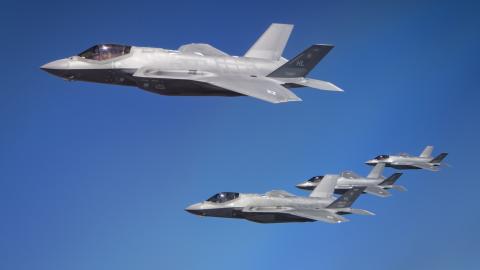
In recent months, voices have been growing in the United States calling to reduce the assistance to Israel in the name of “prioritising domestic investment.” But this argument rests on a flawed premise: the investment in Israel is itself a direct investment in American security. The most prominent example of this is the F-35 aircraft.
In Israeli military culture, no foreign equipment remains foreign. Every platform undergoes “sovereign integration” – modification, adaptation, and transformation into a fully Israeli system. The same is true of the F-35. When Israel was required to prepare the aircraft for a strike scenario against Iran – a distance of approximately 1,700 kilometres – it encountered a critical limitation: range. The solution did not come from the United States but from Israel. Unique external fuel tanks were developed, attached to the sides of the aircraft’s fuselage, enabling extended range without the use of refuelling aircraft. This is precisely the solution that Washington itself needs in much more distant theatres – foremost among them China.
Israel also added an advanced layer of electronic warfare to the aircraft, focused on detecting and disrupting the Russian S-300 and S-400 air defense systems. As a result, Israeli aircraft were able, for the first time, to conduct deep-penetration missions without the enemy systems even detecting that they had entered hostile airspace. this capability was a very important component of the strike. The Chinese air defense systems are indeed different from the Russian ones, but the engineering similarities between them render the Israeli lesson relevant to the Pacific theatre as well.
Another upgrade implemented by Israel concerns the ability to carry heavy external ordnance. The aircraft was originally designed to carry weapons only in its internal bays in order to preserve stealth. Israel changed this and transformed it into a high-payload strike platform as well. At the same time, Israel is a partner in the production of the wings, in upgrades to the pilot’s helmet, and in various operational and control systems. In the most recent war, the aircraft was even integrated, for the first time in the world, as part of a multi-layered air defense array and actually intercepted unmanned aerial vehicles.
But the true value lies in experience. Israel possesses accumulated combat experience with the aircraft that no other operating nation has. The readiness rate of the Israeli fleet is far higher than that of the American fleet. All of the lessons – extending range, improving stealth, increasing ordnance load, and integrating defense and offence – return to the United States as savings of billions of dollars in research and development and as a direct improvement in its aerial capabilities.
And the F-35 is only one example.
The Trophy active protection system, developed in Israel to protect tanks and armoured personnel carriers from anti-tank missiles and drones, has already been integrated into American armoured vehicles. At the moment of truth, this is the system that will stand between the American crew and the incoming strike.
The Lightning navigation pod, also developed in Israel and manufactured in cooperation with American industry, has become a central tool for precise aerial interception at minimal cost. In the arena against the attack drones launched by the Houthis, its combination with the APKWS system enables interceptions costing only tens of thousands of dollars, instead of the hundreds of thousands and millions required for classic missiles. This constitutes a direct budgetary saving for the American administration with every interception.
In the near future, Israel is expected to introduce into operational use a powerful laser interception system. This is a breakthrough that will shape the future of air defense for all Western countries – against China, against Russia, and against the rapidly evolving asymmetric threats. This laser system joins Israel’s multi-layered defense system, which includes Iron Dome, Arrow, and David’s Sling. Israel’s interception rates exceed 90 percent and are the best in the world, and therefore these systems, as well as the professional knowledge and combat experience behind them, are being integrated into the American military.
Perhaps the most striking example of saving human lives was contributed by Israel to the field of combat medicine. The Israeli emergency bandage, developed by a combat medic in the IDF, saved countless American soldiers in Iraq and Afghanistan. Advanced methods of treating the wounded – including administering blood transfusions in the field – are today also being studied and adopted by the American military on the basis of Israeli experience from the recent wars.
These are only a few examples of the importance of Israeli-American cooperation in research, development, and intelligence.
Israel indeed receives $3.8 billion year. But it is not the only country in the region that enjoys fixed assistance. Egypt and Jordan together receive similar sums. Additional countries receive one-time grants. But the real question is not how much money – it is what the strategic return is. And by that measure, there is no other country in the region that provides the United States with operational, technological, and intelligence value comparable to that provided by Israel.
The timing of this debate is not coincidental. These days, a new assistance framework is being formulated, which is expected to gradually shift from weapons grants to a joint research and development framework. This is a correct step. For security cooperation with Israel is not merely an act of friendship. It is one of the engines of the American military’s strategic advantage in the 21st century.
Anyone who proposes cutting aid to Israel in the name of “the American interest” simply does not understand what the American interest is.