






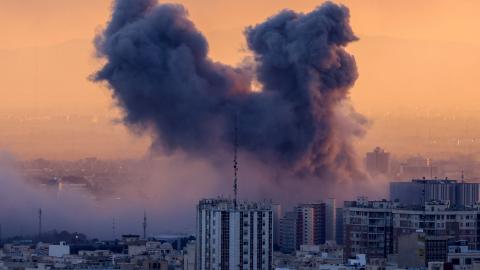




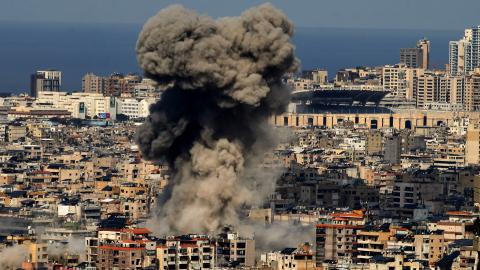
The joint US-Israeli air campaign against Iran is only a week old, yet the geopolitical consequences are already being felt. Fighting in the region has shown how vulnerable much-relied-upon trade and transit routes are to hostilities. Whether it is airspace closing, airports being unable to operate and evacuate civilians or shipping lanes being contested, this war could have an effect on the global economy.
At the same time, this conflict has also served as a useful reminder of the importance of diversifying trade and transit routes, especially the strategic value of the Trans-Caspian International Transport Route, commonly referred to as the Middle Corridor. Squashed between Russia and Iran, the Middle Corridor passes through the South Caucasus, across the Caspian Sea and into the heart of Central Asia. While this route has been used for centuries to connect markets, in recent years it has seen a revitalization in terms of investment and attention.
One only has to look at publicly available commercial flight tracking services to see the impact of the current conflict. A glance at the concentration of aircraft icons diverted away from their usual routes up and down the Gulf and instead rerouted through the South Caucasus and over the Caspian Sea illustrates how quickly global aviation patterns can change in response to instability. Airlines, insurers and shipping companies are making real-time calculations about risk. The result is a growing reliance on corridors that avoid the immediate zone of hostilities.
In the medium term, the Middle Corridor will likely become an even more important route for moving goods, especially if the Gulf and other regional transit routes continue to be disrupted by fighting.
The corridor’s appeal lies in both its geography and its geopolitics. From the Barents Sea in the north to the Arabian Sea in the south, there are some 5,000 km of distance, yet only about 190 km can be used for transport that bypasses both Russia and Iran. This narrow stretch, known as the Ganja Gap, named after the historic Silk Road city of Ganja, now Azerbaijan’s second-largest city, may be one of the most important trade chokepoints in the world that most people have never heard of.
The rise in importance of the Middle Corridor in recent years was initially driven by the response to Russia’s invasion of Ukraine in 2022. As international sanctions hit Moscow, many countries began seeking trade routes between Europe and Asia that would avoid Russian territory. The same logic applied to sanctions on Iran. For policymakers and businesses alike, diversification became not simply desirable but necessary.
More recently, however, the importance of the Middle Corridor has taken on an additional dimension. In December 2024, an Azerbaijani commercial airliner was reportedly hit by Russian air defense systems over the North Caucasus amid Ukrainian drone activity in the area. The aircraft later crashed after diverting from Russian airspace in an incident that highlighted the dangers of operating in contested skies. That episode underscored the broader risks facing civilian aviation in regions where hostilities are active.
Now, to the south of the Middle Corridor, the relentless air campaign and subsequent fighting over Iran make both air and ground transport in the region increasingly dangerous. Add to this the recurring Iranian threats to the Strait of Hormuz and the ongoing disruptions caused by Houthi attacks in the Bab Al-Mandab Strait and it becomes clear why the Middle Corridor’s appeal has grown.
In the past week, the Middle Corridor has become more than just an important transit route. It has also functioned as a humanitarian corridor. With regional airports periodically closed due to drone and missile attacks, and with commercial air traffic diverted around the conflict zone in Iran, neighboring countries have played a vital role. Armenia, Azerbaijan and Turkmenistan, all bordering Iran and linked to the broader corridor, have facilitated the evacuation of foreign nationals. Thousands of civilians have already transited through these countries to reach safety and many more may follow if hostilities persist.
There is no telling when the air campaign against Iran will end, how it will conclude or how the region will emerge after the fighting. However, it is likely that, regardless of the outcome, the Middle Corridor will continue to grow in regional importance. Ensuring its long-term viability requires action on two fronts.
First, resilience must be strengthened across the transport infrastructure that underpins the corridor. Roads, rail lines, ports and airports already exist but they require modernization and expansion. With Armenia and Azerbaijan on the cusp of normalizing relations, new transit connections could soon link Central Asia more directly with Europe. Additional routes would reduce the possibility of redundancy and lessen vulnerability to failure. Achieving this will require significant public and private investment from countries outside the South Caucasus and Central Asia that benefit from secure trade across the region.
Second, there must be a renewed focus on security. History has shown that instability in one country can quickly spill across borders. Border security capacity should be enhanced through training and technical assistance. Maritime security capabilities in the Caspian Sea, particularly among Azerbaijan and Kazakhstan, must be improved, as there can be no Middle Corridor if the Caspian cannot be safely transited.
Air defense is equally critical. The skies above the corridor must remain open and secure. Countries along the route would do well to study the recent experiences of Gulf states in countering Iranian ballistic missiles and drones, as well as Ukraine’s hard-earned lessons in air defense resilience.
While the ultimate end state of the war in Iran remains uncertain, global policymakers should act now to mitigate the broader economic consequences. The continued and secure use of the Middle Corridor will not solve every disruption caused by regional conflict. But as recent events have demonstrated, it is an increasingly vital component of global trade resilience and one that can no longer be treated as peripheral to the world economy.