










Executive Summary
- Battlefield assessment: Although the battle space remained largely static, Russian combat operations intensified around Kostiantynivka. The Russian military is stepping up its preparations to press on in various sectors.
- Deep strikes: Kyiv has bolstered its long-range strikes to hit high-value targets deep inside Russia and occupied Ukraine.
- Ukraine’s wartime innovations: Ukraine opened a new facility dedicated to master the use of artificial intelligence in combat operations, and began to provide its allies with controlled access to the data sets it has accumulated during years of fighting.
1. Battlefield Assessment
Last week, the Ukrainian General Staff reported a notable increase in military activity near Kostiantynivka, a city the Russian Aerospace Forces have bombarded since late February with munitions like three-ton FAB-3000 aerial bombs. Pokrovsk and Huliaipole also saw intense combat. Despite this uptick, the battlespace retained an operational tempo similar to the prior week, with Russian and Ukrainian forces engaging in roughly 100 to 150 tactical clashes per day. We monitor early telltale indicators of a reloaded Russian push in various sectors.
The static state of ground operations did not prevent Ukraine from increasing its rate of long-range air strikes. Kyiv continued its systematic campaign against the sensing layer and air-defense architecture across Russia’s rear area and occupied Crimea, while Ukrainian Special Forces used FP-1 drones to hunt and prey on Russia’s Iskander missile launchers. Additionally, on the night of March 14, Ukrainian strikes near the Crimean village of Libknekhtivka hit key 59N6-E and a 73E6 radar systems that inform Russia’s integrated air-defense systems on the occupied peninsula.
In the same wave of strikes, Ukraine also struck an S-400 Triumf air- and missile-defense launcher near Dalny, underscoring the importance of suppressing Russian radar batteries. Also on March 14, Ukrainian forces struck facilities at the Maykop airfield in the Russian Republic of Adygea, though the full operational impact from those strikes remains unclear.
Earlier Ukrainian operations continued to show operational effects. Russia’s Valdai radar facility near Prymorskyi in Crimea reportedly sustained significant damage in strikes on March 10, further degraded Moscow’s early-warning and air-surveillance coverage across the Black Sea theater.
Ukrainian forces also continued to target industrial sites inside Russia. Kyiv struck and set ablaze the main production site at the Kremniy El plant in the border region of Bryansk. Russia uses this facility to manufacture integrated circuits that supply its ballistic missiles, cruise missiles, and air-defense systems.
In response, Moscow maintained its aerial campaign against Ukraine’s population centers. A Russian drone attack targeted Kyiv during the morning rush hour on March 16. Air-raid sirens sounded shortly before the strikes, followed by explosions and Ukrainian air-defense activity. Initial reports indicate that Russia used multiple Shahed-type drones to strike Ukraine’s energy infrastructure, though no missile launches were confirmed during that attack.
2. Ukraine Weaponizes Its Algorithmic Capabilities and Combat-Data Edge
Ukraine is converting four years of high-intensity fighting into a strategic data asset. In an effort that could shape present and future conflicts beyond its borders, Kyiv is weaponizing the data and technical expertise its military has accumulated through years of sustained combat.
Ukraine is now providing allied militaries and defense firms with controlled access to the data sets collected during frontline operations. This effort allows Ukraine’s allies to train their own AI-enabled robotic systems using Ukrainian combat data. The data sets capture real patterns of troop movement, targeting behavior, and battlefield signatures at a scale that no peacetime training environment can replicate.
Complementing this effort, Ukraine is further institutionalizing its advantage by building a secure architecture to train algorithms without exposing sensitive information. Kyiv is sharpening these systems by supplying them with a near-constant stream of updated imagery and combat data.
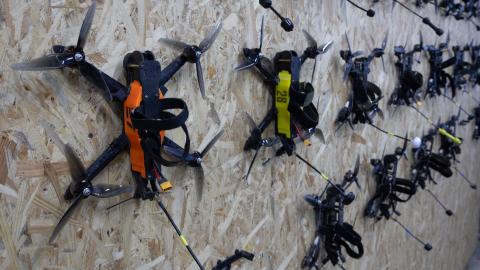
At the center of this effort is Ukraine’s newly established Defense AI Center, known as “A1.” Millions of annotated images from tens of thousands of drone sorties empower this innovative hub in its mission to rapidly translate Ukraine’s battlefield experience into deployable systems at speed.
Ultimately, Ukraine’s goal is to compress the innovation cycle and translate its wartime improvements into efficient robotic warfare capabilities. Equipped with data flows from the front lines, Ukraine’s algorithms can learn in near-real time, enabling Kyiv to integrate algorithms insights into improved systems and return them rapidly to the battlefield.
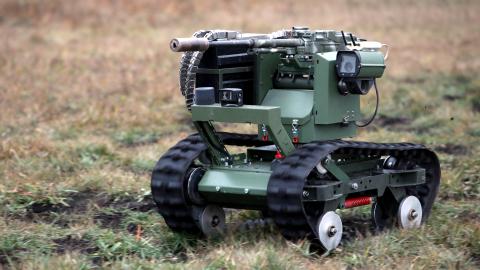
The new AI center has the capacity to analyze combat trends, anticipate Russian behavior, and drive the development of autonomous platforms and command tools. In effect, Ukraine is moving toward an AI-enabled force in which intelligence, targeting, and command functions become increasingly autonomous. This development is meaningful not only for Ukraine, but for the future of warfare more broadly.
3. What to Monitor in the Coming Weeks
1. Ukraine’s expanding new data-centric, AI-focused defense initiatives could potentially deepen Kyiv’s ties with the North Atlantic Treaty Organization (NATO) and open new avenues for future cooperation.
2. As war in the Middle East continues, Ukraine’s efforts to strengthen the Gulf Arab states’ counter-drone systems could help Kyiv accumulate significant diplomatic capital. Such cooperation may yield political and strategic benefits over time.